
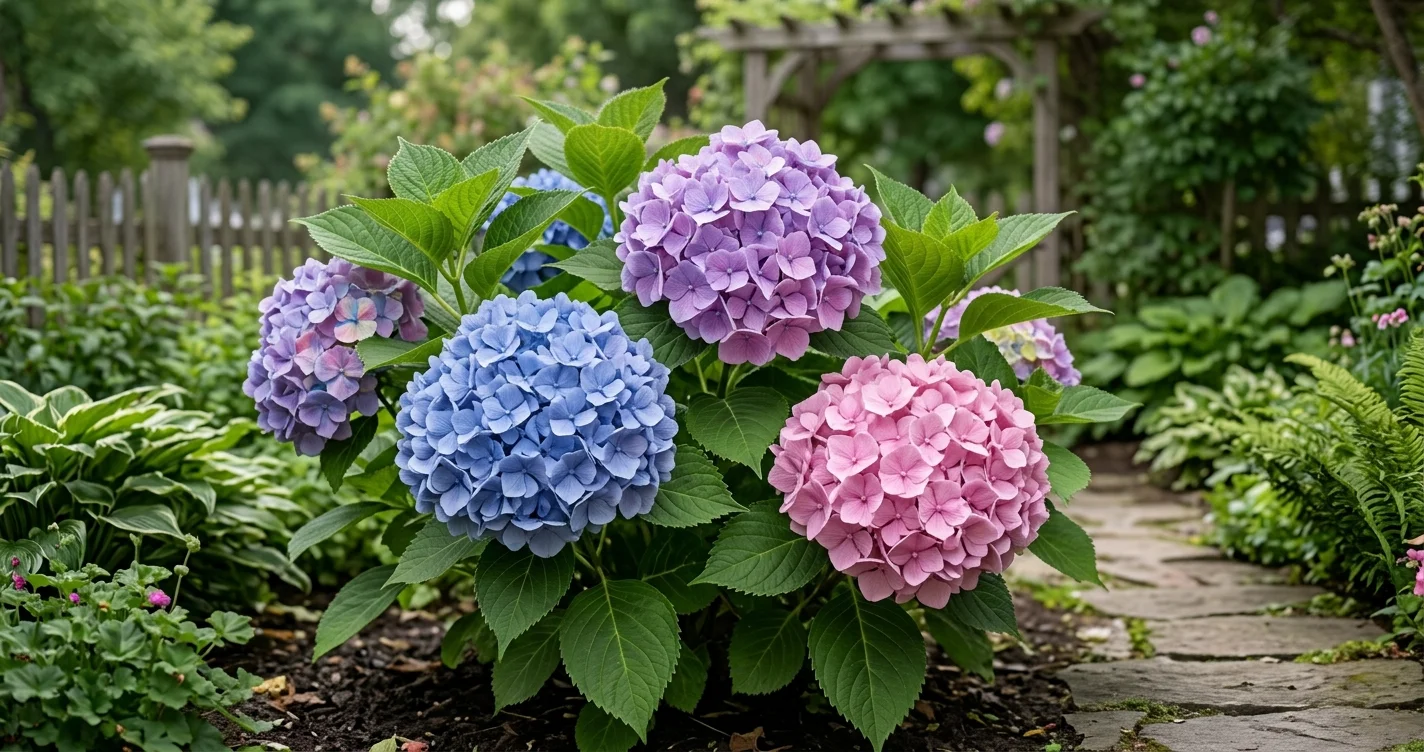
Hydrangeas are among the few garden shrubs capable of producing blue, purple, or pink flowers depending on the chemistry of the soil around their roots. A plant that blooms bright pink in one garden may produce beautiful blue flowers when grown somewhere else.
Understanding why hydrangeas change color begins with soil pH, but the explanation involves more than acidity alone.
The availability of aluminum, the plant’s ability to absorb it, and the genetic characteristics of individual hydrangea cultivars all influence flower color.
For home gardeners, understanding these relationships makes it possible to encourage particular flower colors without damaging plants through unnecessary soil treatments.
Table of Contents
- Why Hydrangeas Change Color
- Which Hydrangeas Can Change Color?
- How Acidic Soil Encourages Blue Flowers
- How Less Acidic Soil Encourages Pink Flowers
- Why One Hydrangea Can Display Multiple Colors
- How to Test Soil pH Before Making Changes
- How to Encourage Blue Hydrangea Flowers
- How to Encourage Pink Hydrangea Flowers
- How Long Does a Color Change Take?
- Common Hydrangea Color Myths
- Frequently Asked Questions
- Conclusion
Why Hydrangeas Change Color
The remarkable color-changing ability of certain hydrangeas results from interactions between plant pigments, aluminum, and soil chemistry.
The Role of Flower Pigments
Hydrangeas contain natural pigments called anthocyanins. These compounds are responsible for many red, purple, and blue colors found throughout the plant kingdom.
In color-responsive hydrangeas, the appearance of these pigments changes when aluminum becomes involved in the chemistry of the flower tissues.
When sufficient aluminum reaches the developing flowers and forms complexes with their pigments, blue coloration becomes possible.
When aluminum is unavailable or cannot be absorbed effectively, the same type of hydrangea may produce pink flowers instead.
Why Soil pH Is Only Part of the Explanation
Soil pH measures how acidic or alkaline the soil is.
Although gardeners frequently associate acidic soil with blue hydrangeas, acidity does not directly turn flower pigments blue.
Instead, acidic conditions generally make aluminum more soluble and available for root absorption.
Three factors are especially important:
- Soil chemistry: Determines how much aluminum is available.
- Plant genetics: Influences pigment production and the range of possible colors.
- Aluminum uptake: Determines whether enough aluminum reaches the flowers.
This explains why two hydrangea cultivars growing in identical soil may display noticeably different colors.
Which Hydrangeas Can Change Color?
Not every hydrangea species responds to soil acidity by changing flower color.
Identifying the plant correctly is essential before attempting any adjustments.
Bigleaf Hydrangeas
Bigleaf hydrangeas (Hydrangea macrophylla) are the best-known color-changing hydrangeas.
They include familiar mophead varieties with rounded flower clusters and lacecap varieties with flatter, more delicate arrangements.
Many cultivars can produce shades ranging from pink to lavender and blue.
However, their genetic characteristics determine how strongly they respond to changes in aluminum availability.
Mountain Hydrangeas
Mountain hydrangeas (Hydrangea serrata) can also respond to soil chemistry.
These shrubs often have smaller leaves and more delicate flower clusters than traditional bigleaf hydrangeas.
Depending on the cultivar, their flowers may appear pink, purple, or blue.
Why White Hydrangeas Usually Stay White
Most white-flowered hydrangeas lack the necessary pigmentation response to turn blue through soil modification.
Popular panicle hydrangeas (Hydrangea paniculata) and smooth hydrangeas (Hydrangea arborescens) do not follow the same blue-pink soil response.
Some white flowers naturally develop pinkish tones as they mature, but that process is different from aluminum-dependent color change.
How Acidic Soil Encourages Blue Flowers
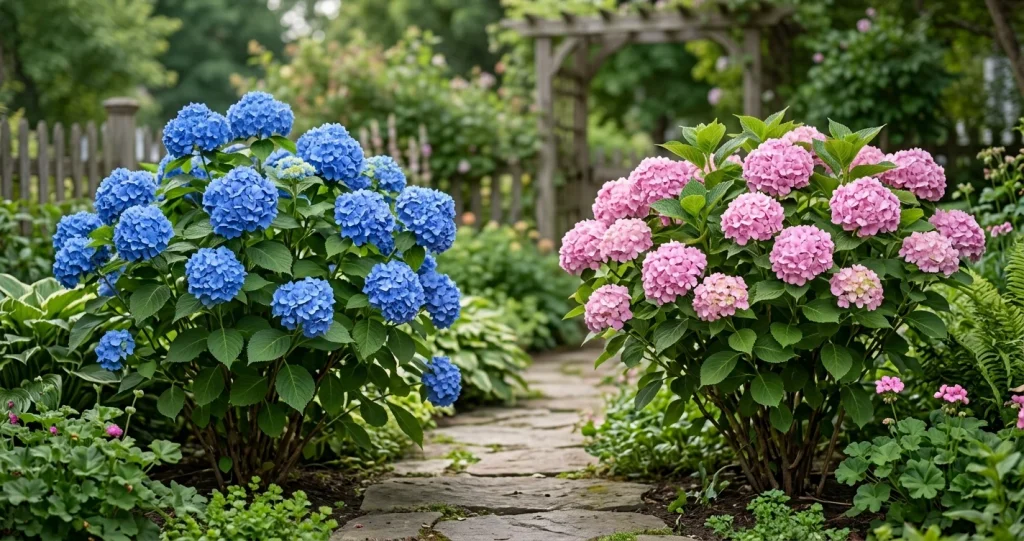
Blue hydrangeas generally develop when their roots can absorb enough available aluminum from the soil.
Aluminum Becomes More Available
In acidic conditions, certain aluminum-containing soil compounds become more soluble.
This allows aluminum to enter the soil solution, where plant roots may absorb it.
The aluminum can then move through the plant and participate in pigment complexes within developing flower tissues.
Typical Soil pH Ranges
For many color-responsive hydrangeas, these ranges provide useful guidance:
| Soil pH | Common flower response |
|---|---|
| 5.0–5.5 | Blue often favored |
| 5.5–6.0 | Blue, purple, or mixed colors possible |
| 6.0–6.5 | Pink increasingly favored |
| Above 6.5 | Pink generally favored |
These values are guidelines rather than guarantees.
The amount of aluminum present, soil composition, fertilizer practices, and cultivar genetics can all affect the result.
Extremely acidic conditions can also interfere with nutrient availability and damage roots.
Therefore, lowering soil pH beyond an appropriate range is not a reliable way to intensify blue flowers.
How Less Acidic Soil Encourages Pink Flowers
Pink coloration becomes more likely when soil conditions reduce aluminum availability.
As soil pH rises, aluminum generally becomes less soluble and more strongly associated with soil minerals.
Consequently, less aluminum is available for hydrangea roots to absorb.
Without sufficient aluminum participating in flower pigment complexes, responsive hydrangeas tend to develop pink or reddish-pink flowers.
Why Exact pH Thresholds Vary
A hydrangea growing at pH 6.2 might produce pink flowers, while another cultivar in similar soil develops lavender blooms.
Differences can arise from soil texture, phosphorus availability, cultivar genetics, and root uptake.
For this reason, gardeners should treat pH measurements as useful indicators rather than exact color controls.
Why One Hydrangea Can Display Multiple Colors
One of the most fascinating hydrangea displays occurs when a single shrub produces blue, purple, and pink flower clusters simultaneously.
Several processes may contribute.
Small Differences in Soil Chemistry
Soil conditions are not always uniform around a shrub.
Different parts of the root system may encounter variations in pH, aluminum availability, and nutrient concentrations.
These differences can contribute to uneven flower coloration.
Flower Age
Hydrangea flower clusters also change appearance naturally as they mature.
Fresh blooms may look vivid, while older flowers gradually fade, develop greenish tones, or acquire muted pink and purple shades.
This aging process should not be confused with a soil-induced color change.
Cultivar Characteristics
Some cultivars naturally produce mixed or intermediate colors more readily than others.
Their pigment chemistry and aluminum uptake characteristics influence how consistently blue or pink flowers develop.
How to Test Soil pH Before Making Changes
Before attempting to alter hydrangea color, determine the existing soil conditions.
Changing soil chemistry without testing can create unnecessary nutrient problems.
Choose a Reliable Soil Test
A laboratory soil test through a university Cooperative Extension service is generally the most dependable starting point.
Depending on the service, testing may report soil pH, nutrient concentrations, and recommendations for amendments.
To collect a representative sample:
- Remove surface mulch and loose debris.
- Collect several small samples from the hydrangea’s root-zone area.
- Avoid concentrated fertilizer deposits.
- Combine the samples in a clean container.
- Follow the laboratory’s preparation and submission instructions.
Understand the Results
Soil pH identifies acidity, but it does not directly measure how much aluminum the plant can absorb.
If a color change is your goal, explain that objective when requesting testing advice.
The amount of amendment needed also depends on soil buffering capacity.
Clay-rich soils often require different treatment rates than sandy soils.
How to Encourage Blue Hydrangea Flowers
Encouraging blue blooms begins with selecting a suitable cultivar and confirming that the soil can support aluminum uptake.
Start With a Color-Responsive Variety
Choose a bigleaf or mountain hydrangea known to produce blue flowers under appropriate conditions.
Some cultivars respond strongly, while others remain predominantly pink or develop only muted purple tones.
Manage Soil Acidity Carefully
If laboratory results indicate that the soil is insufficiently acidic, elemental sulfur may be recommended to lower pH gradually.
Sulfur works through soil microbial activity, so the response depends on temperature, moisture, and soil conditions.
Aluminum sulfate is sometimes used because it supplies aluminum while also acidifying soil.
However, excessive applications can injure roots and create aluminum toxicity.
Never apply it repeatedly without appropriate guidance.
Avoid Unnecessary Fertilizer Applications
High phosphorus availability can reduce aluminum uptake by binding aluminum into less available forms.
Nevertheless, deliberately starving a plant of phosphorus is not appropriate.
Use a soil test to determine whether fertilizer is necessary.
Healthy roots and balanced nutrition remain more important than achieving an exact shade of blue.
How to Encourage Pink Hydrangea Flowers
Pink flowers are generally encouraged by maintaining soil conditions that limit aluminum availability.
Raising Soil pH
If testing confirms that soil is more acidic than desired, agricultural limestone may be recommended.
Limestone gradually raises soil pH, reducing the availability of aluminum.
The appropriate amount depends on soil texture, current pH, and the laboratory’s recommendations.
Avoid Overliming
Excessive lime can raise soil pH beyond the plant’s preferred growing conditions.
This may reduce the availability of important nutrients, including iron, potentially causing yellow leaves and poor growth.
Do not add lime simply because flowers appear blue.
First confirm that the hydrangea is a responsive cultivar and that the soil requires adjustment.
How Long Does a Color Change Take?
Changing hydrangea flower color is usually a gradual process.
Soil amendments need time to react, and plants must absorb aluminum under the new conditions.
Seasonal Changes
Elemental sulfur may take months to produce its full effect, depending on soil conditions.
Limestone also acts gradually, particularly when applied around established shrubs rather than incorporated before planting.
Because of these delays, the most noticeable flower-color changes may appear during the following growing season.
Existing Flowers Usually Remain Their Original Color
Changing soil chemistry does not instantly recolor mature flower clusters.
Instead, the new conditions primarily influence flowers as they develop.
A pink hydrangea treated during summer may therefore continue displaying pink blooms that season.
Patience, follow-up soil testing, and consistent plant care are essential.
Common Hydrangea Color Myths
Several popular gardening claims oversimplify the science behind hydrangea colors.
Myth 1: All Hydrangeas Can Turn Blue
Only certain species and cultivars have the necessary pigmentation response.
Most white panicle and smooth hydrangeas cannot be turned blue by changing soil pH.
Myth 2: Soil Acidity Directly Creates Blue Pigment
Acidity primarily affects aluminum availability.
The blue appearance develops through aluminum’s interaction with pigments inside the flower tissues.
Myth 3: Coffee Grounds Guarantee Blue Flowers
Coffee grounds do not reliably lower garden soil pH enough to produce blue hydrangeas.
Their effects depend on decomposition, soil conditions, and application practices.
They should not replace soil testing.
Myth 4: Household Chemicals Produce Faster Results
Adding vinegar, baking soda, or other household substances is not a dependable method of controlling hydrangea color.
Improper treatments may disturb soil chemistry or injure plants.
Myth 5: Every Color Difference Comes From Soil pH
Flower age, genetics, aluminum uptake, and growing conditions also influence appearance.
A fading flower is not necessarily evidence that soil acidity has changed.
Frequently Asked Questions
1. Can pink hydrangeas turn blue naturally?
Yes. Certain bigleaf and mountain hydrangeas can develop blue flowers when acidic soil makes sufficient aluminum available for absorption. The cultivar must also possess the necessary genetic characteristics.
2. Can blue hydrangeas turn pink?
Yes. When soil conditions reduce aluminum availability, responsive cultivars may produce pink flowers. Raising soil pH with agricultural lime may help when soil testing indicates that it is appropriate.
3. Can white hydrangeas become blue?
Most white hydrangea cultivars do not turn blue in response to soil acidity. Some develop pink or green tones as their flowers mature, but this is a different process.
4. Does adding coffee grounds change hydrangea color?
Coffee grounds are not a reliable color-changing treatment. Their effect on soil acidity is inconsistent, and they cannot guarantee increased aluminum uptake.
5. Why are my hydrangeas purple instead of blue?
Purple flowers may develop when aluminum availability produces an intermediate pigment response. Cultivar genetics and soil conditions can also influence whether flowers appear lavender, violet, or mixed pink and blue.
6. Will changing soil pH affect flowers immediately?
No. Soil chemistry changes gradually, and established flower clusters generally do not change directly in response to amendments. Results are more likely to appear in developing blooms, sometimes during the following season.
Conclusion
Understanding why hydrangeas change color reveals an extraordinary connection between soil chemistry and plant biology.
For certain bigleaf and mountain hydrangeas, acidic soil makes aluminum more available, allowing it to interact with flower pigments and encourage blue coloration.
Less acidic conditions generally reduce aluminum uptake, favoring pink flowers.
However, cultivar genetics, flower development, and soil characteristics mean that no single pH measurement guarantees a particular shade.
For gardeners hoping to influence hydrangea color, the safest approach is to identify the cultivar, test the soil, and make gradual, evidence-based adjustments.
Above all, maintaining healthy roots, appropriate moisture, and balanced nutrition matters more than forcing a particular flower color.
A thriving hydrangea can provide a spectacular display whether its flowers are blue, purple, pink, or a beautiful mixture of all three.
Internal Sources
- Hydrangea Pruning Guide: How to Prune Bigleaf Hydrangeas Without Losing Next Year’s Flowers — Supports seasonal hydrangea care and proper pruning. green garden
- What Your Garden Soil Is Telling You: 6 Common Signs and How to Improve It — Supports soil testing and general soil management. green garden
External Sources
1. University of Massachusetts Amherst Extension — Hydrangeas, Color and Fertilizing https://www.umass.edu/agriculture-food-environment/home-lawn-garden/fact-sheets/growing-tips-hydrangeas-color-fertilizing
2. Clemson University Cooperative Extension — Hydrangea Care in South Carolina https://hgic.clemson.edu/factsheet/hydrangea-care-in-south-carolina/
3. Mississippi State University Extension — Hydrangeas for Mississippi Gardens https://extension.msstate.edu/publications/hydrangeas-for-mississippi-gardens