
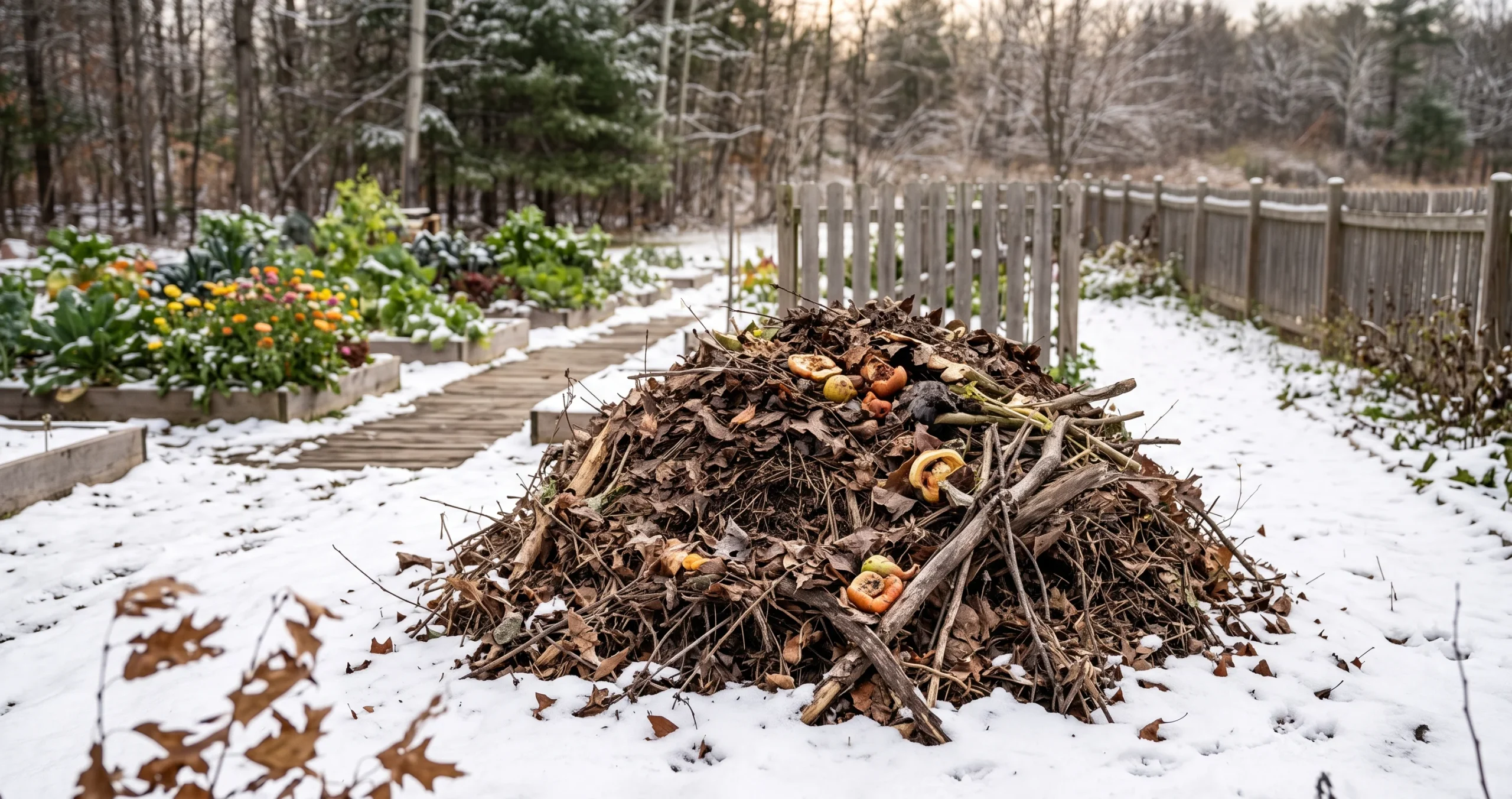
Choosing between hot compost vs cold compost is less about finding one universally superior method and more about matching composting to the way you actually garden. Hot composting can transform a carefully balanced pile of organic material relatively quickly, but it requires enough material, moisture, oxygen, and regular management. Cold composting asks much less of you, although decomposition takes considerably longer.
Both methods rely on microorganisms to break down organic matter. The major differences are how actively you manage those organisms, how much heat the pile produces, how quickly materials decompose, and whether the pile becomes hot enough to reduce many weed seeds and pathogens.
Understanding those differences can help you build a compost system that you will actually maintain rather than one that sounds perfect on paper.
Table of Contents
- What Is the Difference Between Hot and Cold Composting?
- How Hot Composting Works
- Understanding the Carbon-to-Nitrogen Ratio
- Temperature, Moisture, and Oxygen
- How Often Should Hot Compost Be Turned?
- How Cold Composting Works
- Hot Composting: Pros and Cons
- Cold Composting: Pros and Cons
- Hot Compost vs. Cold Compost for Different Gardeners
- What Can Go Into Each Compost Pile?
- How to Tell When Compost Is Finished
- Common Composting Mistakes
- Frequently Asked Questions
- Final Thoughts
Hot Compost vs Cold Compost: The Basic Difference
Hot and cold composting use the same basic biological process: microorganisms consume organic material and gradually transform it into a more stable, soil-like material.
The difference is intensity.
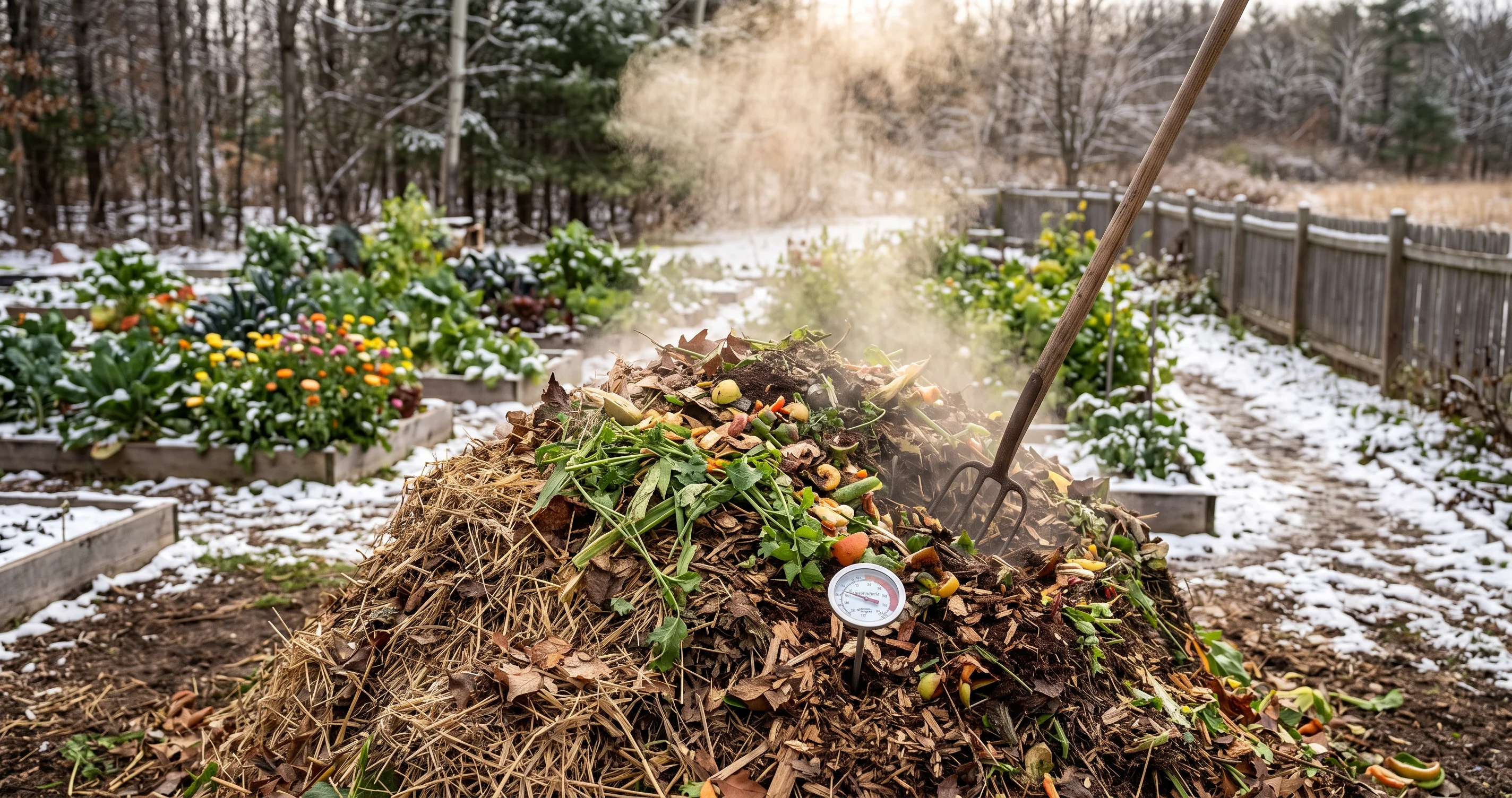
A properly managed hot pile provides microbes with favorable proportions of carbon and nitrogen along with moisture and oxygen. As microbial activity accelerates, heat accumulates inside the pile.
Oregon State University Extension reports that efficient composting commonly occurs between about 110°F and 150°F, with approximately 130°F to 140°F listed as a preferred temperature range for rapid composting.
Cold composting is much more passive. Gardeners continue adding appropriate organic materials and allow fungi, bacteria, insects, and other decomposers to work gradually.
Illinois Extension notes that a passive pile will eventually decompose without active maintenance, but the process may take a year or longer.
That creates the central tradeoff:
Hot composting trades labor and attention for speed. Cold composting trades speed for convenience.
How Hot Composting Works
A compost pile does not become hot simply because materials are rotting.
Heat comes primarily from microbial metabolism.
When microorganisms have sufficient food, moisture, and oxygen, their populations and activity increase. As they consume organic matter, metabolic activity releases heat.
A sufficiently large pile retains that heat instead of immediately losing it to the surrounding air.
Oregon State University Extension recommends an initial pile volume of roughly 1 cubic yard, or about 3 feet by 3 feet by 3 feet, for fast hot composting.
That does not mean smaller piles cannot decompose. They simply have more difficulty maintaining high internal temperatures.
The Four Ingredients Behind a Hot Pile
Successful hot composting depends primarily on:
- Carbon-rich materials
- Nitrogen-rich materials
- Moisture
- Oxygen
Pile size, particle size, weather, and the types of ingredients also affect decomposition.
Getting these factors reasonably balanced is more important than buying compost starters or specialized additives.
Understanding the Carbon-to-Nitrogen Ratio
Carbon and nitrogen are often discussed as the “browns” and “greens” of composting.
Browns are generally carbon-rich materials such as dry leaves, straw, shredded cardboard, small woody materials, and dry plant debris.
Greens generally contain proportionally more nitrogen. Examples include fresh grass clippings, fresh green plant material, coffee grounds, and many fruit and vegetable scraps.
Microorganisms need both.
The Ideal C Ratio
For rapid composting, Oregon State University Extension gives a preferred starting carbon-to-nitrogen ratio of approximately 25:1 to 30:1, with a broader workable range of about 20:1 to 40:1.
That does not mean you need laboratory equipment to calculate the exact chemical composition of every banana peel and handful of leaves.
Home gardeners can usually work by combining a varied mixture of greens and browns and adjusting when the pile shows signs of imbalance.
Too Much Carbon
A pile dominated by dry leaves, straw, or woody material may contain more carbon than microorganisms can efficiently process with the available nitrogen.
The result is usually simple:
Decomposition slows down.
Adding nitrogen-rich material can help restore activity.
Too Much Nitrogen
A pile containing large quantities of fresh grass clippings or other nitrogen-rich material can become dense, wet, and poorly aerated.
Excess nitrogen can also contribute to ammonia odors. Oregon State notes that when the C ratio is too low, excess nitrogen can be converted to ammonia and lost to the atmosphere.
Adding dry carbon-rich material and improving aeration usually helps.
Temperature: The Engine of Hot Composting
Temperature is one of the easiest ways to monitor an active pile.
A long compost thermometer makes monitoring convenient, but it is not absolutely necessary for casual backyard composting.
When microbial activity becomes intense, the center of the pile heats up.
Oregon State reports that an actively composting pile can rise dramatically from ambient temperature, while its preferred range for rapid decomposition is around 130°F to 140°F.
Temperatures should not simply climb indefinitely.
Extremely high temperatures can actually reduce the population of useful composting organisms. Illinois Extension notes that desirable compost organisms are killed when temperatures rise beyond roughly 160°F to 170°F.
Heat and Weed Seeds
One advantage of properly managed hot compost is its ability to reduce many weed seeds and some pathogens.
However, simply noticing that the center of your pile feels hot does not guarantee that every part has received an adequate heat treatment.
Material near the outer edges may remain considerably cooler.
Turning helps move cooler material toward the hotter center.
For gardeners dealing with known plant diseases, animal manure, or other materials where pathogen reduction matters, follow validated composting guidance rather than assuming any warm backyard pile has been sanitized.
Moisture Matters Just as Much
Microorganisms need water, but a compost pile should not be saturated.
A useful practical description is the moisture level of a wrung-out sponge.
Oregon State lists roughly 50% to 60% moisture as a preferred range for rapid composting. Too little moisture slows microbial activity, while excessive moisture can restrict oxygen movement and encourage anaerobic conditions.
If your pile is dry and inactive, add water while turning it.
If it is soggy and smells unpleasant, mix in dry browns and improve aeration.
Oxygen and Turning Frequency
Hot composting is an aerobic process, meaning the most desirable decomposition occurs in the presence of oxygen.
As material settles, air spaces disappear.
Turning physically loosens the pile, introduces oxygen, and moves materials from cooler areas toward the active center.
There is no universal turning schedule that every backyard pile must follow.
The appropriate frequency depends on your ingredients, pile size, moisture, temperature, and how quickly you want finished compost.
Oregon State’s fast-composting guidance suggests checking the pile after it heats and restacking it when it begins cooling, often after roughly 5–10 days in an actively managed system.
Illinois Extension takes a less intensive approach, noting that more frequent turning accelerates decomposition and describing intervals of roughly two to four weeks as one option for home composters.
Instead of obsessing over a fixed schedule, watch the pile.
If a previously hot pile cools while recognizable material remains, turning can introduce fresh oxygen and expose less-decomposed ingredients to the active center.
How Cold Composting Works
Cold composting is composting with fewer chores.
You collect suitable organic material, maintain reasonable conditions, and allow decomposition to proceed gradually.
There is no requirement to build a large pile all at once.
There is no strict turning schedule.
You do not need to monitor temperature constantly.
And you do not need to calculate a precise C ratio.
Oregon State Extension specifically describes slow composting as forgiving: gardeners can skip a precise carbon-to-nitrogen ratio and a turning schedule, although decomposition will take longer.
That makes cold compost particularly attractive for gardeners who simply want to keep leaves, plant trimmings, and suitable kitchen scraps out of the trash.
How Long Does Cold Compost Take?
Think in months rather than weeks.
A passive pile may require a year or longer depending on climate, ingredients, moisture, particle size, and other conditions.
Dry woody material takes particularly long to break down.
Cold winter temperatures can slow the process further.
That is not necessarily a problem.
If you do not urgently need finished compost, time can do much of the work for you.
Hot Composting: Advantages
Faster Results
Speed is the obvious attraction.
Under favorable conditions, an actively managed pile can decompose dramatically faster than an unattended pile.
Oregon State describes properly managed hot composting as a process that can reach the curing stage after roughly a month, followed by another four to six weeks of curing for uses involving tender plants or vegetable gardens.
Real backyard results vary with materials, weather, pile size, and management.
Better Weed-Seed Reduction
Sustained high temperatures can kill many weed seeds.
This is especially valuable if your garden generates large quantities of weeds that have already gone to seed.
Faster Processing of Garden Waste
Gardeners with substantial seasonal debris can process material much faster.
Instead of allowing autumn leaves and summer plant waste to accumulate for a year, an actively managed system can create room for the next batch sooner.
A More Controlled Process
Monitoring temperature, moisture, ingredients, and aeration gives you more control over decomposition.
For gardeners who enjoy managing biological processes, hot composting can be surprisingly satisfying.
Hot Composting: Disadvantages
It Requires Work
Turning a cubic-yard pile is physical labor.
Depending on the system, you may need to chop ingredients, add water, monitor temperatures, and repeatedly rebuild or turn the pile.
You Need Enough Material
A few kitchen scraps and a handful of leaves generally will not create a sustained hot pile.
You need enough organic matter to build sufficient volume.
Moisture and Ingredient Balance Matter
An excessively wet, nitrogen-heavy pile may become smelly and anaerobic.
A dry pile dominated by carbon-rich material may barely heat at all.
Hot composting rewards attention.
Cold Composting: Advantages
Very Little Maintenance
This is the strongest argument for cold compost.
Add suitable material and let decomposition happen.
Occasional mixing can help, but the entire point is that intensive management is unnecessary.
Excellent for Everyday Garden Waste
If your goal is simply to recycle leaves, faded annuals, vegetable trimmings, and other garden debris, cold composting is practical.
No Need to Stockpile Ingredients
Hot composting works particularly well when you can assemble a substantial mixture of materials at once.
Cold piles allow you to add material gradually as your household and garden produce it.
Lower Physical Demands
Gardeners who cannot comfortably turn a large pile may find passive composting much more manageable.
Cold Composting: Disadvantages
It Takes Longer
This is the price of convenience.
Material that might break down relatively quickly in a carefully managed hot pile can remain recognizable for months in a passive system.
Weed Seeds May Survive
Oregon State warns that cold piles do not become hot enough to kill most weed seeds.
Avoid adding mature seed heads from troublesome weeds unless you are comfortable with the possibility that some seeds may survive.
Diseased Plant Material Is Riskier
Some plant pathogens can survive cool composting.
Oregon State recommends caution with diseased leaves and soil from affected roots in slow piles.
When dealing with a serious plant disease, check extension recommendations for that specific pathogen before composting infected material.
Hot Compost vs Cold Compost for Different Gardening Lifestyles
The most practical method is the one that matches your available time, space, physical ability, and amount of organic material.
Choose Hot Composting If You…
Generate substantial quantities of garden waste and want compost relatively quickly.
It also makes sense if you enjoy actively managing the pile, have room for roughly a cubic yard of material, and are willing to monitor moisture and turn the compost.
Vegetable gardeners who regularly need compost for new beds may appreciate the faster turnaround.
Choose Cold Composting If You…
Want composting to fit quietly into your routine.
You can add yard waste as it becomes available and wait.
Cold compost is especially practical for gardeners who have plenty of space but limited time or who do not want the physical work of repeatedly turning a large pile.
Use Both Methods
You do not actually have to choose one forever.
A gardener might build a hot pile during fall when leaves and garden debris are abundant, then maintain a passive pile during the rest of the year.
You could also keep one active pile for materials you want processed quickly and another slow pile for leaves and woody debris.
This hybrid approach often makes more sense than forcing every piece of organic material through the same system.
What Should Not Go Into a Backyard Compost Pile?
Whether you compost hot or cold, ingredient selection matters.
For a typical home pile, avoid materials likely to attract pests, create persistent odors, introduce contaminants, or pose disease risks.
These commonly include meat, fish, grease, large amounts of dairy products, pet feces from dogs and cats, and chemically contaminated materials.
Be particularly cautious about assuming a backyard hot pile reliably destroys every pathogen, weed seed, or persistent herbicide.
Commercial composting systems can maintain controlled temperatures and processing standards that are difficult to reproduce consistently in a home garden.
How to Tell When Compost Is Finished
Finished compost should no longer resemble the ingredients that went into the pile.
Expect a dark, crumbly material with an earthy smell.
The pile should no longer heat dramatically after turning, and most original ingredients should be difficult to identify. A few resistant twigs or woody fragments are normal and can simply be screened out and returned to the next pile.
Hot compost also benefits from a curing period after its most active decomposition stage.
Oregon State recommends four to six weeks of curing after active hot composting when the finished material will be used around tender seedlings or in vegetable gardens.
Curing allows biological and chemical processes to continue as the compost becomes more stable.
Common Composting Mistakes
Making the Pile Too Dry
Dry materials can sit almost unchanged for months.
Add enough water to maintain moisture similar to a wrung-out sponge.
Making It Too Wet
Water fills air spaces and limits oxygen.
Add dry browns and turn the pile if it becomes saturated.
Adding Too Much Grass at Once
Thick layers of grass clippings can mat together, restrict airflow, and develop unpleasant odors.
Mix grass with dry leaves, shredded cardboard, or other coarse carbon-rich material.
Expecting a Tiny Pile to Become Extremely Hot
Small piles lose heat quickly.
They can still make compost—they simply behave more like cold or moderately active piles.
Assuming Heat Means the Compost Is Finished
Heat indicates active microbial decomposition.
Finished compost generally does the opposite: it stabilizes and stops reheating significantly after turning.
Frequently Asked Questions
Is hot compost better than cold compost?
Not universally.
Hot composting is more appropriate when speed, active management, and high temperatures are priorities. Cold composting is better suited to gardeners who prioritize simplicity and are willing to wait longer.
The final decision should reflect how much organic material, time, space, and physical effort you can realistically provide.
How hot should hot compost get?
For rapid composting, Oregon State Extension lists approximately 110°F to 150°F as an effective range and about 130°F to 140°F as preferred conditions.
What carbon-to-nitrogen ratio is best?
For rapid composting, a starting C ratio around 25:1 to 30:1 is generally considered favorable.
Home gardeners rarely need to calculate this precisely. A diverse mixture of carbon-rich browns and nitrogen-rich greens is a practical starting point.
How often should hot compost be turned?
There is no single mandatory interval.
Turning when an actively heating pile begins cooling helps introduce oxygen and moves outer material toward the center. More frequent turning generally accelerates decomposition, provided the pile still has appropriate moisture and ingredients.
Does cold compost smell?
A healthy cold compost pile should not produce a strong rotten odor.
Persistent foul odors usually indicate excess moisture, too much nitrogen-rich material, insufficient oxygen, or inappropriate ingredients.
Can I switch from cold to hot composting?
Yes.
If you have enough material, you can combine a passive pile with fresh greens and browns, adjust moisture, increase its volume, and turn it thoroughly.
Whether it reaches thermophilic temperatures will depend on the mixture, pile size, moisture, oxygen, and environmental conditions.
Does composting stop during winter?
Not necessarily.
Cold temperatures slow microbial activity, and small piles may freeze. Illinois Extension notes that very cold conditions slow composting, while sufficiently small piles can freeze and temporarily stop active decomposition.
Activity generally increases again when conditions become favorable.
The Method You Will Maintain Is Usually the Most Useful
The hot compost vs cold compost decision becomes much easier when you stop treating composting as a competition.
Hot composting is an active system. You provide microorganisms with a favorable C balance, sufficient moisture, oxygen, and enough pile volume to encourage rapid decomposition and heat retention.
In exchange, you can get finished compost considerably sooner and achieve temperatures capable of reducing many weed seeds when the pile is managed correctly.
Cold composting asks for patience instead of labor.
You can add appropriate materials gradually, skip precise ratios and frequent turning, and allow natural decomposition to proceed at its own pace. The tradeoff is slower production and less reliable destruction of weed seeds and plant pathogens.
For gardeners who enjoy hands-on management and need compost quickly, hot composting may fit naturally into the gardening routine. For gardeners who would rather toss in the leaves, close the bin, and return months later, cold composting is a perfectly legitimate method.
And for many gardens, using both is the most practical system of all.
For another way to turn organic material into a valuable soil amendment, see our internal guide to Worm Castings: How Vermicompost Becomes Garden “Black Gold” on Secrets of the Green Garden.