
Introduction
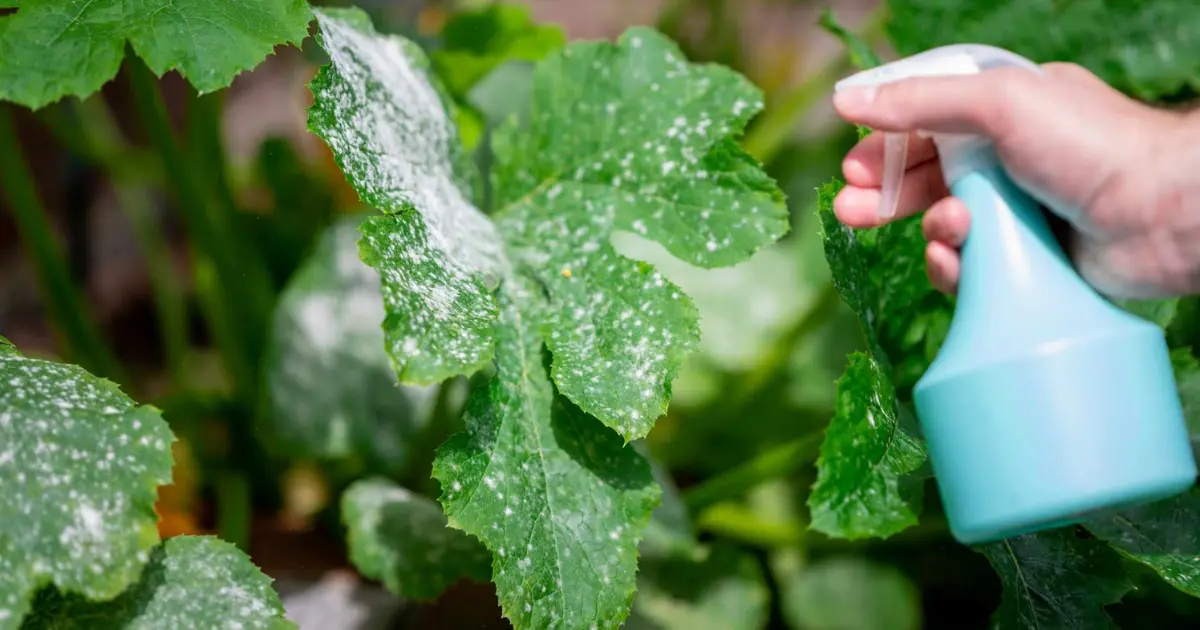
Every summer, many courgette, cucumber, pumpkin, and squash plants seem to follow the same pattern. They grow vigorously through early summer, produce an abundance of flowers and fruit, and then, almost overnight, a white, powdery coating begins spreading across the leaves.
This is powdery mildew, one of the most common fungal diseases affecting cucurbits.
Unlike many plant diseases that strike unexpectedly, powdery mildew is often predictable. In many gardens, it appears during late summer when warm days, cooler nights, aging foliage, and changing humidity create ideal conditions for the fungus.
Because of this, experienced gardeners often focus less on trying to eliminate powdery mildew completely and more on delaying its arrival for as long as possible. Every extra week of healthy leaves means more photosynthesis, more flowers, and a longer harvest season.
Understanding how powdery mildew develops—and what actually works to slow it down—can help you enjoy healthier plants without relying on unrealistic promises of “instant cures.”
What Is Powdery Mildew?
Powdery mildew is a fungal disease caused by several closely related fungi, each adapted to specific groups of plants.
On cucurbits such as:
- Courgettes
- Cucumbers
- Pumpkins
- Squash
- Melons
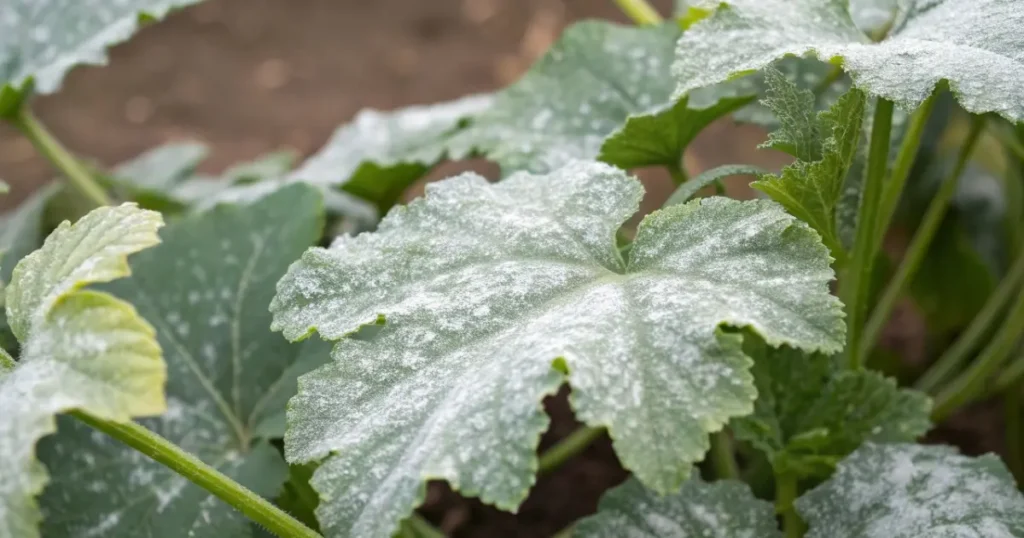
the disease usually appears as white or gray powdery patches on the upper surfaces of leaves.
Unlike many fungal diseases, powdery mildew does not require standing water on leaves to infect plants.
Instead, it thrives under conditions of:
- Warm temperatures.
- Moderate humidity.
- Good spore movement through the air.
Why It Appears Late in the Season
Powdery mildew often becomes noticeable in late summer because several favorable conditions occur at the same time.
These include:
- Older, less vigorous leaves.
- Dense plant growth.
- Reduced air circulation.
- Warm daytime temperatures.
- Cooler nights.
- Increasing numbers of fungal spores in the environment.
Even healthy plants may eventually develop infections once spore levels become sufficiently high.
How Powdery Mildew Spreads
The fungus produces microscopic spores that travel easily on:
- Wind.
- Clothing.
- Garden tools.
- Insects.
- Plant-to-plant contact.
Once spores land on a suitable leaf, they germinate and begin growing across the surface.
Unlike many fungi, powdery mildew remains mostly on the outside of the leaf while sending tiny feeding structures into plant cells.
Recognizing the Early Symptoms
Early detection allows gardeners to slow the disease before large portions of the plant become affected.
Watch for:
- Small white spots.
- Circular powdery patches.
- Pale yellow areas.
- White growth on upper leaf surfaces.
As the disease progresses:
- Spots merge together.
- Entire leaves become coated.
- Leaves yellow.
- Foliage dries and dies prematurely.
Does Powdery Mildew Kill Plants?
Usually not.
Powdery mildew rarely kills mature cucurbit plants outright.
Instead, it reduces their ability to photosynthesize.
The consequences include:
- Lower yields.
- Smaller fruits.
- Shorter harvest periods.
- Earlier leaf loss.
- Reduced plant vigor.
The fruit itself often remains perfectly edible if unaffected.
Why Delaying Infection Matters
Every healthy leaf acts as a solar panel.
The longer leaves remain green, the longer they produce energy for:
- New flowers.
- Fruit enlargement.
- Root growth.
- Overall plant health.
A plant that develops mildew in September instead of August may continue producing for several additional weeks.
For many gardeners, this extra harvest is the real goal.
Improving Air Circulation
Crowded foliage traps humid air around leaves.
Good spacing helps reduce conditions favorable to mildew.
Consider:
- Proper plant spacing.
- Vertical supports for cucumbers.
- Removing overcrowded leaves.
- Keeping weeds under control.
Better airflow also helps leaves dry more quickly after rain or irrigation.
Water the Soil, Not the Leaves
Although powdery mildew doesn’t require wet foliage to infect plants, watering practices still matter.
Aim to:
- Water early in the day.
- Direct water at the soil.
- Avoid unnecessary splashing.
- Use drip irrigation when possible.
Healthy, unstressed plants generally tolerate disease better than drought-stressed ones.
Choose Resistant Varieties
Plant breeding has produced many cucumber and squash varieties with improved resistance to powdery mildew.
Resistance does not mean complete immunity.
Instead, resistant varieties often:
- Develop symptoms later.
- Experience slower disease progression.
- Produce longer harvests.
Choosing resistant cultivars is one of the most effective long-term management strategies.
Avoid Excess Nitrogen
Heavy nitrogen fertilization encourages rapid production of soft new growth.
This dense foliage can:
- Reduce air circulation.
- Increase humidity.
- Encourage prolonged disease development.
Balanced fertilization generally produces healthier plants.
Remove Severely Infected Leaves
Removing badly affected leaves can:
- Improve airflow.
- Reduce local spore production.
- Make harvesting easier.
Avoid removing too much healthy foliage at once.
Leaves still provide energy even if only lightly infected.
Cleaning Up at Season’s End
Powdery mildew fungi can survive on infected plant debris depending on the species and local climate.
Good sanitation includes:
- Removing diseased vines.
- Cleaning supports.
- Composting only where appropriate.
- Rotating crops when practical.
Healthy garden hygiene reduces disease pressure the following season.
Do Homemade Sprays Work?
Numerous home remedies circulate online.
Common suggestions include:
- Baking soda.
- Milk sprays.
- Potassium bicarbonate.
- Neem oil.
Some have shown varying degrees of effectiveness in reducing disease severity under certain conditions, particularly when applied early and repeatedly.
However:
- None completely eliminate established infections.
- Results vary depending on weather, timing, and disease pressure.
Preventive applications are generally more successful than attempting to cure heavily infected plants.
Always test any spray on a small section of the plant first to check for leaf damage.
Weather Plays a Major Role
Some years bring very little powdery mildew.
Others see widespread infections.
Factors influencing disease development include:
- Temperature.
- Humidity.
- Plant spacing.
- Variety.
- Air movement.
- Regional spore levels.
No gardener can completely control these conditions.
Management focuses on reducing risk rather than eliminating it entirely.
Can You Still Eat the Vegetables?
Yes.
Powdery mildew affects the leaves, not the edible fruit.
Provided the vegetables themselves remain healthy and free from rot or damage, they are safe to harvest and eat after normal washing.
Practical Tips
- Plant resistant varieties whenever available.
- Space plants generously.
- Train cucumbers vertically.
- Water at soil level.
- Remove heavily infected leaves.
- Maintain balanced fertilization.
- Harvest regularly to keep plants productive.
Common Mistakes
Waiting Until Every Leaf Is White
Early intervention is more effective than reacting after severe infection.
Overcrowding Plants
Poor airflow encourages disease development.
Applying Excess Fertilizer
Too much nitrogen produces dense foliage that may favor mildew.
Expecting a Permanent Cure
Powdery mildew is best managed rather than completely eliminated.
Removing Too Many Leaves
Healthy foliage remains essential for fruit production.
Frequently Asked Questions
What causes powdery mildew?
Powdery mildew is caused by fungal pathogens that spread through airborne spores and infect susceptible plants under favorable environmental conditions.
Can powdery mildew be cured?
Once established, it cannot usually be completely eliminated. Management focuses on slowing its spread and protecting healthy new growth.
Should I remove infected leaves?
Yes, severely infected leaves can be removed to improve airflow and reduce local spore production, but avoid removing excessive healthy foliage.
Are resistant varieties worth growing?
Absolutely. Resistant cultivars often remain productive longer because symptoms develop more slowly.
Is powdery mildew harmful to people?
No. Powdery mildew affects plants and does not infect humans. Fruits from affected plants are generally safe to eat if they remain healthy.
Conclusion
Powdery mildew is so common on courgettes, cucumbers, and other cucurbits that many gardeners eventually learn to expect it rather than fear it. The objective isn’t to create a completely mildew-free garden—a goal that is often unrealistic—but to keep plants healthy and productive for as long as possible.
Simple practices such as choosing resistant varieties, improving air circulation, watering wisely, and maintaining balanced nutrition can delay the disease by valuable weeks. Those extra weeks often translate into more flowers, more fruit, and a longer harvest.
In the end, successful management is less about finding a miracle cure and more about understanding the biology of both the plant and the fungus. By focusing on prevention and delay instead of elimination, gardeners can enjoy healthier crops and far more productive growing seasons.
Internal Linking
Learn how consistent watering helps reduce plant stress during summer:
https://secretsofthegreengarden.com/heat-stress-in-plants/
Discover why self-watering planters help maintain even soil moisture:
https://secretsofthegreengarden.com/self-watering-planter-guide/
Build healthier soil to grow stronger, more resilient vegetables:
https://secretsofthegreengarden.com/why-not-leave-bare-soil-winter/
Find out when to harvest courgettes for the best flavor and continued production:
https://secretsofthegreengarden.com/when-to-harvest-courgettes/
Recommended External Sources
- Royal Horticultural Society (RHS): https://www.rhs.org.uk
- University of California Integrated Pest Management (UC IPM): https://ipm.ucanr.edu
- Cornell University Plant Disease Diagnostic Clinic: https://plantclinic.cornell.edu