
Introduction
For much of the last century, peat has been the standard ingredient in commercial potting composts. Lightweight, easy to handle, and excellent at retaining both water and air, it helped transform modern horticulture and became a staple for home gardeners and professional growers alike.
Today, however, peat is at the center of a major environmental debate.
Peat forms extremely slowly—typically over thousands of years—as partially decomposed plant material accumulates in waterlogged wetlands known as peatlands. Because it regenerates far more slowly than it is harvested, peat is considered a non-renewable resource on human timescales.
Beyond its value as a growing medium, peatlands are among the planet’s most important ecosystems. They store vast amounts of carbon, regulate water, and provide habitat for highly specialized plants and animals. When peat is extracted, these functions can be damaged or lost, prompting many gardeners to consider peat-free alternatives.
The good news is that modern peat-free composts have improved dramatically over the past decade. With the right product and slightly different watering and feeding habits, many gardeners can achieve excellent results while reducing their reliance on peat.
What Is Peat?
Peat is partially decomposed organic material that accumulates in permanently wet environments where low oxygen levels slow decomposition.
Over centuries and millennia, layers of mosses, sedges, and other wetland plants gradually build up to form peat deposits.
Unlike compost, which forms over months, peat develops incredibly slowly. In many bogs, growth averages only about 1 millimetre per year, meaning a substantial peat layer may represent thousands of years of accumulation.
Why Peat Became So Popular
For decades, peat was considered an ideal growing medium because it offers several horticultural advantages.
It is:
- Lightweight.
- Easy to transport.
- Consistent in texture.
- Excellent at holding water.
- Well aerated.
- Naturally low in weed seeds.
- Easy to blend with fertilizers and other ingredients.
These qualities made it a reliable ingredient for seed composts, container mixes, and nursery production.
The Environmental Importance of Peatlands
Peatlands cover only a small percentage of Earth’s land surface, yet they perform functions that are disproportionately important.
Healthy peatlands:
- Store enormous quantities of carbon.
- Help regulate water flow.
- Reduce downstream flooding.
- Filter water.
- Support rare wildlife.
- Preserve unique plant communities.
According to the International Union for Conservation of Nature (IUCN), peatlands store more carbon than all the world’s forests combined, despite covering only about 3% of global land area.
This makes them one of Earth’s most effective long-term carbon stores.
Why Peat Extraction Is Controversial
Harvesting peat removes material that required thousands of years to accumulate.
Extraction typically involves:
- Draining wetlands.
- Removing vegetation.
- Harvesting peat layers.
- Drying the material before processing.
These activities can:
- Release stored carbon.
- Alter natural water systems.
- Reduce biodiversity.
- Destroy habitats that recover only very slowly.
Even when restoration projects are undertaken after extraction, returning a peatland to its original ecological condition can take many decades, and full peat formation occurs over much longer timescales.
Is Peat Renewable?
Technically, peat continues to form naturally.
However, because accumulation is so slow, it is generally regarded as non-renewable for practical horticultural use.
A resource that requires thousands of years to replace cannot realistically be replenished at the rate it is harvested.
Modern Peat-Free Alternatives
Today’s peat-free composts often combine several renewable ingredients.
Common components include:
- Coconut coir.
- Composted bark.
- Green compost.
- Wood fibre.
- Composted plant material.
- Bracken.
- Sheep’s wool in some specialist mixes.
Each ingredient contributes different properties such as moisture retention, drainage, or structure.
Coconut Coir
Coir is produced from coconut husks, a by-product of coconut processing.
Its advantages include:
- Good water retention.
- Excellent aeration.
- Renewable source.
- Lightweight.
However, coir contains very few nutrients and generally requires regular fertilization during plant growth.
Because most coir is produced in countries such as Sri Lanka and India, transportation contributes to its environmental footprint.
Composted Bark
Bark improves drainage while adding structure to peat-free composts.
Properly composted bark:
- Resists compaction.
- Encourages healthy roots.
- Supports beneficial microorganisms.
Green Compost
Produced from composted garden waste, green compost recycles organic materials that might otherwise enter landfill.
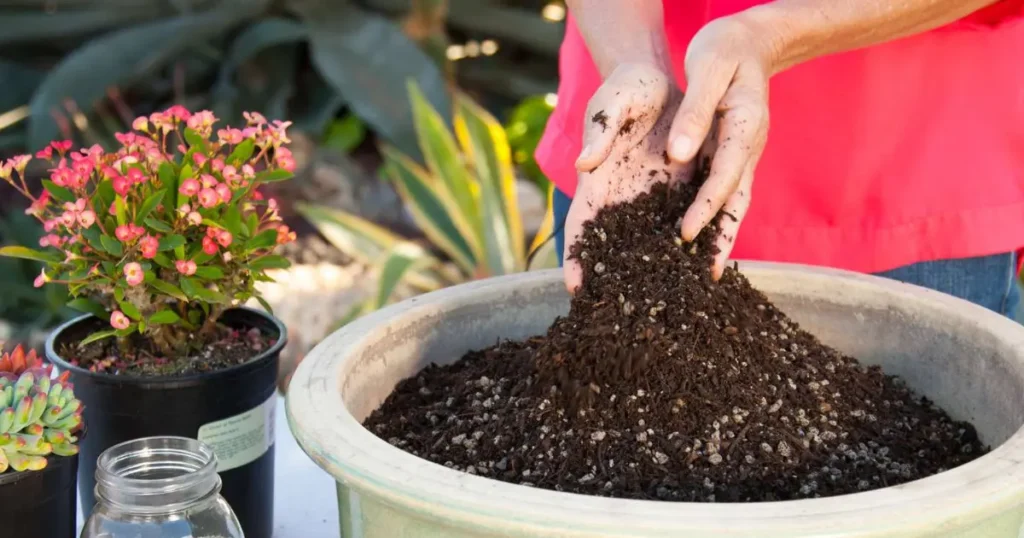
Its quality varies depending on production methods, so reputable commercial products generally provide more consistent performance.
Do Peat-Free Composts Work as Well?
Modern peat-free composts have improved significantly.
Many now perform extremely well for:
- Container gardening.
- Raised beds.
- Vegetables.
- Herbs.
- Flowers.
- Shrubs.
Some gardeners notice that peat-free mixes dry differently from traditional peat-based composts.
Learning how a particular product behaves is often more important than the ingredient itself.
Watering Differences
Peat-free compost may require slightly different watering habits.
Rather than assuming it behaves exactly like peat:
- Check moisture regularly.
- Water thoroughly when needed.
- Avoid allowing some mixes to dry out completely.
Different blends vary considerably depending on their ingredients.
Feeding Plants
Most peat-free composts contain limited nutrients beyond any added starter fertilizer.
For long-term container planting, regular feeding is usually necessary once the initial nutrients are exhausted.
Follow the recommendations provided for the specific compost being used.
Choosing the Right Product
Not every peat-free compost suits every task.
Some are designed for:
- Seed sowing.
- Houseplants.
- Containers.
- Vegetables.
- Trees and shrubs.
Reading product labels helps ensure the growing medium matches the intended use.
Supporting Biodiversity
Reducing peat use can help protect habitats that support:
- Carnivorous plants.
- Mosses.
- Dragonflies.
- Rare insects.
- Ground-nesting birds.
- Specialized wetland species.
Peatlands are among the most distinctive ecosystems in the world, and many of their species occur nowhere else.
Practical Tips
- Choose peat-free compost whenever suitable for your plants.
- Learn how your chosen compost retains water.
- Feed container plants regularly according to product recommendations.
- Store compost in a dry place.
- Match compost type to the crop being grown.
- Reuse potting compost where appropriate by refreshing it with compost and nutrients.
Common Mistakes
Assuming All Peat-Free Compost Behaves the Same
Different ingredients produce different watering characteristics.
Letting Containers Dry Completely
Some peat-free mixes become harder to rewet after prolonged drying.
Forgetting to Feed
Many peat-free composts contain relatively few nutrients beyond their initial charge.
Buying the Cheapest Mix Without Checking Ingredients
Quality varies considerably between products.
Expecting Immediate Differences
Most gardeners notice only minor changes once they adjust their watering routine.
Frequently Asked Questions
Why is peat considered non-renewable?
Although peat continues to form naturally, it accumulates so slowly that harvested deposits cannot be replaced within a human lifetime.
Is peat-free compost better for the environment?
Peat-free compost generally reduces pressure on natural peatlands, although the sustainability of individual products depends on the ingredients and how they are sourced.
Does peat-free compost need more watering?
Some blends behave differently from peat-based composts, but watering needs depend on the specific ingredients and growing conditions.
Can I grow vegetables in peat-free compost?
Yes. Many commercial peat-free composts are specifically formulated for vegetables and perform very well when watered and fed appropriately.
Is coconut coir completely sustainable?
Coir is a renewable by-product of the coconut industry, but transporting it long distances contributes to its environmental footprint.
Conclusion
Peat played a major role in modern horticulture for decades, providing gardeners with a reliable and easy-to-use growing medium. Today, however, our understanding of peatlands has expanded beyond their horticultural value. We now recognize them as globally important carbon stores, biodiversity hotspots, and vital wetland ecosystems.
For many home gardeners, switching to peat-free compost is one practical way to reduce environmental impact without sacrificing successful plant growth. Modern blends continue to improve, offering reliable performance across a wide range of gardening applications. While they may require slight adjustments to watering and feeding routines, these small changes are often outweighed by the long-term benefits of helping conserve some of the world’s most valuable natural landscapes.
Internal Linking
Learn how coconut coir compares with peat as a growing medium:
https://secretsofthegreengarden.com/coir-vs-peat-compost/
Improve soil naturally with Korean Natural Farming techniques:
https://secretsofthegreengarden.com/korean-natural-farming-fermented-plant-juice-fpj/
Find out what eggshells really do in the garden:
https://secretsofthegreengarden.com/eggshells-in-the-garden/
Build healthier soil by avoiding bare ground during winter:
https://secretsoftthegreengarden.com/why-not-leave-bare-soil-winter/
Recommended External Sources
- International Union for Conservation of Nature (IUCN): https://www.iucn.org
- Royal Horticultural Society (RHS): https://www.rhs.org.uk
- International Mire Conservation Group (IMCG): https://www.imcg.net