
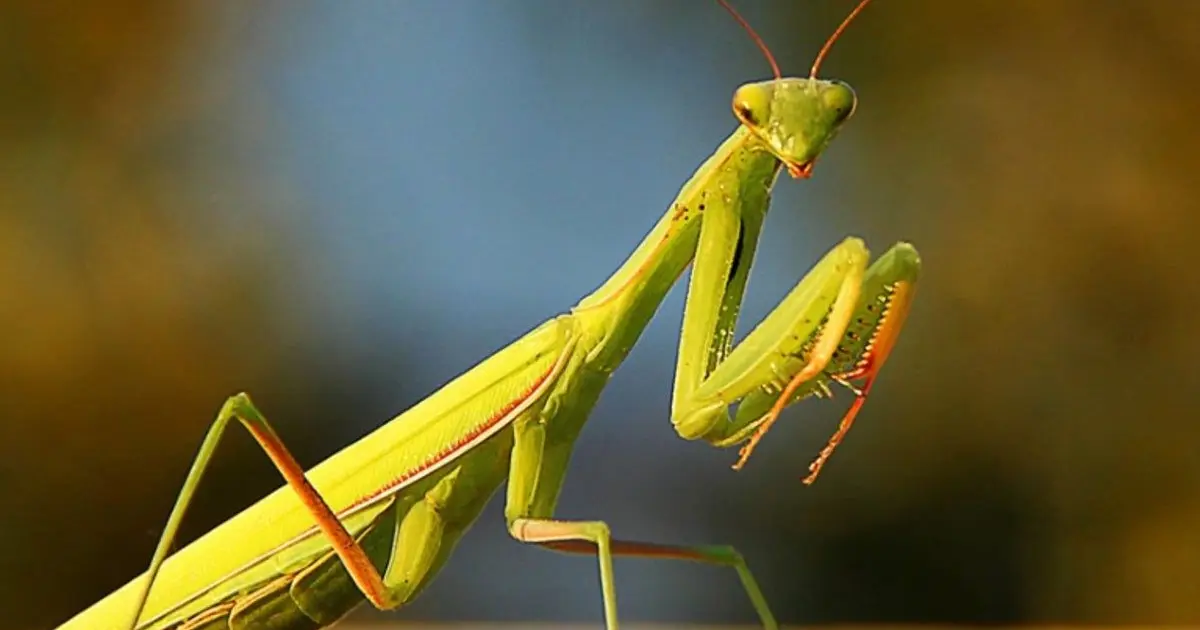
The praying mantis is one of nature’s most remarkable insect predators. Despite its calm appearance, this skilled hunter combines exceptional vision, lightning-fast reflexes, and specialized front legs to capture prey with incredible accuracy.
Unlike many insects that rely on speed or large numbers, the praying mantis depends on patience and precision. It often remains perfectly still, blending into its surroundings before striking in just a fraction of a second.
This guide explores the unique adaptations that make the praying mantis one of the most efficient hunters in the insect world.
What Is a Praying Mantis?
The praying mantis belongs to the order Mantodea, which includes more than 2,400 known species found across tropical, temperate, and subtropical regions.
These insects are recognized by their:
- Triangular head.
- Large compound eyes.
- Folded front legs that resemble praying hands.
- Long, slender body.
- Excellent camouflage.
Most species are harmless to humans and play an important role in natural ecosystems by feeding on a wide variety of insects.
Forward-Facing Eyes Provide Exceptional Vision
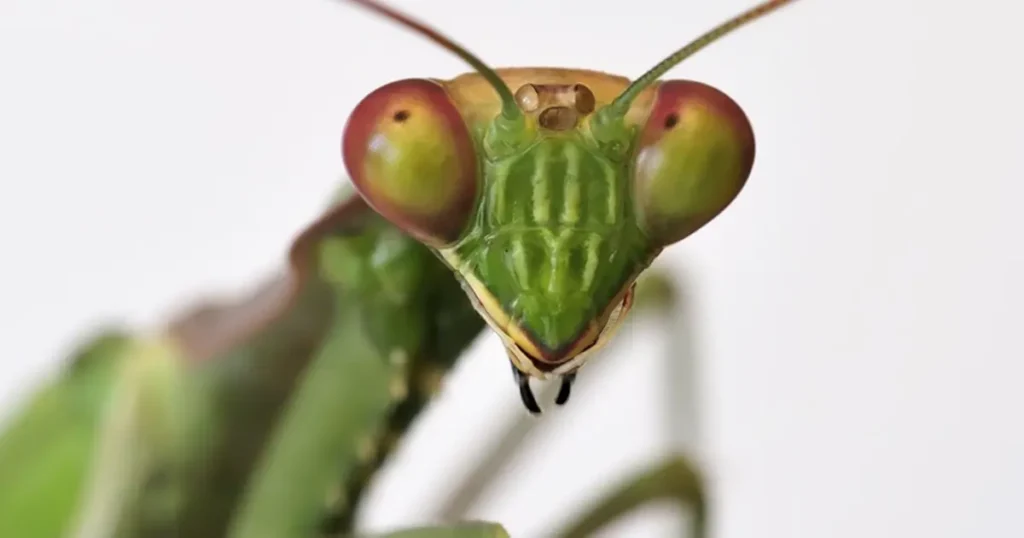
One of the praying mantis’ greatest advantages is its eyesight.
Unlike most insects, mantises have forward-facing compound eyes, giving them binocular vision that allows them to judge distance with remarkable accuracy.
They also possess a feature called a pseudopupil, a dark spot that appears to follow the observer. This optical effect helps indicate where the mantis is looking and reflects the alignment of its compound eyes.
Accurate depth perception is essential because every hunting strike must reach the target with precision.
Lightning-Fast Hunting Strikes
The praying mantis is famous for its incredibly fast attack.
When prey comes within range, it extends its powerful front legs in approximately 30 to 70 milliseconds, making it one of the fastest predatory movements among insects.
Its specialized forelegs are equipped with rows of sharp spines that grip prey securely and reduce the chance of escape.
Once captured, the prey is held firmly while the mantis begins feeding.
A Head That Rotates Up to 180 Degrees
Few insects can move their heads independently, but the praying mantis is a notable exception.
It can rotate its head up to 180 degrees, allowing it to observe its surroundings without moving the rest of its body.
This unusual flexibility helps the mantis:
- Detect approaching prey.
- Watch for predators.
- Remain hidden while hunting.
- Track moving insects with remarkable precision.
Keeping the body motionless while scanning the environment is one of the keys to its successful ambush strategy.
Excellent Camouflage
Praying mantises are masters of disguise.
Many species blend almost perfectly into their environment using colors and body shapes that resemble:
- Green leaves.
- Dry foliage.
- Twigs.
- Bark.
- Flowers.
Some tropical species even mimic blossoms, allowing them to ambush pollinating insects that land nearby.
This camouflage helps mantises avoid predators while remaining nearly invisible to their prey.
What Do Praying Mantises Eat?
Praying mantises are carnivorous predators that feed on a wide variety of animals.
Their diet commonly includes:
- Flies.
- Moths.
- Crickets.
- Grasshoppers.
- Beetles.
- Caterpillars.
- Bees.
- Wasps.
- Small spiders.
Large mantis species have occasionally been observed capturing small vertebrates such as frogs, lizards, or hummingbirds, although these events are uncommon.
Are Praying Mantises Beneficial in the Garden?
Many gardeners appreciate praying mantises because they consume numerous insects that feed on plants.
They may help reduce populations of certain garden pests, including caterpillars and grasshoppers.
However, mantises are generalist predators, meaning they do not distinguish between harmful and beneficial insects. They may also capture:
- Butterflies.
- Bees.
- Ladybugs.
- Other pollinators.
For this reason, they are best viewed as one part of a healthy, balanced garden ecosystem rather than a targeted pest-control solution.
Life Cycle of a Praying Mantis
The praying mantis undergoes incomplete metamorphosis, developing through three stages:
- Egg.
- Nymph.
- Adult.
Females lay eggs inside a protective foam structure called an ootheca, which hardens and shields the developing eggs through winter.
When temperatures warm in spring, dozens or even hundreds of tiny nymphs may emerge, looking like miniature versions of the adults.
As they grow, they molt several times before reaching maturity.
Interesting Facts About Praying Mantises
- More than 2,400 species have been identified worldwide.
- They rely primarily on ambush hunting rather than chasing prey.
- Their front legs are specially adapted for grasping insects.
- Many species depend on camouflage to remain undetected.
- They are among the few insects capable of rotating the head up to 180 degrees.
Frequently Asked Questions
Are praying mantises dangerous to humans?
No. Praying mantises are generally harmless to people. Although they may pinch if handled, they are not venomous and do not pose a significant risk.
Why do praying mantises sway back and forth?
The gentle swaying movement helps them imitate leaves moving in the wind while also improving their ability to judge distance before striking.
Can a praying mantis help control garden pests?
Yes. Mantises consume many insects found in gardens, but because they are generalist predators, they may also feed on beneficial species.
How fast is a praying mantis strike?
A praying mantis can extend its front legs in approximately 30 to 70 milliseconds, allowing it to capture prey with exceptional speed.
Where do praying mantises lay their eggs?
Females lay eggs inside a protective egg case called an ootheca, which is usually attached to branches, stems, fences, or other sturdy surfaces.
Final Thoughts
The praying mantis is one of nature’s most fascinating insect predators. Its binocular vision, rapid strike, rotating head, and outstanding camouflage allow it to hunt with remarkable precision while remaining almost invisible in its environment.
Beyond its impressive hunting skills, the praying mantis plays an important role in many ecosystems by helping maintain natural insect populations. Observing one in the garden offers a fascinating glimpse into the remarkable adaptations that have made this insect one of the world’s most effective ambush hunters.
Internal Linking Suggestions
Consider linking this article to related content on secretsofthegreengarden.com, such as:
- Beneficial Garden Insects Every Gardener Should Know
- Why Every Firefly Species Has Its Own Flash Code
- How Pollinators Support a Healthy Garden
Recommended External Sources
For additional scientific information, consult:
- Smithsonian Institution
- National Geographic Society
- University of Kentucky Entomology
Primary Keyword: praying mantis
Related Keywords: praying mantis facts, mantis hunting, beneficial garden insects, insect predators, praying mantis vision, camouflage insects, mantis life cycle, insect adaptations.
Meta Description: Discover why the praying mantis is one of the most precise hunters in the insect world, from its binocular vision and lightning-fast strike to its remarkable camouflage and unique hunting adaptations.