
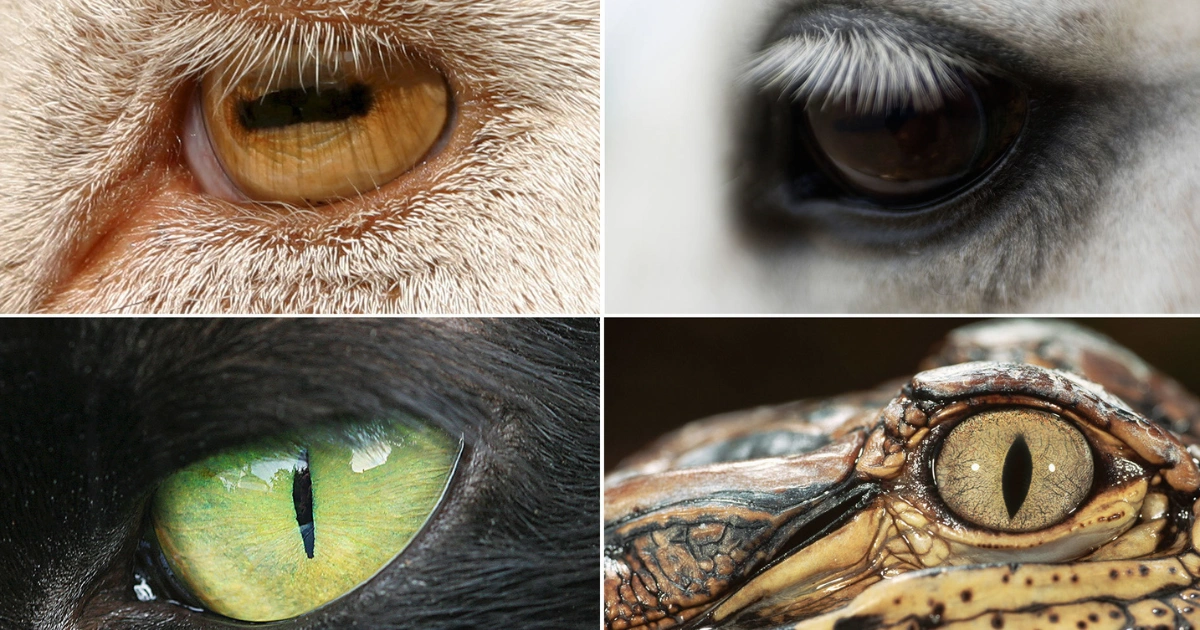
Animal eyes have evolved in remarkable ways to suit survival strategies, with pupil shape being one of the most important adaptations. These differences are closely tied to whether a species is primarily prey or a predator. Understanding these adaptations provides insight into animal behavior, hunting strategies, and ecological roles.
Prey Animals: Horizontal Pupils for a Wider View
Prey species are at constant risk of being hunted, so their vision has evolved to maximize awareness. Many prey animals, such as deer, sheep, and goats, possess horizontal pupils, which allow for a panoramic view of their surroundings. This adaptation helps them:
- Detect predators approaching from various angles
- Monitor movement across wide fields of vision
- Maintain balance and orientation while grazing
Horizontal pupils stretch across the eye, enabling prey to see nearly 360 degrees without moving their heads. This provides a survival advantage in open habitats like grasslands and savannas.
Predator Animals: Vertical Pupils for Precision Focus
Predators, on the other hand, require precise targeting to capture prey. Many predators, including cats, snakes, and crocodiles, have vertical pupils. This adaptation serves several purposes:
- Enhanced depth perception for accurate hunting
- Better control of light intake in bright or low-light conditions
- Improved ability to judge distance and strike accurately
Vertical pupils are particularly advantageous for ambush predators that hunt from concealment. The elongated shape allows the eye to focus sharply on prey while minimizing peripheral distractions.
Comparing Pupil Shapes
| Feature | Prey Animals | Predator Animals |
|---|---|---|
| Pupil Shape | Horizontal | Vertical |
| Primary Advantage | Wider panoramic view for predator detection | Precise focus for hunting |
| Example Species | Sheep, Deer, Horses | Cats, Snakes, Crocodiles |
These differences demonstrate how natural selection shapes eye anatomy based on survival needs.
Evolutionary Insights
The contrast between horizontal and vertical pupils reflects the evolutionary pressures of predator-prey dynamics. Prey species prioritize vigilance and awareness, while predators optimize for stealth and accuracy. Over thousands of years, these adaptations have enabled species to survive and thrive in their ecological niches.
Observing Pupils in Wildlife
Understanding pupil orientation can help wildlife enthusiasts and researchers:
- Identify animal behavior patterns
- Predict feeding and hunting strategies
- Assess habitat preferences
For example, observing a horizontal pupil in a grazing mammal can indicate vigilance behavior, while vertical pupils in a cat suggest readiness to hunt.
Frequently Asked Questions
Q1: Can humans see the difference in pupil shape in wild animals?
Yes, with close observation. Horizontal pupils are elongated side-to-side, while vertical pupils appear slit-like from top to bottom.
Q2: Do all predators have vertical pupils?
Not all. Some predators, such as wolves and eagles, have round pupils but rely on binocular vision for depth perception.
Q3: Why are horizontal pupils less common in predators?
Horizontal pupils reduce depth perception needed for capturing prey. Predators require focused binocular vision to hunt effectively.
Q4: Do pupil shapes affect night vision?
Yes. Vertical pupils can open wide to capture more light in low-light conditions, enhancing nocturnal hunting.
Q5: Can pupil shape change with age or environment?
While the basic shape is genetic, pupil size can adjust with lighting conditions, but the orientation remains consistent.
Recommended External Resources
- National Geographic: Animal Eyes and Vision
- Smithsonian Wildlife Vision Guide
- BBC Earth: Predator and Prey Adaptations
Conclusion
Pupil orientation is a fascinating adaptation that reflects the survival strategies of animals. Horizontal pupils allow prey to remain vigilant and detect danger, while vertical pupils provide predators with the precision needed to capture prey. By studying these differences, we gain insight into the evolutionary pressures that shape animal behavior and ecology.