
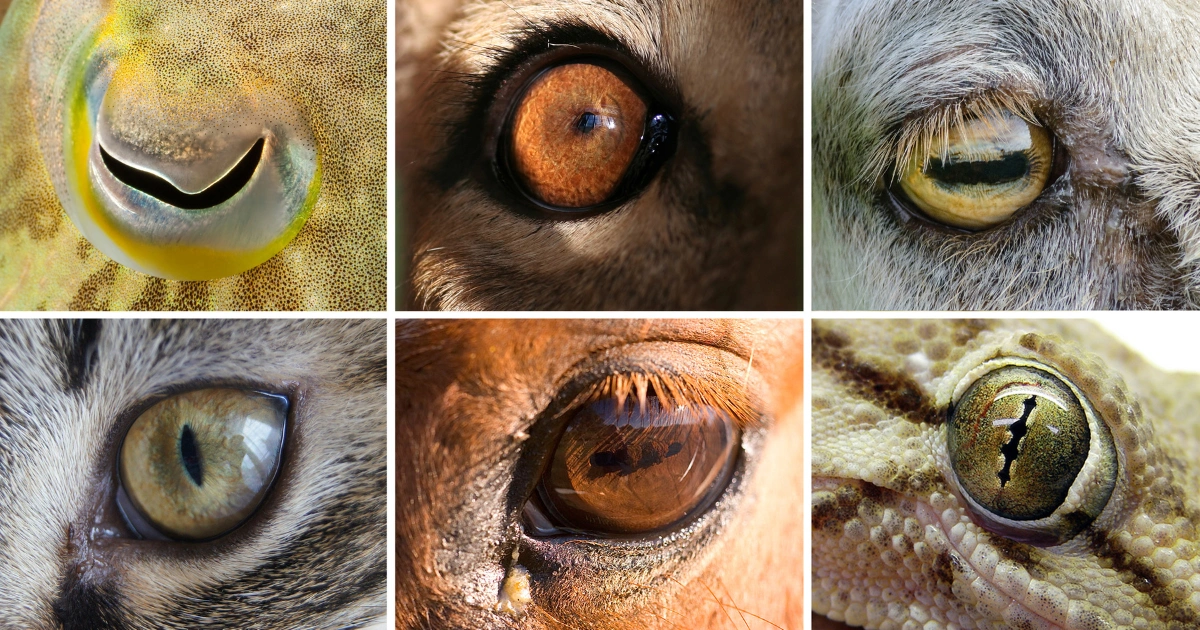
If you look closely at animal eyes, you will notice a fascinating pattern. Many grazing animals such as sheep and deer have horizontal pupils, while predators like cats and snakes often have vertical slit pupils. This difference is not random. It is the result of millions of years of evolution shaping vision for survival.
In this article, you will discover why horizontal and vertical pupils exist, how they work, and what they reveal about animal behavior and ecology.
Why Pupil Shape Matters in the Animal Kingdom
The pupil controls how much light enters the eye, but its shape also affects how an animal sees the world. Different pupil shapes improve specific visual abilities, such as detecting motion, judging distance, or scanning wide areas.
The distinction between prey vs predator eyes is one of the clearest examples of evolutionary adaptation.
Horizontal Pupils in Prey Animals
What Are Horizontal Pupils?
Horizontal pupils appear as elongated slits stretching sideways across the eye. They are commonly found in animals that are frequently hunted by predators.
Examples include:
- Sheep
- Goats
- Deer
- Horses
Advantages of Horizontal Pupils
Horizontal pupils provide several survival benefits.
Wide Field of Vision
These pupils allow animals to see almost all around them, often close to 360 degrees. This helps detect predators approaching from different directions.
Improved Ground Awareness
Horizontal pupils enhance the ability to see the ground clearly while moving, which is essential for escaping quickly.
Stability While Grazing
Even when lowering their heads to eat, many prey animals can keep their pupils aligned with the horizon. This maintains a consistent view of their surroundings.
Evolutionary Purpose
For prey species, survival depends on early detection and rapid escape. Horizontal pupils are perfectly adapted for scanning the environment and spotting danger from afar.
Vertical Pupils in Predator Animals
What Are Vertical Pupils?
Vertical pupils are narrow, slit-like openings that expand and contract vertically. They are most commonly found in ambush predators.
Examples include:
- Domestic cats
- Snakes
- Foxes (some species)
Advantages of Vertical Pupils
Vertical pupils are designed for hunting efficiency.
Precise Depth Perception
These pupils improve the ability to judge distance accurately, which is critical when striking prey.
Better Focus in Varying Light
Vertical pupils can close tightly in bright light and open widely in darkness, allowing predators to hunt both day and night.
Enhanced Target Tracking
They help predators focus sharply on moving prey, increasing hunting success.
Why Not All Predators Have Vertical Pupils?
Larger predators like lions and wolves have round pupils instead. This is because they rely more on speed and endurance rather than ambush tactics.
Vertical pupils are most common in smaller predators that hunt close to the ground.
Horizontal vs Vertical Pupils: Key Differences
Here is a clear comparison:
- Horizontal pupils
- Found in prey animals
- Provide wide panoramic vision
- Help detect predators early
- Vertical pupils
- Found in ambush predators
- Enhance depth perception
- Improve focus during hunting
Each design reflects a different survival strategy.
The Role of Eye Position
Pupil shape works together with eye placement.
- Prey animals often have eyes on the sides of their heads, increasing their field of view
- Predators typically have forward-facing eyes, improving binocular vision and depth perception
This combination further enhances their ability to survive in their respective roles.
Are There Exceptions?
Yes, not all animals fit perfectly into this pattern.
- Some predators have round pupils (e.g., lions, wolves)
- Some prey animals may have slightly oval pupils
However, the general trend still holds true across most species.
What This Means for Understanding Animal Behavior
By observing an animal’s eyes, you can often infer its role in the ecosystem.
- Wide, horizontal pupils suggest vigilance and defense
- Narrow, vertical pupils suggest precision and attack
This insight is useful not only for wildlife enthusiasts but also for understanding ecological balance.
Internal Linking Suggestions
To strengthen your content structure on secretsofthegreengarden.com, consider linking to:
- Understanding Predator-Prey Relationships in Nature
- How Wildlife Supports a Balanced Ecosystem
- Natural Ways to Encourage Beneficial Animals in Your Garden
These topics connect animal behavior with ecological awareness.
External Resources for Scientific Insight
For reliable, research-based information, explore:
- University of California – Animal Vision Studies
https://www.universityofcalifornia.edu - National Geographic – Animal Adaptations
https://www.nationalgeographic.com - Smithsonian National Museum of Natural History
https://naturalhistory.si.edu
These sources provide credible explanations of animal vision and evolution.
FAQ: Animal Pupil Shapes
Why do prey animals have horizontal pupils?
They allow a wider field of view, helping animals detect predators from multiple directions.
Why do cats have vertical pupils?
Vertical pupils improve depth perception and allow precise control of light, aiding in hunting.
Do all predators have vertical pupils?
No, larger predators often have round pupils because they rely on different hunting strategies.
Can pupil shape change over time?
No, pupil shape is genetically determined and evolves over generations.
What is the advantage of slit pupils?
Slit pupils provide better control over light entry and improve visual accuracy in different lighting conditions.
Conclusion
The difference between horizontal vs vertical pupils is a powerful example of how evolution shapes animals for survival. Prey animals are built to see danger coming, while predators are designed to strike with precision.
By understanding these adaptations, you gain a deeper appreciation for the complexity of nature and the delicate balance between hunter and hunted.