
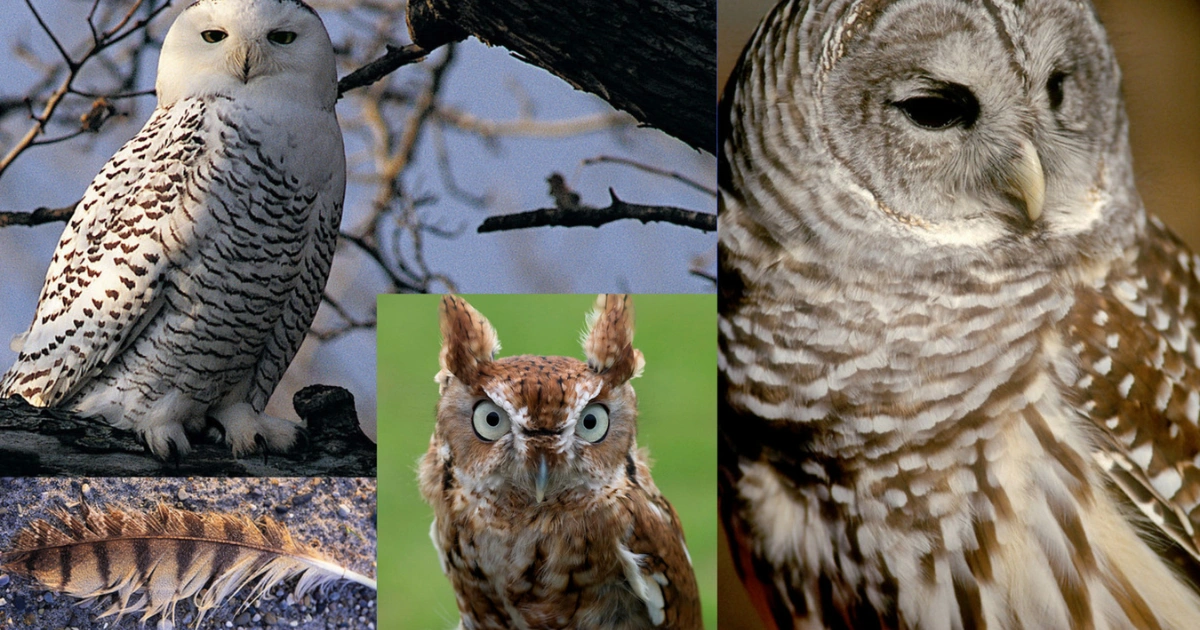
Owls are among the most fascinating birds of prey, admired for their silent flight, sharp vision, and mysterious nocturnal behavior. However, not all owls are the same. They are divided into two main groups: true owls and barn owls, each with distinct physical features, behaviors, and ecological roles.
In this comprehensive guide, you will discover the key differences between these two groups, explore notable species, and learn how to identify them in the wild.
Primary Keyword: types of owls
Related keywords: true owls, barn owls, owl species comparison, nocturnal birds, owl identification, owl families, bird of prey owls, owl characteristics
Understanding Owl Classification
Owls belong to the order Strigiformes, which is divided into two families:
- Strigidae (true owls)
- Tytonidae (barn owls)
Although they share similar hunting behaviors, their appearance and anatomy differ in important ways.
What Are True Owls?
True owls make up the majority of owl species worldwide. They are incredibly diverse and can be found in forests, deserts, tundras, and even urban environments.
Key Characteristics of True Owls
- Rounded facial discs
- Stocky bodies and strong talons
- Often have ear tufts (though not actual ears)
- Wide variety of sizes and colors
Common True Owl Species
Great Horned Owl
A powerful and adaptable predator known for its distinctive ear tufts and deep hooting call.
Snowy Owl
Recognizable by its white plumage, this owl thrives in cold, Arctic regions.
Eurasian Eagle Owl
One of the largest owl species, with impressive wingspan and strength.
Barred Owl
Often found in North American forests, known for its “who cooks for you” call.
Tawny Owl
Common in Europe, this owl prefers woodland habitats.
Long-eared Owl
Identified by its tall ear tufts and slender body.
Northern Hawk Owl
A daytime hunter with behavior similar to hawks.
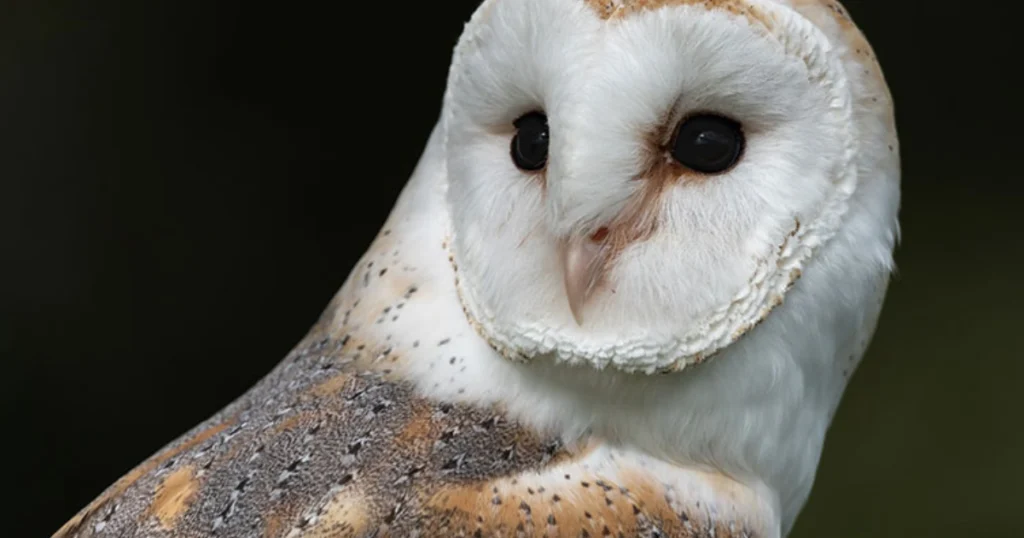
What Are Barn Owls?
Barn owls belong to a smaller, more specialized family. They are easily distinguished by their unique facial shape and graceful flight.
Key Characteristics of Barn Owls
- Heart-shaped facial disc
- Long legs and lighter body structure
- Exceptional hearing abilities
- Silent, gliding flight
Notable Barn Owl Species
Barn Owl (Tyto alba)
The most widespread barn owl species, found on nearly every continent.
Lesser Masked Owl
A pale-colored owl native to parts of Australia and nearby regions.
African Grass Owl
Adapted to grassland habitats in Africa.
Eastern Grass Owl
Similar to its African relative but found in Asia and Australia.
Greater Sooty Owl
A darker species with a strong presence in dense forests.
Oriental Bay Owl
A lesser-known species with striking facial features.
Key Differences Between True Owls and Barn Owls
Understanding the differences between these two groups can help you identify them quickly.
Facial Structure
- True owls: round faces
- Barn owls: heart-shaped faces
Body Shape
- True owls: compact and robust
- Barn owls: slender and elongated
Behavior
- True owls: more varied hunting styles
- Barn owls: rely heavily on hearing to locate prey
Habitat
- True owls: found in diverse environments
- Barn owls: often prefer open landscapes like fields and grasslands
Why Owl Classification Matters
Understanding the types of owls is not just about identification. It also helps us appreciate their ecological importance.
Owls play a crucial role in controlling rodent populations, making them valuable for agriculture and natural ecosystems. Their presence is often a sign of a healthy environment.
Scientific Insights on Owl Adaptations
Studies from organizations like the Cornell Lab of Ornithology and the British Trust for Ornithology highlight how owls have evolved specialized features such as:
- Asymmetrical ears for precise sound detection
- Soft feathers that enable silent flight
- Large eyes adapted for low-light vision
For deeper research, consult these trusted sources:
How to Identify Owls in the Wild
If you encounter an owl or observe one in nature, use these tips:
- Look at the face shape first
- Notice ear tufts or lack of them
- Observe habitat and behavior
- Listen to vocalizations
These clues can help distinguish between species and families.
Internal Linking Suggestions
To strengthen SEO and user engagement on secretsofthegreengarden.com, consider linking to:
- “How Birds Help Control Pests in Your Garden”
- “Best Ways to Attract Wildlife to Your Backyard”
- “Creating a Natural Habitat for Birds at Home”
FAQ About Types of Owls
What is the difference between true owls and barn owls?
True owls have round faces and are more diverse, while barn owls have heart-shaped faces and rely heavily on hearing.
How many types of owls are there?
There are over 200 owl species worldwide, divided mainly between the two families.
Are barn owls rarer than true owls?
Barn owls are less diverse but not necessarily rare. Some species are widespread, while others are more localized.
Which owl is the most powerful?
The Eurasian eagle owl is considered one of the strongest due to its size and hunting ability.
Can owls live in urban areas?
Yes, some species, especially true owls, can adapt to cities if food and shelter are available.
Final Thoughts
Learning about the different types of owls reveals just how diverse and specialized these birds are. From the powerful true owls to the elegant barn owls, each group has evolved unique traits that make them highly effective predators.
By understanding their differences, habitats, and roles in nature, you can better appreciate these remarkable birds and their importance in maintaining ecological balance.
Awesome content! My friends would really enjoy reading this. I’ve shared this on my social media already. Speaking of which, telegram has helped me a lot in this area.
Backbiome is an advanced daily wellness supplement formulated to help support spinal comfort, reduce feelings of built-up tension, and promote freer, smoother movement throughout backbiome everyday life.
Boostaro is a modern men’s wellness boostaro formula created to support daily vitality, stamina, and confidence through a practical, natural routine.