
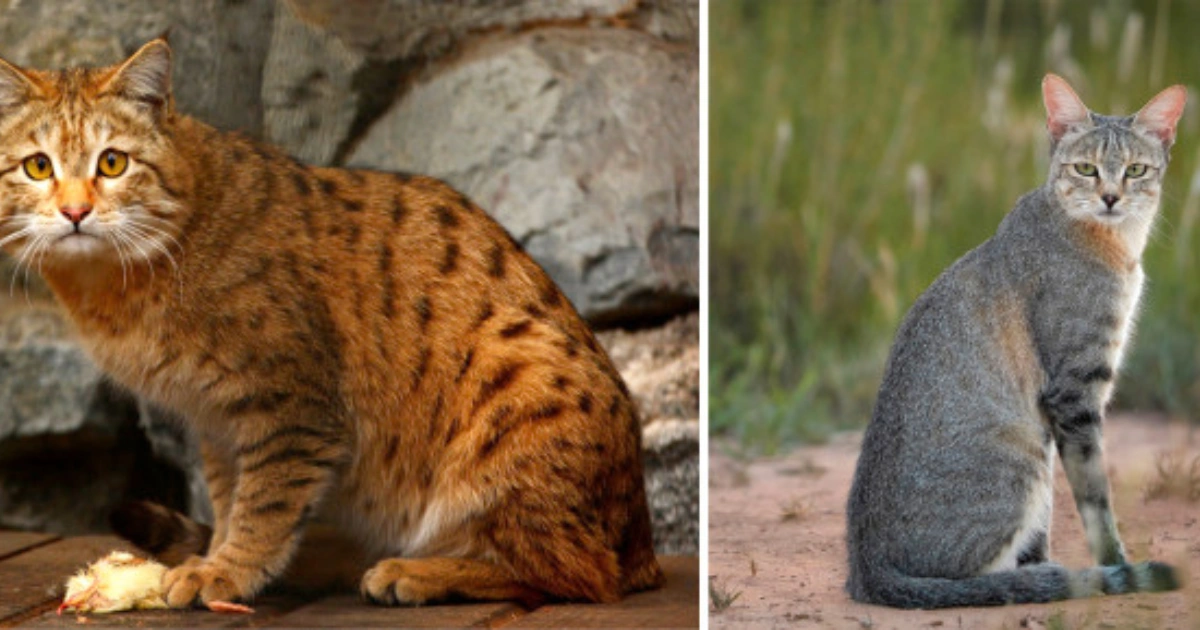
Wildcats are the hidden ancestors behind one of the most familiar animals in the world—the domestic cat. While house cats may seem far removed from their wild relatives, they share a deep evolutionary connection with a diverse group of small wild felines spread across Africa, Europe, and Asia.
In this article, we explore the wildcat lineage, the different species and subspecies, and how they are connected to modern domestic cats.
Primary Keyword: wildcat lineage
Related keywords: wildcat species, African wildcat, domestic cat origin, jungle cat, sand cat, small wild cats, felis species, cat evolution
What Is the Wildcat Lineage?
The term wildcat lineage refers to a group of closely related feline species within the genus Felis. These cats share common ancestry and similar physical traits, such as slender bodies, sharp hunting instincts, and adaptability to diverse environments.
This lineage includes both truly wild species and the ancestors of domestic cats, making it one of the most important branches in feline evolution.
The Origin of Domestic Cats
Modern domestic cats are believed to descend primarily from the African wildcat (Felis lybica). Thousands of years ago, early humans and wildcats formed a mutual relationship: cats controlled rodent populations, while humans provided food sources.
Over time, this relationship led to the domestication of cats without significant changes in their physical structure.
Key Insight
Unlike dogs, which were heavily bred for specific traits, domestic cats remain genetically very close to their wild ancestors.
Major Wildcats in the Lineage
African Wildcat: The True Ancestor
The African wildcat is considered the closest ancestor of domestic cats. It is still found across parts of Africa and the Middle East.
Characteristics
- Sandy or gray coat with faint stripes
- Highly adaptable to desert and savanna environments
- Solitary and territorial behavior
European and Caucasian Wildcats
These wildcats inhabit forests and mountainous regions of Europe and Western Asia.
Features
- Thicker fur adapted to colder climates
- Broader heads and bushy tails
- More elusive and less tolerant of human presence
Asian Wildcats
Asian wildcats include several subspecies adapted to diverse environments.
Examples
- Asian wildcat
- South and North African variants (closely related forms)
They typically live in arid or semi-arid regions and have lighter coats for camouflage.
Jungle Cats: Agile Hunters of Wetlands and Grasslands
Jungle cats (Felis chaus) are part of the wildcat lineage but differ slightly in appearance and behavior.
Key Traits
- Longer legs compared to other wildcats
- Prefer wetlands, grasslands, and riverbanks
- Active hunters of birds and small mammals
Regional Variants
- Indochinese jungle cat
- Indian jungle cat
- Western jungle cat
These regional forms reflect adaptation to different climates and prey availability.
Specialized Wildcats: Unique Adaptations
African Sand Cat
The sand cat is perfectly adapted to desert life.
Adaptations
- Thick fur on paws to walk on hot sand
- Excellent night vision
- Ability to survive with minimal water
Black-Footed Cat
One of the smallest wild cats, the black-footed cat is known for its remarkable hunting efficiency.
Notable Facts
- Extremely active hunter
- High success rate when catching prey
- Native to southern Africa
Chinese Mountain Cat
This rare and lesser-known species inhabits high-altitude regions.
Characteristics
- Dense fur for cold climates
- Limited distribution
- Still not widely studied
How Wildcats Differ from Domestic Cats
Although domestic cats share ancestry with wildcats, several differences remain:
- Wildcats are generally more territorial and less social
- Domestic cats have adapted to human environments
- Wildcats rely entirely on hunting for survival
Despite these differences, their physical similarities highlight how recent domestication is in evolutionary terms.
Scientific Perspective on Cat Evolution
Research from institutions like the Smithsonian Institution and National Geographic Society supports the idea that all modern domestic cats trace back to a small population of African wildcats.
Genetic studies show minimal divergence between wild and domestic cats, reinforcing their close evolutionary relationship.
For further reading, consult trusted sources such as:
Conservation and Threats to Wildcats
Many wildcat species face growing threats due to human activity.
Main Challenges
- Habitat destruction
- Hybridization with domestic cats
- Illegal hunting
Why Conservation Matters
Protecting wildcats helps preserve biodiversity and maintains ecological balance, as these predators control rodent populations and support healthy ecosystems.
Internal Linking Suggestions
To improve engagement and SEO on secretsofthegreengarden.com, consider linking to:
- “How Animals Contribute to Natural Pest Control in Gardens”
- “Creating a Wildlife-Friendly Garden Environment”
- “Understanding Biodiversity in Your Backyard”
FAQ About Wildcat Lineage
What is the ancestor of domestic cats?
The African wildcat is widely recognized as the primary ancestor of modern domestic cats.
Are wildcats dangerous to humans?
Most wildcats avoid humans and pose little threat unless provoked.
Can wildcats be domesticated?
Wildcats are not suitable as pets. They retain strong instincts and require natural habitats.
What is the smallest wildcat species?
The black-footed cat is one of the smallest and most efficient predators among wildcats.
Do wildcats and domestic cats interbreed?
Yes, interbreeding can occur, which can threaten the genetic purity of wild populations.
Final Thoughts
The wildcat lineage offers a fascinating glimpse into the origins of one of humanity’s closest animal companions. From the deserts of Africa to the forests of Europe and Asia, these small but powerful predators showcase remarkable adaptability and resilience.
Understanding their evolution not only deepens appreciation for domestic cats but also highlights the importance of conserving their wild relatives for future generations.