
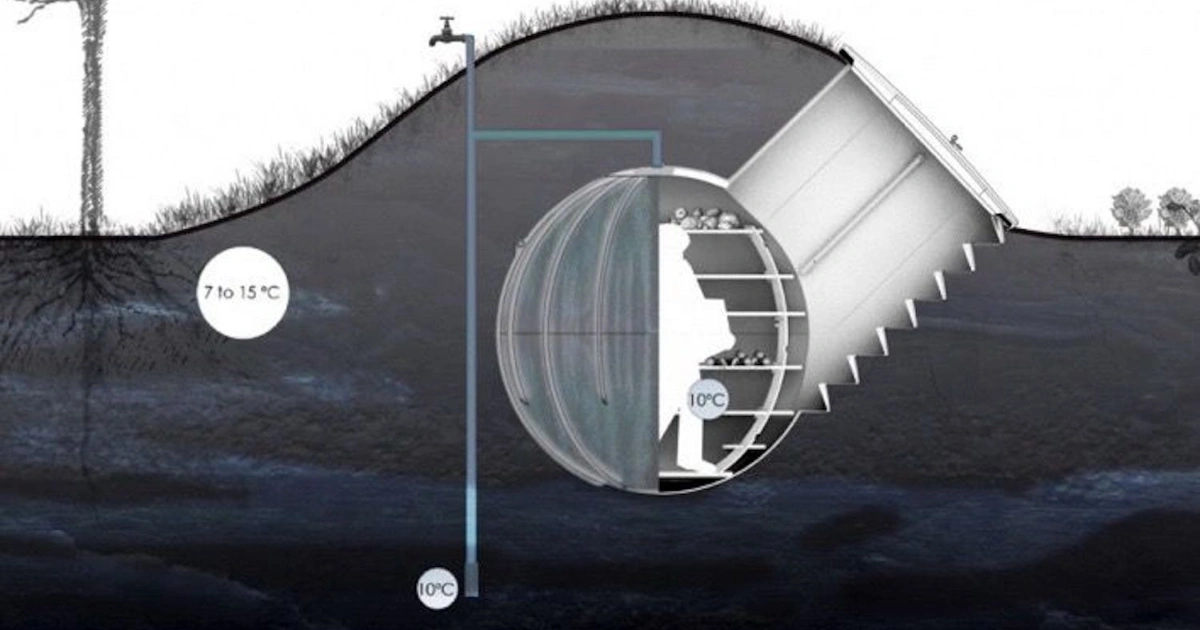
Long before refrigerators became common, people relied on the natural properties of the earth to preserve food. One of the most effective methods was the underground root cellar, a storage space built below ground that uses stable soil temperatures and controlled airflow to keep food fresh for months. Today, this traditional solution is gaining renewed interest among gardeners, homesteaders, and sustainability-minded households.
An underground root cellar with proper ventilation offers a reliable, low-energy way to store harvested produce while reducing waste and dependence on electricity.
What Is an Underground Root Cellar?
An underground root cellar is a below-ground storage space designed to maintain cool temperatures, high humidity control, and darkness. These conditions slow down spoilage and prevent premature sprouting or decay.
Unlike modern refrigeration, a root cellar relies entirely on natural insulation from the surrounding soil and a well-designed ventilation system. When built correctly, it can keep food fresh throughout the year, even in regions with extreme seasonal temperatures.
Why Ventilation Is Essential in a Root Cellar
Ventilation is the key element that separates an effective underground root cellar from a damp, mold-prone space. Without proper airflow, moisture accumulates, temperatures become unstable, and stored food can rot quickly.
A good ventilation system allows fresh air to enter while warm, humid air exits. This continuous exchange helps regulate temperature, balance humidity, and prevent mold growth.
How Natural Airflow Works Underground
The ventilation system of an underground root cellar typically uses two air pipes placed at different heights.
- The lower pipe brings in cool outside air
- The upper pipe allows warmer air to escape
Cold air is heavier, so it naturally flows into the cellar through the lower intake. As the air inside warms slightly, it rises and exits through the upper exhaust pipe. This creates a passive airflow cycle without the need for fans or electricity.
Ideal Placement of Ventilation Pipes
Correct placement of ventilation pipes is critical for effective airflow.
The intake pipe should:
- Enter near ground level inside the cellar
- Extend outside and, if possible, pass through soil before reaching open air
- Be made of durable material such as metal or rigid PVC
The exhaust pipe should:
- Be installed near the ceiling
- Extend vertically upward to allow warm air to rise naturally
- Remain unobstructed for consistent airflow
Some builders recommend routing the intake pipe through the soil before it enters the cellar, allowing the air to cool further before reaching stored food.
Temperature Stability Through Earth Insulation
One of the main advantages of an underground root cellar is the earth’s ability to maintain a relatively constant temperature. Below the frost line, soil temperatures remain stable year-round.
Most well-built cellars maintain internal temperatures between 2°C and 10°C, which is ideal for storing root vegetables, fruits, and preserved foods. Thick stone, concrete, or earth-packed walls help buffer against sudden temperature changes outside.
Managing Humidity Levels Naturally
Humidity plays a major role in food preservation. Too much moisture encourages mold, while too little causes vegetables to dry out and shrivel.
Ventilation helps regulate humidity by removing excess moisture. Additional methods include:
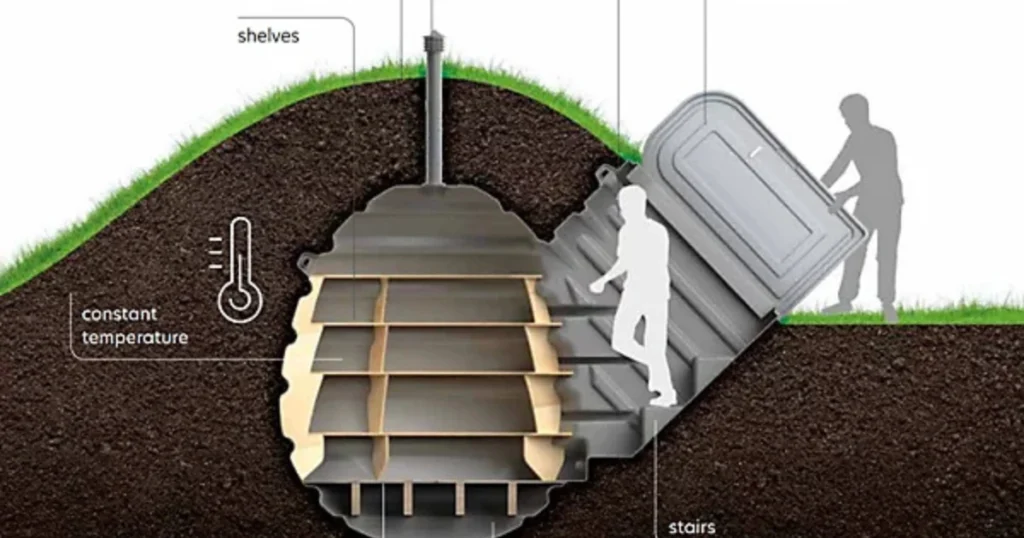
- Wooden shelves that absorb and release moisture gradually
- Gravel floors to improve drainage
- Avoiding direct contact between food and cellar walls
Maintaining balanced humidity extends the storage life of produce significantly.
Best Foods for Underground Root Cellar Storage
Not all foods store equally well in a root cellar. The most suitable items are those that prefer cool, dark, and slightly humid conditions.
Commonly stored foods include:
- Potatoes
- Carrots
- Onions
- Beets
- Turnips
- Pumpkins and squash
- Apples
- Preserved foods in glass jars
Each food type benefits from specific placement and airflow, so organizing storage carefully improves results.
Internal Organization for Better Air Circulation
Proper internal layout is just as important as ventilation pipes.
Effective organization includes:
- Wooden shelves that allow air to circulate
- Storage boxes that keep produce off the floor
- Separation of fruits and vegetables that release ethylene gas
- Clear spacing between containers
Good airflow inside the cellar prevents localized moisture buildup and extends food freshness.
Structural Design for Long-Term Performance
The structure of an underground root cellar influences its effectiveness and durability.
Common design elements include:
- Stone or concrete walls for thermal mass
- An arched ceiling for strength and airflow efficiency
- Earth-covered roofing for insulation
- A tightly sealed door to prevent warm air intrusion
These features work together to maintain stable internal conditions with minimal maintenance.
Reducing Food Waste Through Immediate Storage
One of the greatest benefits of an underground root cellar is the ability to store food immediately after harvest. Freshly harvested produce can be placed directly into optimal conditions, preserving flavor and nutritional quality.
This approach reduces spoilage, minimizes waste, and supports a more self-sufficient lifestyle.
Sustainability and Energy Independence
An underground root cellar represents a highly sustainable storage solution. It operates without electricity, requires minimal materials once built, and lasts for decades with proper care.
Benefits include:
- Zero energy consumption
- Reduced reliance on refrigeration
- Lower household energy costs
- Preservation of traditional knowledge
For those seeking resilience and autonomy, root cellars offer a practical solution rooted in proven techniques.
Practical Tips for Building Success
To ensure long-term performance:
- Use strong, moisture-resistant materials
- Install ventilation pipes before sealing walls
- Test airflow before storing food
- Monitor temperature and humidity during the first seasons
Small adjustments early on can greatly improve efficiency.
Frequently Asked Questions
Does a root cellar work in warm climates?
Yes, if built deep enough and properly ventilated. Soil temperature stability is the key factor, not surface climate.
Should ventilation pipes be metal or plastic?
Metal pipes cool incoming air more effectively, but rigid PVC can also work if properly installed and protected.
How deep should an underground root cellar be?
It should be built below the frost line to ensure stable temperatures year-round.
Can a root cellar replace a refrigerator?
For many types of produce and preserved foods, yes. However, it is not suitable for fresh meats or dairy without additional controls.
How often should airflow be checked?
Seasonally. Adjustments may be needed during extreme temperature changes.
Internal Linking Suggestions
To strengthen topical relevance on secretsofthegreengarden.com, consider linking to related articles such as:
- How to store root vegetables long term
- Natural food preservation methods for home gardens
- Sustainable homesteading storage solutions
External Linking Suggestions
For authoritative, non-commercial references, consider linking to:
- University agricultural extension services on root cellar design
- Government sustainability or food preservation resources
- Educational materials from botanical or agricultural research institutions
These sources provide reliable, research-based information that supports best practices.
Final Thoughts
An underground root cellar with proper ventilation is one of the most effective and sustainable food storage solutions available. By using the earth’s natural insulation and simple airflow principles, it preserves food safely and efficiently without electricity.
This traditional method offers modern value, supporting food security, reducing waste, and promoting a more resilient and self-reliant lifestyle.
IM và TF Gaming chắc chắn sẽ không làm bạn thất vọng khi cung cấp hơn 35+ tựa game cá cược Thể thao điện tử cực kỳ hấp dẫn. 66b đăng nhập Bạn có thể xem nhanh tỷ lệ cược sớm – trước trận đấu để bắt ngay kèo thơm cho riêng mình: Kèo chấp bản đồ, kèo tổng số Round, kèo Chẵn/Lẻ,… TONY03-27O