
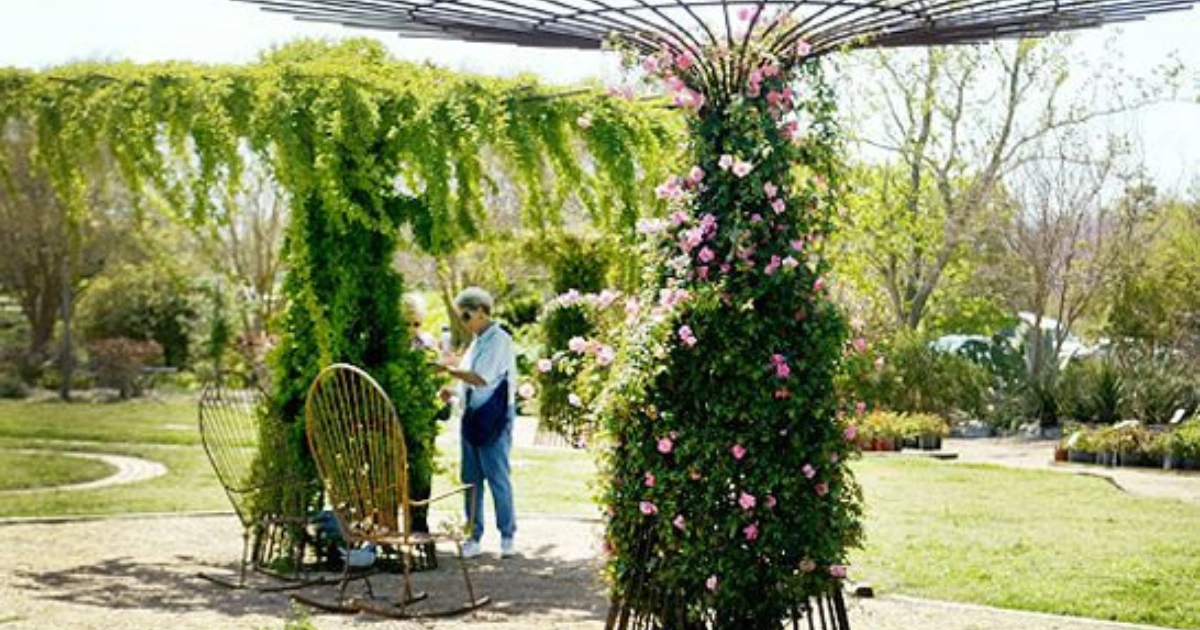
A garden does not need expensive features or complex landscaping to feel artistic and alive. Sometimes, a single creative structure can transform an ordinary space into something memorable. One such idea is the umbrella trellis garden structure, a clever way to turn a simple frame into a living sculpture covered with climbing plants.
This concept combines functionality, aesthetics, and sustainability. By using an umbrella-like support as a trellis, gardeners can guide vines upward and outward, forming a green canopy that provides light shade, visual interest, and a strong focal point in the garden.
What Is an Umbrella Trellis Garden Structure?
An umbrella trellis garden structure is a vertical support shaped like an open umbrella or parasol. Instead of fabric, the ribs and central pole serve as a framework for climbing plants.
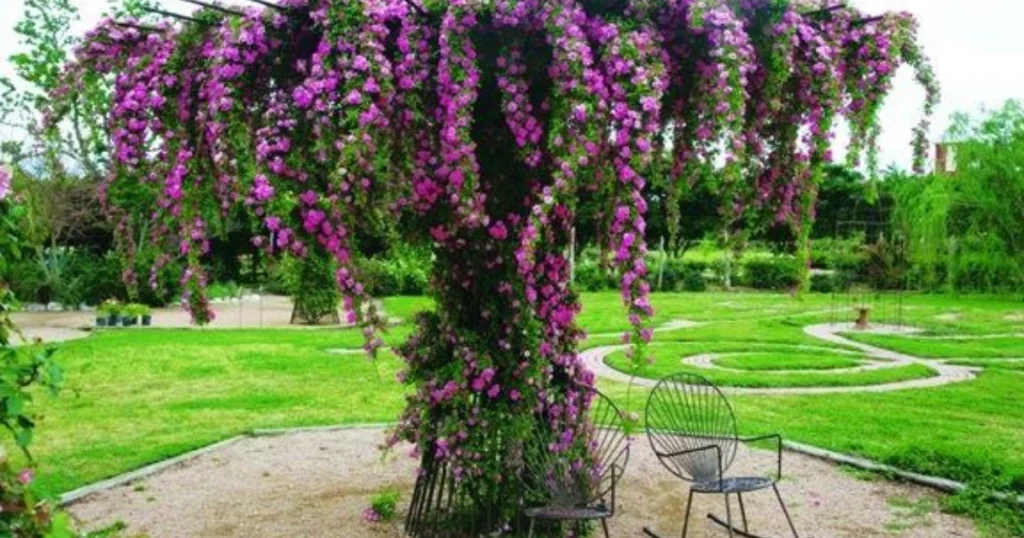
As vines grow, they wrap around the ribs, gradually forming a dome or canopy of leaves and flowers. Over time, the structure becomes a living garden sculpture, blending natural growth with intentional design.
This idea works especially well in small gardens, patios, and even large planters where traditional pergolas or arbors are not practical.
Why an Umbrella Trellis Works So Well in Gardens
The umbrella shape is naturally suited to climbing plants. It provides multiple support points and encourages even growth in all directions.
Key advantages include:
- Strong vertical support concentrated around a central pole
- Radial arms that help distribute plant weight
- An organic shape that looks natural once covered
- Efficient use of vertical space
Because of its form, the umbrella trellis garden structure allows plants to climb upward first, then spread outward, creating a balanced and visually pleasing canopy.
Choosing the Right Structure for Strength and Safety
Strength is essential when building an umbrella trellis. Mature climbing plants can become surprisingly heavy, especially after rain or during peak growth.
The most reliable options include:
- Repurposed beach umbrella frames made from metal
- Garden parasol skeletons without fabric
- Reinforced metal poles with welded arms
- Sturdy recycled structures such as satellite dish frames
Avoid lightweight decorative umbrellas or plastic frames, as they may bend or collapse under plant weight. Anchoring the base securely in the ground or inside a heavy planter is critical for long-term stability.
Best Climbing Plants for an Umbrella Trellis
Not all climbers behave the same way. Some grow quickly and aggressively, while others are lighter and more delicate. Choosing the right plants ensures success and reduces maintenance.
Fast-Growing Climbers
These plants quickly cover the structure and create visual impact:
- Morning glory
- Hyacinth bean
- Sweet pea
- Black-eyed Susan vine
They are ideal for seasonal displays and provide flowers within a short time.
Perennial and Heavier Vines
For long-term installations, consider stronger climbers:
- Ivy varieties
- Chayote vine
- Passionflower
- Jasmine
These plants require a stronger frame and occasional pruning but offer year-round greenery in mild climates.
Creating Natural Shade with a Living Canopy
One of the most appealing benefits of an umbrella trellis garden structure is the soft, natural shade it creates. Unlike solid shade structures, a leafy canopy filters sunlight rather than blocking it completely.
This makes it ideal for:
- Light shade over seating areas
- Protection for shade-tolerant plants underneath
- Cooling small garden spaces naturally
As the leaves move with the wind, the shade shifts gently, adding a dynamic element to the garden.
Where to Place an Umbrella Trellis in the Garden
This structure is highly versatile and adapts to different garden layouts.
Common placement options include:
- Center of a lawn as a focal feature
- Inside a large decorative pot on a patio
- Near a bench or relaxation area
- Along pathways or open courtyards
When choosing a location, consider sun exposure, wind direction, and enough space for the canopy to expand fully.
Maintenance and Care Requirements
Despite its striking appearance, an umbrella trellis garden structure is relatively low maintenance.
Basic care includes:
- Guiding young vines toward the ribs during early growth
- Regular watering, especially for container-grown plants
- Light pruning to maintain shape and airflow
- Seasonal checks on structural stability
Once established, most climbers require minimal intervention, making this an excellent option for gardeners who want impact without constant upkeep.
Sustainability and Creative Reuse
This gardening idea aligns well with sustainable practices. Many gardeners use repurposed materials, giving new life to objects that might otherwise be discarded.
Using recycled umbrella frames or old metal structures:
- Reduces waste
- Lowers project cost
- Encourages creative problem-solving
- Adds character to the garden
The result is both environmentally responsible and visually distinctive.
Turning an Everyday Object into a Garden Focal Point
What makes the umbrella trellis garden structure so appealing is its transformation. A common, overlooked object becomes the centerpiece of a living design.
As plants grow, the structure blends into the greenery. Eventually, the metal frame fades from view, leaving what looks like a naturally formed green umbrella rising from the ground.
This immediate visual impact explains why the idea attracts so much interest from gardeners of all experience levels.
Practical Tips for Long-Term Success
For the best results:
- Start with young, healthy plants
- Train vines evenly around the structure
- Avoid overcrowding multiple heavy climbers
- Reinforce the base before full growth begins
Planning ahead prevents issues once the plants mature and ensures the structure remains safe and attractive.
Frequently Asked Questions
Can an umbrella trellis support heavy plants?
Yes, if the frame is made from strong metal and properly anchored. Lightweight structures should only support delicate climbers.
Is this suitable for container gardening?
Absolutely. Large, heavy pots work well and allow placement on patios or balconies, as long as weight and stability are considered.
How long does it take for plants to cover the structure?
Fast-growing climbers may cover it in one season. Perennial vines can take one to two years for full coverage.
Does it work in small gardens?
Yes. The vertical design makes it ideal for compact spaces where horizontal spreading is limited.
Can it be dismantled or moved?
If installed in a container, it can be relocated. Ground-installed structures are best left in place once established.
Internal Linking Suggestions
To enhance topical relevance, consider linking this article with related content from secretsofthegreengarden.com, such as:
- Vertical gardening ideas for small spaces
- How to choose the right trellis for climbing plants
- Creative ways to reuse garden materials
These internal links help readers explore complementary projects while strengthening site structure.
External Linking Suggestions
For additional authoritative guidance, you may reference:
- University extension services on climbing plant care and vine training
- Government horticulture resources on sustainable garden structures
- Botanical garden educational pages on vertical gardening techniques
These sources provide reliable, non-commercial information that supports credibility.
Final Thoughts
An umbrella trellis garden structure proves that innovative gardening does not require complex construction or high budgets. With a strong frame, suitable climbing plants, and a bit of guidance, anyone can create a living sculpture that offers beauty, shade, and sustainability.
This approach celebrates creativity, reuse, and the natural elegance of plants working in harmony with thoughtful design.