
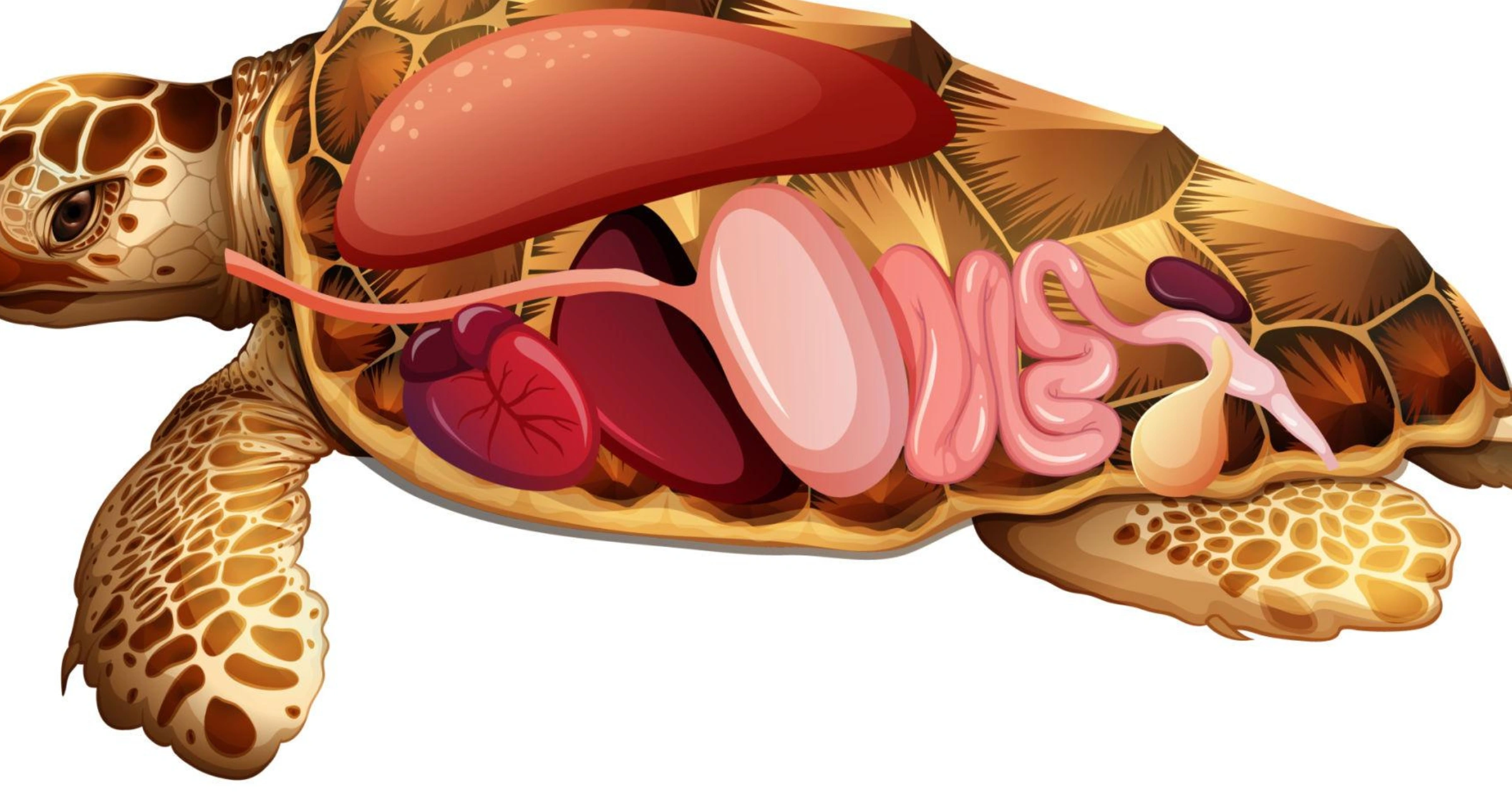
Turtles are fascinating reptiles known for their hard shells and slow, deliberate movements. Their anatomy is adapted for survival in various environments, from freshwater ponds and oceans to dry land. By examining both their external and internal anatomy, we can better understand how these ancient creatures live, move, and protect themselves.
External Anatomy of a Turtle
Turtles’ external features are designed for protection, mobility, and feeding. Every part of their body plays a vital role in their survival.
Keratin Beak
Turtles lack teeth and instead possess a sharp keratin beak, which helps them cut, crush, and tear food. Herbivorous turtles have flatter beaks, while carnivorous species feature sharper beaks to suit their diet.
Neck
The flexible neck allows the turtle to extend its head for feeding or observation. When threatened, most turtles can withdraw their head back into their shell for protection.
Carapace
The carapace is the upper portion of the turtle’s shell, made of bone covered by keratin plates known as scutes. It offers protection from predators and environmental hazards.
Plastron
The plastron is the bottom part of the shell. Together with the carapace, it forms a durable protective structure surrounding the turtle’s body.
Tail
The tail helps with balance, and in aquatic turtles, it aids in swimming. In certain species, the tail also plays a role in reproduction.
Internal Anatomy of a Turtle
Inside the shell, turtles have a compact arrangement of organs adapted to their protective structure.
Mouth and Digestive System
Food enters through the mouth and moves through the digestive tract, where nutrients are absorbed. Turtles have slow metabolisms, which help them endure times when food is scarce.
Lungs
Unlike amphibians, turtles rely entirely on lungs for respiration. Their lungs are positioned near the top of the shell, and since their ribs are fused to the shell, turtles use specialized muscles to move air in and out.
Heart
Turtles possess a three-chambered heart, which efficiently regulates blood flow, particularly beneficial during dives or periods of low activity.
Reproductive Organs
Turtles’ reproductive organs vary by sex. Female turtles have ovaries, and males have testes along with additional structures for mating. These organs are located inside the shell along with other vital systems.
How the Shell Supports the Turtle’s Body
The turtle’s shell is more than just a protective covering—it’s an integral part of its skeleton. The ribs and spine are fused to the carapace, providing a rigid structure that offers strong protection but limits flexibility compared to other reptiles.
Key Characteristics of the Shell:
- Turtles cannot leave their shells.
- Their movement is slower but more stable.
- Organs are tightly arranged inside the shell for optimal protection.
Adaptations for Different Environments
Turtle anatomy varies to suit their habitats, providing the necessary features for survival.
Aquatic Turtles
- Webbed feet or flippers for swimming
- Streamlined shells for easy movement in water
- Lighter bone structure for buoyancy
Land Turtles (Tortoises)
- Thick, domed shells for protection against predators
- Strong, column-like legs for stability on land
- Heavy bone structure for added defense
These anatomical adaptations enable turtles to thrive in their specific environments.
Interesting Facts About Turtle Anatomy
- The shell contains living tissue and blood vessels.
- Turtles can feel touch and pressure on their shells.
- Some species can retract their heads and limbs completely.
- Turtles can hold their breath for extended periods.
Why Understanding Turtle Anatomy Matters
Knowing about turtle anatomy is crucial for:
- Proper care of pet turtles
- Wildlife conservation
- Understanding reptile evolution
- Protecting natural habitats
Since turtles have slow growth rates and long lifespans, it’s important to protect their environments to ensure their survival for generations to come.
Quick Summary:
- The carapace and plastron form the protective shell.
- Turtles have beaks instead of teeth.
- Their lungs are adapted to fit within the shell.
- The shell is part of the skeleton, not a detachable covering.
- Species have adaptations based on their specific habitats.
Turtles have survived for millions of years thanks to their unique anatomy. By understanding their specialized structure, we can better appreciate and protect these ancient reptiles.
I respect your work, regards for all the informative posts.
Bạn có thể đặt giới hạn cược/ngày tại slot365 ios – chơi có trách nhiệm, vui vẻ lâu dài. TONY02-11O