
Cities are designed to move water away as fast as possible. Curbs, gutters, and storm drains push rainwater off streets and into underground systems, often carrying pollution straight into rivers and lakes. Curbside rain gardens offer a smarter alternative by slowing rain down, soaking it into the soil, and using it to support trees and plants right where it falls.
These small landscape features may look simple, but they play a powerful role in urban water management, greener streets, and healthier neighborhoods.

4
What Is a Curbside Rain Garden?
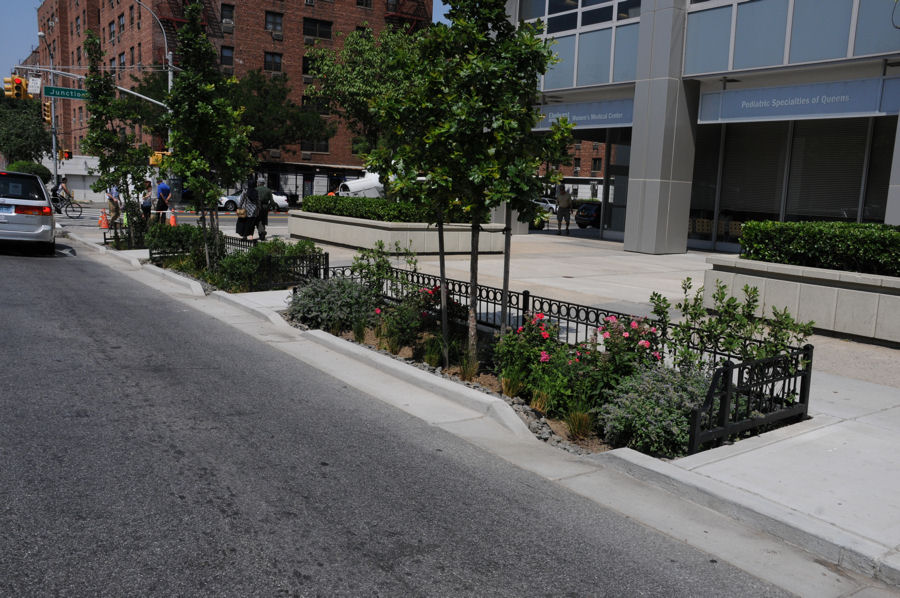
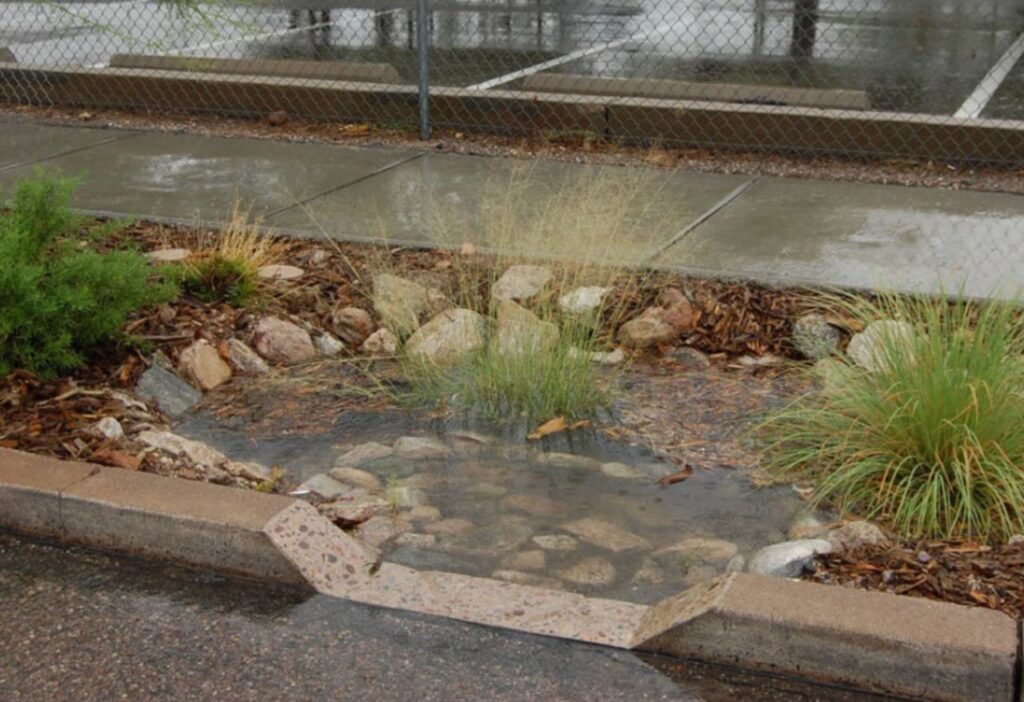
A curbside rain garden is a shallow, planted depression built along the edge of a street. A small opening in the curb allows rainwater to flow from the road into the garden instead of directly into a storm drain.
Once inside, the water:
- Spreads out slowly
- Soaks into specially prepared soil
- Feeds nearby trees and plants
- Gets naturally filtered before reaching groundwater
This turns excess runoff into a local resource instead of a problem.
Catching Rain Instead of Losing It
Redirecting Street Runoff
During rainstorms, streets act like fast-moving rivers. Curbside rain gardens intercept this flow by guiding water through curb cuts into planted areas.
This simple redirection:
- Reduces flooding and puddles
- Keeps water on-site longer
- Prevents sudden surges into storm drains
Rather than fighting rain, the street design works with it.
Feeding Trees and Plants Naturally
Water Where It’s Needed Most
Urban trees often struggle because rainwater never reaches their roots. Pavement sends water away before it can soak in.
Curbside rain gardens solve this by:
- Delivering water directly to tree root zones
- Supporting plants during dry periods
- Reducing the need for supplemental irrigation
This passive watering system keeps vegetation healthier with no extra effort.
Slowing the Flow to Protect Infrastructure
Acting Like a Natural Sponge
Rain gardens use layers of soil, sand, stones, and plant roots to absorb and slow water movement. This sponge-like effect helps manage heavy rainfall more safely.
Benefits include:
- Less pressure on storm drain systems
- Reduced erosion along streets
- Lower risk of localized flooding
When many rain gardens are installed along a street, their impact multiplies.
Cleaning Water as It Moves Through
Natural Filtration in Action
Stormwater runoff picks up oil, dust, heavy metals, and debris from roads. When water enters a rain garden, these pollutants are filtered naturally.
The soil and plants:
- Trap sediment
- Break down contaminants
- Prevent pollutants from reaching rivers and lakes
This improves water quality without mechanical treatment systems.
Design Details That Make the Difference
Drainage Is Essential
A well-built rain garden must drain properly. Water should soak in within 24 to 48 hours to prevent standing water.
Good design includes:
- Free-draining soil mixes
- Proper depth and slope
- An overflow outlet for extreme storms
Poor drainage turns a helpful feature into a maintenance problem.
Choosing Tough, Adaptable Plants
Plants in curbside rain gardens face challenging conditions, including flooding, drought, road salt, and heat.
Ideal plants are:
- Deep-rooted
- Tolerant of wet and dry cycles
- Native or well-adapted to local climates
These plants stabilize soil and improve infiltration over time.
Keeping the Inlet Clear
Small details matter. The curb opening that lets water in must stay clear of leaves, litter, and sediment.
Regular maintenance includes:
- Removing leaves and debris
- Checking for sediment buildup
- Ensuring water flows freely into the garden
Neglecting this step can cause water to bypass the garden entirely.
Benefits Beyond Water Management
Curbside rain gardens do more than manage runoff.
They also:
- Cool streets and sidewalks
- Improve neighborhood aesthetics
- Support pollinators and urban wildlife
- Increase property and community value
Green infrastructure adds beauty while quietly performing essential work.
From Single Gardens to Greener Streets
One rain garden helps, but a network of them can transform entire neighborhoods. When installed along multiple blocks, they significantly reduce stormwater loads and create greener, more resilient streets.
Cities around the world are now adopting curbside rain gardens as part of broader climate adaptation and sustainability plans.
Final Thoughts
Curbside rain gardens show that small design changes can create big environmental benefits. A simple curb cut, paired with soil and plants, can turn rain from a nuisance into a valuable resource.
Smart streets do not rush rain away. They slow it down, clean it, and put it to work. By embracing curbside rain gardens, communities take a practical step toward healthier water systems and greener neighborhoods.
**glucotonic**
glucotonic is an expertly formulated dietary supplement designed to help maintain balanced blood sugar levels naturally.
**revitag**
revitag is a daily skin-support formula created to promote a healthy complexion and visibly diminish the appearance of skin tags.
**prodentim**
prodentim is a distinctive oral-care formula that pairs targeted probiotics with plant-based ingredients to encourage strong teeth, comfortable gums, and reliably fresh breath.
**vittaburn**
vitta burn is a liquid dietary supplement designed to support healthy weight management by elevating metabolic activity, curbing cravings, and encouraging fat reduction.
**nervecalm**
nervecalm is a high-quality nutritional supplement crafted to promote nerve wellness, ease chronic discomfort, and boost everyday vitality.
В мире игр, где любой площадка норовит зацепить заверениями легких джекпотов, рейтинг топ онлайн казино
становится именно той картой, которая направляет через ловушки подвохов. Тем хайроллеров и дебютантов, кто надоел от фальшивых обещаний, это помощник, дабы ощутить подлинную rtp, как ощущение золотой ставки в пальцах. Обходя пустой воды, лишь проверенные клубы, в которых rtp не только число, а реальная удача.Подобрано по поисковых поисков, как сеть, что ловит топовые свежие веяния на сети. Здесь нет пространства для шаблонных фишек, каждый момент словно ставка на игре, там подвох раскрывается немедленно. Профи видят: в рунете манера речи и сарказмом, в котором ирония маскируется как совет, даёт избежать рисков.В https://cloud.mail.ru/public/1pe1/MmFjMPKG5 этот рейтинг находится как готовая колода, готовый для игре. Посмотри, если желаешь ощутить ритм реальной игры, минуя обмана да неудач. Игрокам кто ценит вес удачи, такое как иметь карты у ладонях, а не глядеть на экран.
An interesting discussion is worth comment. I think that you should write more on this topic, it might not be a taboo subject but generally people are not enough to speak on such topics. To the next. Cheers