
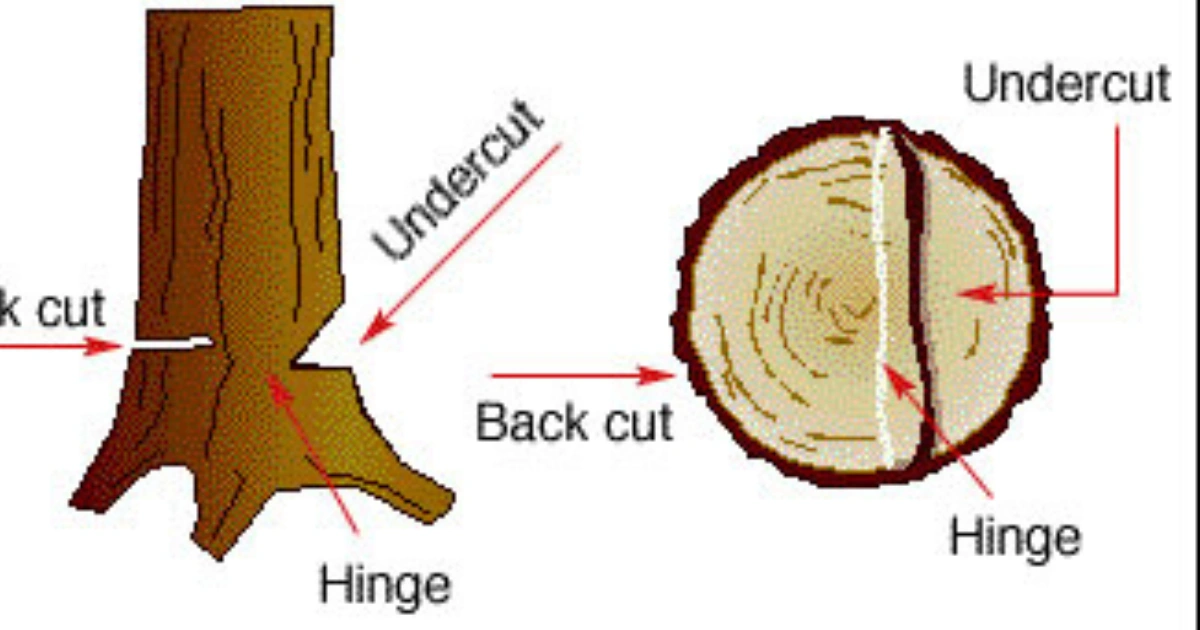
Cutting a tree is more than just swinging a saw—it requires planning, precision, and the right technique to ensure a safe and predictable fall. The type of notch you create can make a huge difference in guiding the tree and minimizing risk.
Here’s a breakdown of the most common notch types and when to use them.
1. Open Face Notch
The open face notch is ideal for directing the tree clearly in the direction you want it to fall. This notch opens wide, providing good visibility and control over the fall.
Key Points:
- Offers a clear path for the tree to follow.
- Improves safety by giving the cutter better control.
- Best for situations where accuracy is crucial.
Common Pitfall: Assuming you can simply “eyeball” the fall—this cut requires careful measurement and alignment.
2. Classic Face Notch
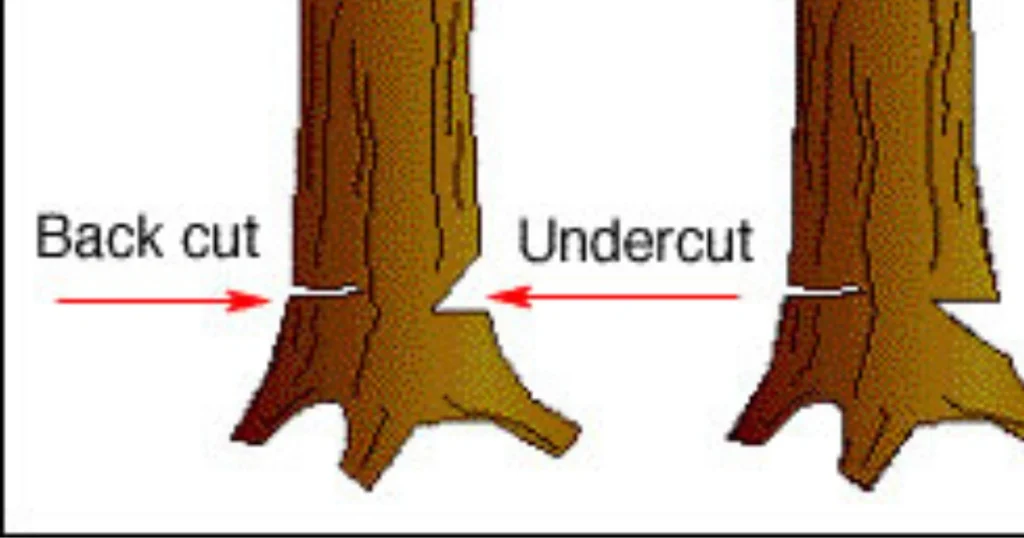
The classic face notch is the most common choice for beginners. It’s a simple angled cut that guides the tree steadily and predictably.
Key Points:
- Easy to learn and execute.
- Offers a reliable fall path for small to medium-sized trees.
- Works well on flat or gently sloping terrain.
Common Pitfall: Believing it’s foolproof. Even the classic notch requires proper technique and attention to tree lean and surroundings.
3. Humboldt Notch
The Humboldt notch is designed for larger trees or challenging terrain, such as slopes. This notch provides precise control over the fall angle and can help reduce stump height.
Key Points:
- Excellent for controlling direction on uneven ground.
- Reduces risk of splitting or kickback.
- Helps manage large, heavy trees.
Common Pitfall: This notch looks impressive but requires careful execution and experience to avoid mistakes.
Quick Takeaway
Different trees and terrain call for different notch types. Choosing the right cut ensures a controlled fall, improves safety, and reduces the stress of tree felling. Always assess the environment, the tree’s size, and the direction you want it to fall before cutting.
Safety Reminder: Always wear protective gear, keep bystanders at a safe distance, and never cut a tree without a clear escape path. Proper planning and the right notch can make tree cutting much safer and more efficient.
Related Reads:
- Essential Chainsaw Safety Tips for Beginners
- How to Assess Tree Stability Before Felling