
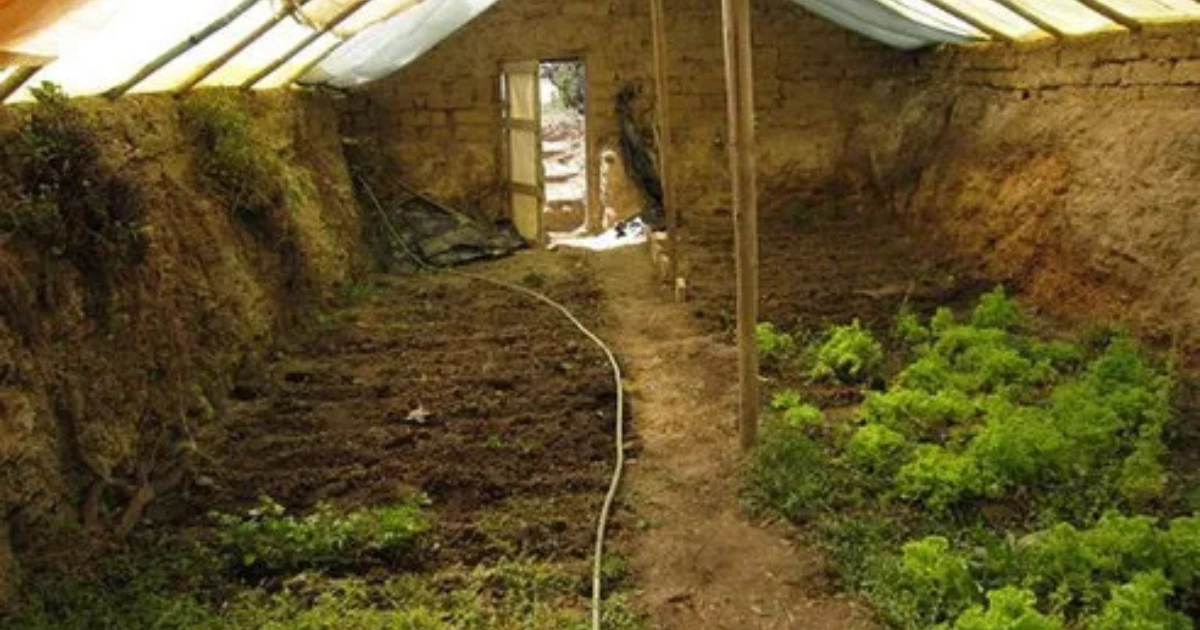
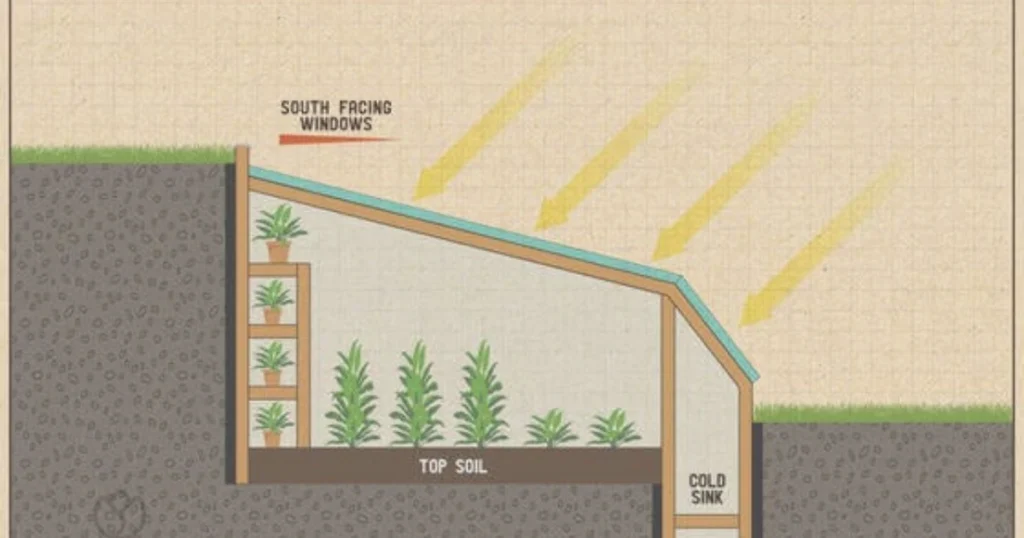
This illustration explains how an underground or earth-sheltered greenhouse—sometimes called a bijou heat pit or walipini-style greenhouse—uses natural principles to maintain warmer temperatures without constant artificial heating.
How the system works
1. Earth as natural insulation
By building the greenhouse partially below ground, the surrounding soil acts as a thermal buffer. Underground temperatures stay more stable year-round, protecting plants from extreme cold.
2. Solar gain from winter sun
The slanted, transparent roof is angled to capture low winter sunlight. Sunlight enters during the day and warms the air, soil, and stone surfaces inside.
3. Heat storage in soil and stone
Rocks, soil, and stacked stones absorb heat during daylight hours. At night, this stored heat is slowly released, helping maintain a more consistent internal temperature.
4. Insulated north wall
The back (north-facing) wall is heavily insulated and often reflective. This prevents heat loss and redirects warmth back toward the plants.
5. Layered heat pit
Some designs include a layered pit of stones beneath planting areas. This increases thermal mass and improves long-term heat retention.
6. Ventilation control
Roof vents allow excess heat to escape on sunny days, preventing overheating while maintaining air circulation and humidity balance.
Why this design is effective
- Reduces reliance on electric or gas heaters
- Extends the growing season in cold climates
- Protects plants from frost and wind
- Creates a stable microclimate for vegetables and herbs
Important reality check
This type of greenhouse:
- Works best in sunny winter climates
- May still need backup heat during extreme cold spells
- Requires proper drainage to prevent moisture buildup
Best uses
- Winter greens and cold-hardy vegetables
- Seed starting in early spring
- Year-round herb production in mild climates
Key takeaway
An underground greenhouse doesn’t create heat—it captures, stores, and reuses natural solar energy. When built correctly, it can stay warm most days without a heater, making it a smart, low-energy solution for sustainable gardening.