

Chocolate has been enjoyed for thousands of years, long before it became a modern dessert. Originally consumed as a bitter beverage by ancient civilizations, cocoa was valued not only for its flavor but also for its energizing and medicinal properties. Today, science confirms what history long suggested: dark chocolate offers real health benefits when consumed wisely.
Not all chocolate delivers the same nutritional value. Among the many varieties available, dark chocolate with a high cocoa content stands out as the most beneficial option. This article explores why dark chocolate deserves a place in a balanced diet, how it supports overall health, and how to enjoy it responsibly.
Why Dark Chocolate Is Different From Other Chocolates
Dark chocolate is made primarily from cocoa solids, cocoa butter, and minimal sugar. The higher the cocoa percentage, the more beneficial compounds it contains.
Unlike milk or white chocolate, dark chocolate retains a concentrated amount of plant-based nutrients that positively affect the body. The key lies in cocoa, which is naturally rich in antioxidants, minerals, and bioactive compounds.
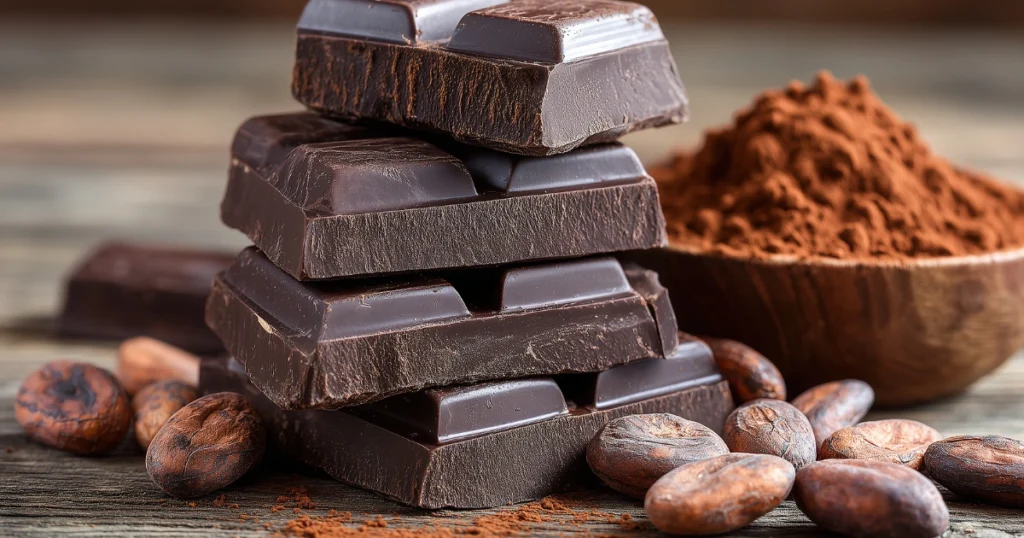
Rich in Antioxidants That Protect Your Cells
One of the strongest reasons to choose dark chocolate is its exceptional antioxidant content.
Dark chocolate contains powerful compounds such as:
- Flavonoids
- Polyphenols
- Catechins
These antioxidants help neutralize free radicals, which are unstable molecules that damage cells and accelerate aging. Research shows that cocoa ranks among the highest antioxidant-rich foods, even surpassing some fruits traditionally labeled as “superfoods.”
By reducing oxidative stress, dark chocolate supports long-term cellular health and lowers inflammation throughout the body.
Supports Healthy Blood Pressure Levels
Dark chocolate has a positive effect on the cardiovascular system, particularly blood pressure regulation.
Cocoa flavanols stimulate the production of nitric oxide, a molecule that relaxes blood vessels. When blood vessels widen, circulation improves, allowing blood to flow more easily and reducing strain on the heart.
Regular, moderate consumption of dark chocolate has been associated with:
- Improved arterial flexibility
- Reduced vascular tension
- Better overall circulation
This effect is most noticeable in chocolates containing 70% cocoa or more.
Promotes Heart Health and Circulation
Dark chocolate contributes to heart health through multiple mechanisms. Studies suggest it can:
- Lower LDL (bad cholesterol)
- Increase HDL (good cholesterol)
- Reduce oxidation of cholesterol particles
- Improve blood flow
Oxidized LDL cholesterol is a major contributor to plaque formation in arteries. By limiting this process, dark chocolate may help reduce the risk of cardiovascular disease when consumed as part of a balanced lifestyle.
Enhances Brain Function and Mental Performance
Dark chocolate does more than support the heart; it also benefits the brain.
Cocoa stimulates the release of neurotransmitters such as dopamine, serotonin, and endorphins. These chemicals play a role in mood regulation, motivation, focus, and emotional well-being.
Additionally, improved blood flow from cocoa flavanols increases oxygen delivery to the brain, which may enhance:
- Concentration
- Cognitive performance
- Short-term memory
This makes dark chocolate a natural cognitive support when consumed in moderation.
Provides Essential Minerals for Daily Health
Dark chocolate is surprisingly nutrient-dense. High-quality dark chocolate supplies several essential minerals, including:
- Magnesium for muscle relaxation and nerve function
- Iron for oxygen transport in the blood
- Copper and manganese for energy production
- Potassium for heart rhythm and fluid balance
- Zinc for immune support
These minerals contribute to overall vitality and help support metabolic processes throughout the body.
Supports Gut Health Through Prebiotic Action
Recent research highlights the relationship between cocoa and digestive health.
Dark chocolate acts as a prebiotic, feeding beneficial gut bacteria. When gut microbes break down cocoa compounds, they produce anti-inflammatory substances that support digestive health and immune function.
A healthy gut microbiome plays a crucial role in:
- Nutrient absorption
- Immune regulation
- Mood balance
- Reduced inflammation
This makes dark chocolate an unexpected ally for gut health when sugar content is kept low.
Helps Regulate Blood Sugar Levels
Despite its rich taste, dark chocolate has a lower glycemic index than most sweet snacks. This means it does not cause sharp spikes in blood sugar when consumed responsibly.
Dark chocolate may help:
- Improve insulin sensitivity
- Reduce sugar cravings
- Support steady energy levels
This makes it a better option for people managing blood sugar levels or trying to reduce refined sugar intake.
Dark Chocolate Compared to Other Chocolate Types
Dark Chocolate (70–90% cocoa)
- Highest antioxidant content
- Lowest sugar levels
- Best for heart, brain, and gut health
- Most nutritionally beneficial choice
Milk Chocolate
- Lower cocoa concentration
- Higher sugar content
- Reduced health benefits
White Chocolate
- No cocoa solids
- Primarily sugar and fat
- Minimal nutritional value
When it comes to health, dark chocolate consistently outperforms other varieties.
How Much Dark Chocolate Should You Eat?
Moderation is key. The recommended amount is 20–30 grams per day, roughly one to two small squares.
Consuming more than this can add unnecessary calories and sugar, even in dark chocolate. Quality matters more than quantity.
A Simple Way to Enjoy Dark Chocolate Warm
A warm chocolate drink can be a gentle and satisfying way to consume dark chocolate.
Ingredients
- One cup of warm milk or plant-based alternative
- Two small pieces of dark chocolate
- Optional natural sweetener added after cooling slightly
Preparation
- Heat the milk until warm, not boiling
- Stir in the dark chocolate until fully melted
- Allow it to cool slightly before adding any sweetener
This method preserves cocoa compounds while creating a comforting beverage.
Frequently Asked Questions
Is dark chocolate good for daily consumption?
Yes, when consumed in moderation and with a cocoa content of at least 70 percent.
Can dark chocolate help with weight management?
In small amounts, it may reduce cravings and support satiety, but it should not be overconsumed.
Does dark chocolate contain caffeine?
Yes, but in small amounts compared to coffee or tea.
Is dark chocolate suitable for people with diabetes?
Dark chocolate with minimal sugar may be suitable in controlled portions, but individual tolerance varies.
Does cooking destroy dark chocolate’s benefits?
High heat can reduce antioxidants, so gentle warming is preferable.
Internal Linking Suggestions
For related content on nutrition and natural health, consider linking to:
- Anti-Inflammatory Foods for Everyday Health
- Natural Sources of Antioxidants You Should Know
- How to Reduce Sugar Without Giving Up Flavor
External High-Authority Sources
For additional scientific reading:
- National Institutes of Health – Cocoa and cardiovascular health
- Harvard T.H. Chan School of Public Health – Chocolate and nutrition
- Cleveland Clinic – Dark chocolate health benefits
Final Thoughts
Dark chocolate is far more than a treat. When chosen carefully and consumed mindfully, it offers real health benefits that support the heart, brain, gut, and overall well-being. The key lies in high cocoa content, low sugar, and moderation.
By making dark chocolate a conscious choice rather than an indulgence, you can enjoy its rich flavor while supporting long-term health.
**neuro sharp**
Neuro Sharp is an advanced cognitive support formula designed to help you stay mentally sharp, focused, and confident throughout your day.
**boostaro**
Boostaro is a purpose-built wellness formula created for men who want to strengthen vitality, confidence, and everyday performance.
navigate to these guys https://anycoindirect.me
**back biome**
Mitolyn is a carefully developed, plant-based formula created to help support metabolic efficiency and encourage healthy, lasting weight management.
Мы собрали для вас самые захватывающие факты из мира науки и истории. От малознакомых деталей до грандиозных событий — эта статья расширит ваш кругозор и подарит новое понимание того, как устроен наш мир.
Подробная информация доступна по запросу – https://crownval.com.ar/divisiones/valvula-aortica-biologica-porcina
купить живых подписчиков в тг живые подписчики в тг канал бесплатные подписчики живые
Смотреть здесь https://www.wildberries.ru/catalog/22911052/detail.aspx?size=56230142
Visit Your URL https://letsexchange.cc
Одним из ключевых преимуществ «КузбассМед» является современная материально-техническая база. В клинике задействованы устройства для точного мониторинга жизненных функций, автоматические инфузионные системы, экспресс-диагностические модули и оборудование для неотложной терапии. Врачи используют программируемые дозаторы, портативные анализаторы крови и аппараты для оценки дыхательной функции, что позволяет своевременно корректировать тактику лечения без потерь времени. Все процедуры соответствуют национальным стандартам безопасности и рекомендациям ВОЗ.
Подробнее тут – https://narkologicheskaya-klinika-novokuzneczk0.ru/narkologicheskij-czentr-novokuzneczk
Умение одеваться со вкусом играет важную роль в создании образа.
Она позволяет выразить характер.
Удачный внешний вид поддерживает самооценку.
Одежда может быть инструментом визуального контакта.
https://blog.fashionessa.ru/philipp-plein-manifest/
Кроме того, продуманный гардероб делает сборы быстрее в повседневных делах.
В долгосрочной перспективе внимание к стилю воспитывает чувство меры.
В результате стильная одежда остается элементом современного образа жизни.
Умение одеваться со вкусом имеет большое значение в создании образа.
Она дает возможность подчеркнуть индивидуальность.
Удачный внешний вид поддерживает самооценку.
Одежда нередко является частью невербального общения.
https://hackernoon.com/preview/xZYe3hpqsrE98i2oYWEY
Кроме того, продуманный гардероб упрощает выбор в повседневных делах.
В долгосрочной перспективе внимание к стилю формирует привычку.
В результате стильная одежда играет значимую роль современного образа жизни.
Visit Website https://tornadocash.app
This book is a reminder that we don’t need grand gestures to feel loved. The small acts of kindness Wes shows Liz are the real romance. A Better Than the Movies PDF is a convenient way to read about these tender moments. It is a narrative that shifts the focus from cinematic perfection to the beauty of everyday love. https://betterthanthemoviespdf.site/ Better Than The Movies Filetype:pdf
More Info https://etherealtrade.lat/
YOURURL.com https://letsexchange.cc
anonymous https://camelot.click/
click https://daobase.info
Continue Reading https://bitmix.app
this website https://hyperliquid-wiki.cc
visit this site download jaxx wallet
Добрый день!
Business-Mentor — это онлайн-платформа, где собрана библиотека готовых решений и проверенных бизнес-идей для старта и развития своего дела. Здесь можно найти вдохновение, получить экспертные рекомендации и поддержку единомышленников на каждом этапе запуска проекта. Ключ к успешному предпринимательству — готовые бизнес-решения для тех, кто хочет начать действовать уже сегодня. Готовые бизнес-решения включают готовые договоры, политики конфиденциальности и шаблоны переписки с клиентами. Это ускоряет юридическую и операционную подготовку.
Вся информация на сайте – https://business-mentor.ru/biznes-idei/
как использовать аналитику в e-commerce, как зарегистрировать ИП быстро, как работать с отзывами клиентов
идеи для бизнеса в маленьком городе, рекомендации по запуску бизнеса, обзоры трендов и кейсы компаний
Всего наилучшего и развития!!
Get the facts https://jaxxwallet-web.org/
Работа выездной службы построена так, чтобы для семьи всё было максимально понятно и предсказуемо. После звонка специалист не ограничивается общими фразами, а уточняет детали: сколько длится употребление, есть ли хронические болезни сердца, печени, почек, эндокринные нарушения, какие препараты и в каких дозах пациент уже получил, были ли в прошлом судороги, галлюцинации, тяжёлые реакции на лекарства. Это позволяет заранее оценить уровень риска и понять, подходит ли формат дома. По прибытии в Серпухове врач осматривает пациента, проверяет контакт и ориентировку, измеряет артериальное давление несколько раз, оценивает пульс, сатурацию, температуру, выраженность тремора, наличие болей, характер дыхания, степень обезвоживания. Далее формируется индивидуальная инфузионная схема: растворы для регидратации и коррекции электролитов, витамины группы B и магний для поддержки нервной системы, при необходимости — гепатопротекторы и мягкие антиоксидантные комплексы, противорвотные для контроля тошноты, щадящие анксиолитики для нормализации сна без грубой седации. Во время процедуры врач контролирует динамику, меняет скорость капельницы при необходимости, отслеживает реакцию на препараты и объясняет родным, какие изменения будут происходить по часам. По завершении визита пациент и родственники получают подробный план: режим, питьё, питание, чего нельзя, какие симптомы считаются тревожными, когда нужна повторная консультация или стационар. При выявлении опасных признаков вопрос о госпитализации поднимается честно и сразу, а не откладывается «до утра».
Выяснить больше – vyzvat-vracha-narkologa-na-dom-srochno
Some times its a pain in the ass to read what people wrote but this internet site is real user genial! .
Hiện nay, nền tảng cung cấp đa dạng hình thức giải trí khác nhau để phù hợp với mọi nhu cầu của anh em. 188v bet Ngoài việc được tham gia vào các danh mục truyền thống như Casino, Thể Thao, Nổ Hũ thì bạn còn được khám phá nhiều loại hình đặc sắc mới như Đá Gà, Bắn Cá. TONY02-11O
Slot tại 188v – Trang Chủ Chính Thức 188BET có biểu tượng “phổ biến” được gắn trên những game có lượt chơi cao nhất tuần – giúp bạn nhanh chóng bắt trend và tham gia đúng thời điểm. TONY03-02O
Продвинутые специалисты используют seo xrumer, чтобы добиться высокой эффективности.
You’ll often need to reevaluate your choices — no second chances.