

Elk are among the most impressive large mammals in North America. Known for their majestic antlers, powerful bodies, and distinctive bugling calls during the breeding season, elk play an important role in forest and grassland ecosystems. While many people simply refer to “elk” as a single species, wildlife biologists recognize several subspecies that differ in size, habitat, and geographic range.
Understanding the different elk subspecies helps conservationists manage wildlife populations and protect habitats. Each group has its own ecological role and conservation history across North America.
Primary Keyword
elk subspecies
Overview of Elk in North America
Elk belong to the species Cervus canadensis, one of the largest members of the deer family. These animals inhabit forests, mountain ranges, grasslands, and valleys throughout North America and parts of Asia.
Historically, elk once roamed across most of the continent. However, hunting pressure and habitat loss significantly reduced their populations during the 19th and early 20th centuries. Conservation efforts and wildlife management programs have since helped many populations recover.
Today, scientists recognize several elk subspecies in North America, each adapted to specific regions.
Related search terms include:
- elk species in North America
- types of elk
- elk distribution in North America
- elk conservation status
- differences between elk subspecies
- Rocky Mountain elk habitat
- Roosevelt elk characteristics
- Tule elk population
Roosevelt Elk
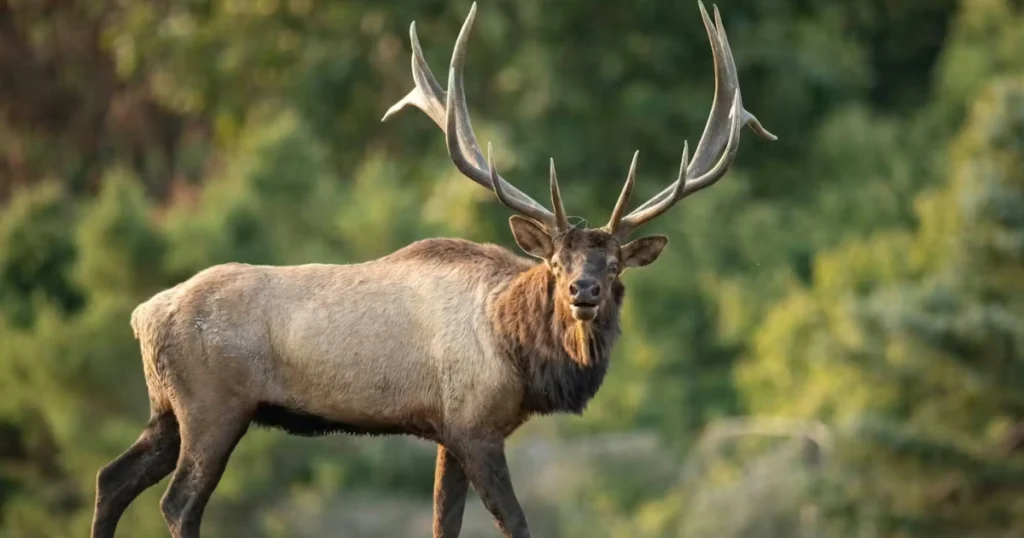
The Roosevelt elk (Cervus canadensis roosevelti) is the largest elk subspecies in North America. These animals are known for their dark coats and massive antlers.
Habitat and distribution
Roosevelt elk primarily live in the Pacific Northwest, including:
- western Washington
- coastal Oregon
- northern California
- parts of British Columbia
They thrive in dense temperate rainforests and coastal mountain ranges.
Conservation status
The Roosevelt elk is currently classified as Least Concern, thanks to successful conservation programs and protected habitats.
According to the National Park Service, Roosevelt elk populations remain strong in several national parks including Olympic National Park.
https://www.nps.gov
Tule Elk
The Tule elk (Cervus canadensis nannodes) is the smallest elk subspecies and is found only in California.
Habitat and distribution
Historically, Tule elk lived throughout California’s Central Valley grasslands and wetlands. Today, they survive mainly in protected areas and wildlife reserves.
Conservation history
In the late 1800s, Tule elk nearly disappeared due to excessive hunting and habitat loss. At one point, fewer than 30 individuals remained.
Conservation efforts helped the population recover, and today the species is considered Least Concern, although its range remains limited.
Rocky Mountain Elk
The Rocky Mountain elk (Cervus canadensis nelsoni) is the most widespread and commonly recognized elk subspecies.
Habitat and distribution
This elk subspecies inhabits much of western North America, including:
- the Rocky Mountains
- parts of Canada
- the western United States
Rocky Mountain elk prefer mountain forests, alpine meadows, and grasslands.
Population status
Due to effective wildlife management, the Rocky Mountain elk population is considered stable and remains one of the most abundant elk groups.
Research from the U.S. Fish and Wildlife Service highlights the importance of habitat preservation for maintaining healthy elk populations.
https://www.fws.gov
Manitoban Elk
The Manitoban elk (Cervus canadensis manitobensis) lives primarily in the Great Plains region.
Distribution
This subspecies is commonly found in:
- Manitoba
- North Dakota
- Saskatchewan
- surrounding prairie regions
Manitoban elk are well adapted to grassland ecosystems and open landscapes.
Conservation status
The Manitoban elk is classified as Least Concern, with populations maintained through wildlife management and habitat conservation.
Eastern Elk
The Eastern elk (Cervus canadensis canadensis) once lived throughout the eastern United States.
Historical range
Historically, this elk subspecies inhabited forests and valleys across:
- Pennsylvania
- Kentucky
- Tennessee
- the Appalachian region
Extinction
The Eastern elk became extinct in the late 1800s, primarily due to unregulated hunting and widespread deforestation.
Modern elk populations in the eastern United States today come from reintroduced Rocky Mountain elk rather than the original Eastern elk subspecies.
Merriam’s Elk
Merriam’s elk (Cervus canadensis merriami) once lived in parts of the southwestern United States.
Historical distribution
Their range included areas of:
- Arizona
- New Mexico
- Texas
Conservation outcome
Like the Eastern elk, Merriam’s elk disappeared due to habitat loss and excessive hunting during the late 19th and early 20th centuries.
Today, they are considered extinct, although other elk populations have been introduced into similar habitats.
Information about elk conservation and species recovery programs is available through the International Union for Conservation of Nature (IUCN).
https://www.iucnredlist.org
Why Elk Subspecies Matter for Conservation
Recognizing different elk subspecies helps scientists better understand biodiversity and ecosystem health. Each subspecies evolved adaptations suited to specific landscapes, climates, and vegetation types.
Wildlife managers use this information to:
- design effective conservation strategies
- maintain genetic diversity
- protect important habitats
- monitor population trends
Understanding these distinctions also helps hunters, wildlife watchers, and conservationists appreciate the diversity within the elk species.
Internal Linking Suggestions
For readers interested in wildlife and nature conservation, consider linking to related content on secretsofthegreengarden.com such as:
- How to Create a Wildlife-Friendly Garden
- Animals That Naturally Protect Your Garden From Pests
- How Native Plants Support Local Wildlife
These topics help connect wildlife awareness with sustainable gardening practices.
FAQ
How many elk subspecies exist in North America?
Six elk subspecies are traditionally recognized in North America, although scientists sometimes debate classifications based on genetic research.
Which elk subspecies is the largest?
The Roosevelt elk is considered the largest elk subspecies in North America.
Are any elk subspecies extinct?
Yes. The Eastern elk and Merriam’s elk are both extinct.
Which elk subspecies is most common today?
The Rocky Mountain elk is the most widespread and abundant elk subspecies in North America.
Where can elk be seen today?
Elk can be found across many parts of western North America, including national parks, forests, and wildlife reserves.
Conclusion
Elk are iconic animals of North America’s wilderness, but the species is more diverse than many people realize. From the massive Roosevelt elk of the Pacific Northwest to the small Tule elk of California, each subspecies tells a unique story about adaptation, conservation, and the relationship between wildlife and landscapes.
Learning about elk subspecies not only deepens our understanding of wildlife biology but also highlights the importance of protecting natural habitats for future generations.