
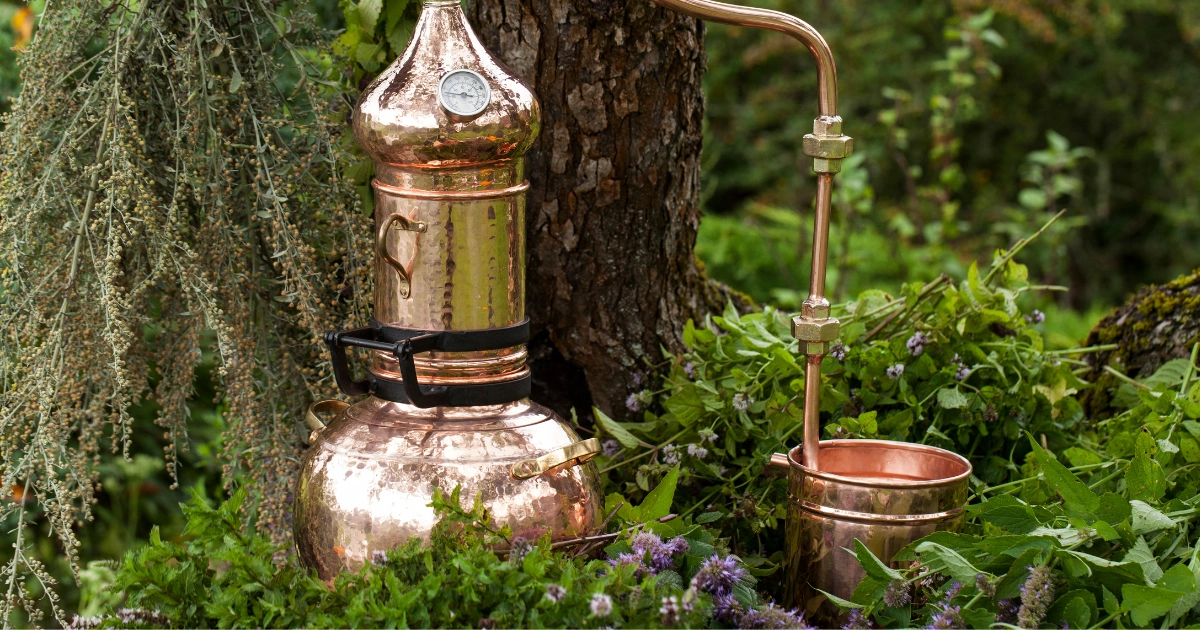
A pot still distillation system is one of the oldest and most widely used methods for producing distilled spirits. The process relies on simple physics: heating a fermented liquid to separate alcohol vapors, then cooling those vapors back into liquid form. This traditional technique is still used today for many craft spirits because it preserves flavor and character.
Understanding how a pot still distillation system works helps explain why certain spirits taste richer and more complex than others.
What Is Pot Still Distillation
Pot still distillation is a batch process in which a fermented mixture, often called a mash or wash, is heated inside a sealed vessel. As the temperature rises, alcohol evaporates before water because it has a lower boiling point. The alcohol vapor travels through a pipe into a condenser, where it cools and returns to liquid form.
This process concentrates the alcohol and separates it from unwanted compounds.
Main Components of a Pot Still System
A basic pot still distillation setup includes three primary parts:
Copper pot still
The pot still is the main vessel where the fermented liquid is heated. Copper is commonly used because it conducts heat well and helps remove unwanted sulfur compounds during distillation.
Inside the pot still:
- The fermented mash is heated.
- Alcohol vapors form and rise.
- Vapors travel through the neck of the still.
Vapor tube or lyne arm
This curved pipe carries the alcohol vapor from the still to the condenser. Its shape and length can influence the flavor and purity of the final product.
Condenser
The condenser cools the alcohol vapors back into liquid form. It typically consists of a coiled metal tube surrounded by cold water.
Inside the condenser:
- Hot alcohol vapors enter the coil.
- Cold water removes heat from the vapor.
- The vapor condenses into liquid alcohol.
- The distilled liquid exits into a collection container.
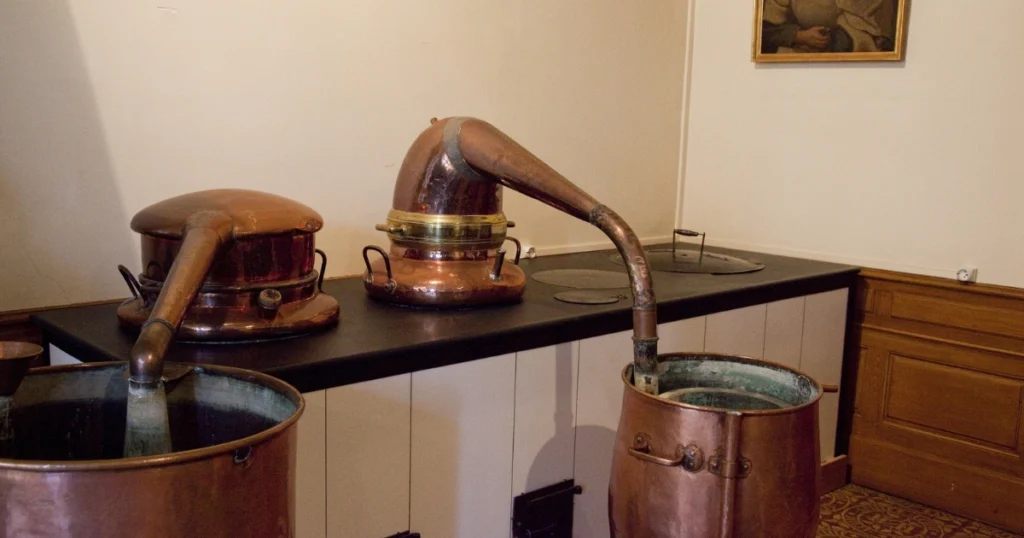
How Pot Still Distillation Works Step by Step
Step 1: Fermentation
The process begins with fermentation. Sugars from grains, fruits, or other sources are converted into alcohol by yeast. The result is a liquid mixture with a low alcohol content, usually between 5 and 12 percent.
Step 2: Heating the mash
The fermented mash is placed inside the copper pot still. Heat is applied, often using wood, gas, or electric elements.
As the temperature rises:
- Alcohol begins to evaporate around 78°C (172°F).
- Water remains mostly liquid at this stage.
Step 3: Vapor separation
The alcohol vapor travels upward through the still’s neck and into the vapor tube. This stage separates alcohol from heavier compounds.
Step 4: Condensation
The vapor enters the condenser, where it passes through a coiled tube surrounded by cold water. The cooling effect turns the vapor back into liquid alcohol.
Step 5: Collection
The condensed liquid flows out of the condenser and is collected. Distillers often separate the liquid into different portions:
- Heads: early portion containing volatile compounds
- Hearts: the desired, clean alcohol
- Tails: heavier, less desirable components
The “hearts” portion becomes the final spirit.
Why Copper Is Used in Pot Stills
Copper plays an important role in traditional pot still distillation.
Benefits of copper include:
- Removes sulfur compounds that cause off-flavors
- Conducts heat evenly
- Improves the aroma and smoothness of the spirit
Because of these qualities, many distillers prefer copper stills over stainless steel alternatives.
Types of Spirits Made with Pot Stills
Pot still distillation is commonly used for spirits that benefit from strong flavor and character.
Examples include:
- Whiskey
- Rum
- Brandy
- Tequila
- Some types of gin
These spirits often undergo multiple distillation runs to reach the desired strength and flavor.
Pot Still vs. Column Still
Two main distillation methods are used in spirit production: pot stills and column stills.
Pot still
- Batch process
- Retains more flavor compounds
- Used for traditional or craft spirits
- Lower efficiency but richer taste
Column still
- Continuous process
- Produces higher alcohol purity
- Used for vodka and industrial spirits
- More efficient but less flavor retention
Each method serves a different purpose depending on the desired final product.
Safety and Legal Considerations
Distillation involves heat, pressure, and flammable vapors. Proper equipment and safety measures are essential.
Important considerations:
- Ensure proper ventilation
- Avoid open flames near alcohol vapors
- Use food-grade materials
- Follow local laws and regulations
In many countries, distilling alcohol at home without a license is illegal. Always check local regulations before attempting any distillation process.
Advantages of Pot Still Distillation
Pot still distillation remains popular because of its unique benefits.
Key advantages:
- Produces rich, full-bodied spirits
- Simple and traditional design
- Suitable for small-batch production
- Allows greater control over flavor
For craft distillers, this method offers both authenticity and quality.
Common Challenges in Pot Still Distillation
While effective, pot still systems have some limitations.
Typical challenges include:
- Lower efficiency compared to column stills
- Need for multiple distillation runs
- Higher energy use per batch
- Manual operation required
Despite these drawbacks, the flavor benefits often outweigh the disadvantages.
FAQ
What is the main purpose of a pot still
The main purpose of a pot still is to separate alcohol from a fermented liquid by heating and condensing the vapor.
Why are pot stills made of copper
Copper removes unwanted sulfur compounds and improves the taste and aroma of the final spirit.
How many times is alcohol distilled in a pot still
Many spirits are distilled two or three times to reach the desired strength and flavor profile.
What temperature does alcohol boil at
Ethanol boils at approximately 78°C (172°F), which is lower than water.
Is pot still distillation better than column distillation
It depends on the goal. Pot stills produce more flavorful spirits, while column stills produce higher-purity alcohol.
Internal Linking Suggestions
- How Fermentation Works in Homemade Food and Drink
- Natural Methods for Preserving Fruits and Grains
- Building a Simple Outdoor Cooking Area