
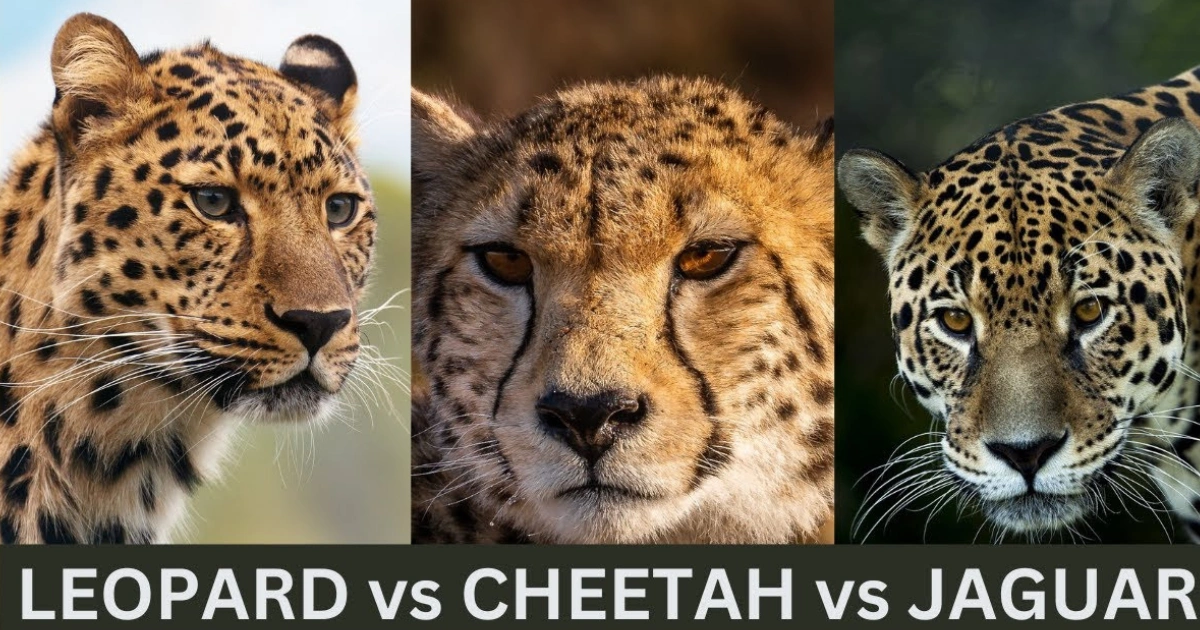
Leopards, cheetahs, and jaguars are often confused due to their spotted coats and powerful appearance. While they may look similar at first glance, these three big cats differ significantly in anatomy, behavior, habitat, and evolutionary lineage. Understanding these distinctions not only satisfies curiosity but also deepens appreciation for how each species has adapted to its environment.
This guide breaks down the key differences between leopards, cheetahs, and jaguars in a clear, practical way, making identification easy once you know what to look for.
Primary keyword: leopard vs cheetah vs jaguar
Why These Big Cats Are Commonly Confused
All three animals are large, carnivorous cats with spotted fur patterns, and they are frequently grouped together in popular media. However, similarity in appearance does not mean similarity in biology or behavior.
Key reasons for confusion include:
- Spotted coats across all three species
- Similar body size at a distance
- Overlapping reputation as apex predators
Once you examine their markings, build, and hunting styles, the differences become unmistakable.
Leopard Characteristics and Identification
Spot Pattern
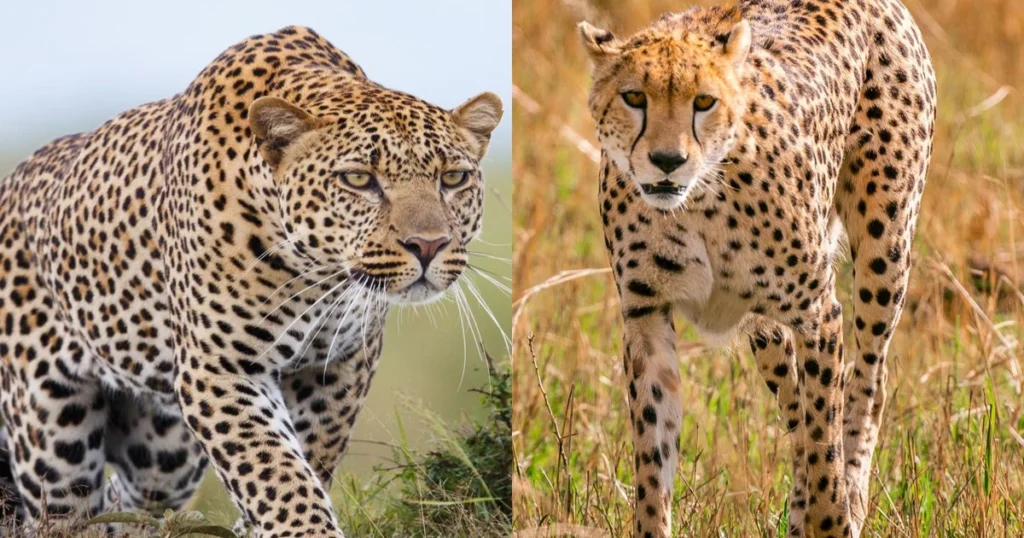
Leopards have rosette-shaped spots that do not contain a central dot. These rosettes are smaller and more densely packed than those of jaguars.
Body Structure
Leopards have a stocky, muscular body with relatively short legs. Their powerful shoulders and jaws allow them to drag prey into trees, a behavior unique among these three cats.
Habitat and Range
Leopards are the most adaptable of the three. They live in:
- Sub-Saharan Africa
- Parts of the Middle East
- South and Southeast Asia
They thrive in forests, savannas, mountains, and even areas near human settlements.
Hunting Behavior
Leopards are stealth hunters that rely on ambush rather than speed. They are primarily nocturnal and are exceptional climbers, often storing prey in trees to avoid scavengers.
Cheetah Characteristics and Identification
Spot Pattern
Cheetahs have solid black round spots, not rosettes. Their spots are evenly spaced and never form clusters.
They also have distinctive black tear-like stripes running from the inner corners of their eyes to the mouth.
Body Structure
Cheetahs are built for speed, not strength. They have:
- Long, slender legs
- A narrow waist
- A lightweight frame
They are the fastest land animals, capable of reaching speeds over 60 miles per hour for short bursts.
Habitat and Range
Cheetahs primarily live in:
- Open savannas and grasslands of Africa
- A very small population in Iran
They avoid dense forests because they need open space to run.
Hunting Behavior
Cheetahs hunt during daylight hours and rely on explosive speed rather than stealth or strength. Unlike leopards and jaguars, they rarely climb trees and often lose their kills to stronger predators.
Jaguar Characteristics and Identification
Spot Pattern
Jaguars have large rosettes with a distinct black dot in the center, making their pattern the boldest of the three.
Body Structure
Jaguars are the most muscular and powerful. They have:
- Broad heads
- Thick necks
- Extremely strong jaws
Their bite force is strong enough to crush bones and pierce turtle shells.
Habitat and Range
Jaguars are found in:
- Central America
- South America
- Parts of Mexico
They prefer dense rainforests, wetlands, and river systems.
Hunting Behavior
Jaguars often hunt near water and are excellent swimmers. Unlike other big cats, they commonly kill prey with a bite directly through the skull rather than the throat.
Key Differences at a Glance
The easiest ways to tell them apart include:
- Spots: Rosettes without dots (leopard), solid spots (cheetah), rosettes with central dots (jaguar)
- Build: Stocky climber (leopard), slim runner (cheetah), muscular powerhouse (jaguar)
- Habitat: Highly adaptable (leopard), open plains (cheetah), dense forests and wetlands (jaguar)
Genetics and Classification
Leopards and jaguars belong to the genus Panthera, meaning they share traits such as the ability to roar. Cheetahs belong to a different genus and are genetically distinct, despite visual similarities.
This genetic separation explains why cheetahs behave differently and lack the physical strength seen in the other two.
Why Knowing the Difference Matters
Understanding the distinction between these animals is important for:
- Wildlife education
- Conservation awareness
- Accurate identification in nature documentaries
- Respect for species-specific behavior and habitat needs
Misidentification can oversimplify conservation challenges and obscure the unique threats each species faces.
Frequently Asked Questions
Is a cheetah a type of leopard
No. Cheetahs are genetically distinct and belong to a different genus.
Which is the strongest: leopard, cheetah, or jaguar
The jaguar is the strongest, with the most powerful bite force.
Can leopards climb trees
Yes. Leopards are exceptional climbers and often store prey in trees.
Do cheetahs roar
No. Cheetahs cannot roar and communicate through chirps and vocal sounds.
Where do jaguars live
Jaguars live in Central and South America, primarily in rainforest and wetland regions.
Internal Linking Suggestions
From secretsofthegreengarden.com, consider linking to:
- Big Cats of the World Explained
- Wild Animals and Their Unique Survival Traits
- Predators and Ecosystem Balance in Nature
External High-Authority Sources
For further factual reference:
- National Geographic – big cat species profiles
- Smithsonian National Zoo – carnivore biology and behavior
- World Wildlife Fund – large cat conservation
Final Thoughts
Leopards, cheetahs, and jaguars may share a spotted appearance, but they are remarkably different animals shaped by distinct environments and evolutionary paths. By paying attention to spot patterns, body structure, and behavior, anyone can learn to identify these big cats with confidence.
Recognizing these differences deepens understanding of wildlife diversity and highlights the importance of protecting each species according to its unique ecological role.
888slot – Nền tảng casino trực tuyến uy tín cho người Việt cung cấp các sảnh bài đẳng cấp từ những nhà phát hành lớn. Đồ họa 3D sắc nét cùng âm thanh sống động sẽ khiến bạn không thể rời mắt. TONY03-31