
Hugelkultur is a sustainable gardening method that transforms natural materials into long-lasting, self-fertilizing garden beds. Originating from traditional European practices, hugelkultur relies on buried wood and organic matter to create rich soil that improves over time. When built correctly, a hugelkultur bed can remain productive for decades while requiring less watering and fewer external inputs than conventional garden beds.
This article explains how hugelkultur works, how to build it properly, what to plant, and why it continues to gain popularity among sustainable gardeners worldwide.
What Is Hugelkultur?
Hugelkultur is a raised-bed gardening technique that uses decaying wood as the foundation of the planting area. Logs, branches, and woody debris are layered with organic matter and soil, forming a mound that slowly decomposes and feeds plants over many years.
The wood acts like a sponge, absorbing rainwater and releasing it gradually. As it breaks down, it provides nutrients, improves soil structure, and supports beneficial microorganisms.
Why Hugelkultur Beds Improve Over Time
Unlike traditional garden beds that lose nutrients season after season, hugelkultur beds become more fertile as the buried wood decomposes.
Key long-term benefits include:
- Increased soil fertility over time
- Improved water retention during dry periods
- Reduced need for fertilizers
- Enhanced microbial activity
- Better root development
A properly built hugelkultur bed can remain productive for 15 to 25 years, depending on the wood used and local climate conditions.
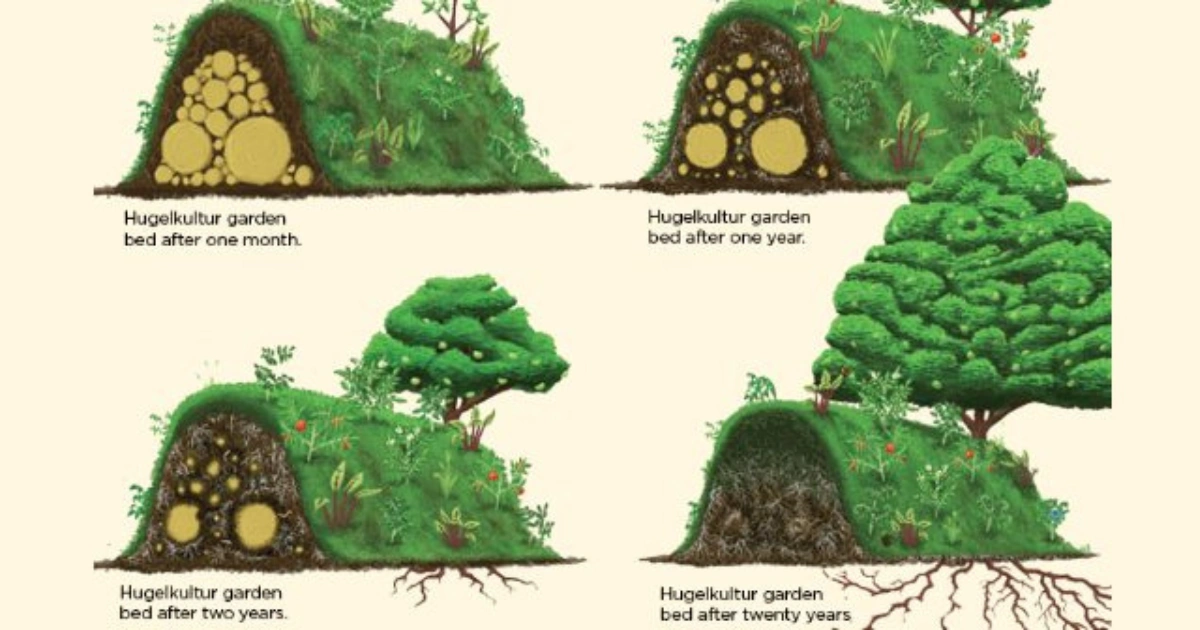
How Hugelkultur Changes Over the Years
The First Month
In the early stage, the bed is mostly structural. Large logs create air pockets, and soil settles into gaps. Initial plant growth may appear modest as microorganisms begin breaking down the wood.
After One Year
By the first year, fungal networks and bacteria actively decompose the wood. The bed retains moisture more effectively, and plant growth becomes stronger and more balanced.
After Two Years
The bed reaches peak biological activity. Roots penetrate deeper into the decomposing wood, accessing stored moisture and nutrients. Yields typically increase during this stage.
After Twenty Years
After decades, the original wood has mostly transformed into rich humus. The bed may flatten naturally but remains fertile, holding moisture and supporting healthy plant growth with minimal intervention.
How Hugelkultur Works Below the Surface
The success of hugelkultur depends on what happens underground.
- Decaying wood provides long-term carbon
- Soil organisms convert wood into plant-available nutrients
- Mycorrhizal fungi form networks that enhance nutrient uptake
- Air pockets improve oxygen flow to roots
- Moisture is stored deep in the bed and released slowly
According to soil ecology research from university extension programs, decaying wood significantly improves soil structure and water-holding capacity over time.
Materials Needed for a Hugelkultur Bed
Hugelkultur relies on readily available organic materials.
Suitable Wood Types
Best options include:
- Hardwoods such as oak, maple, and beech
- Fruit tree wood
- Untreated fallen branches
Avoid using:
- Treated or painted wood
- Black walnut (toxic to some plants)
- Fresh softwoods in large quantities
Additional Layers
- Smaller branches and twigs
- Leaves, straw, or grass clippings
- Compost or aged manure
- Topsoil for planting
Step-by-Step Guide to Building Hugelkultur Beds
Step 1: Choose the Location
Select a sunny area with good drainage. Hugelkultur works well on flat ground or gentle slopes.
Step 2: Prepare the Base
Dig a shallow trench if desired, especially in dry climates. This helps anchor the bed and increase moisture retention.
Step 3: Add Large Logs
Place logs lengthwise in the trench or directly on the ground. These form the core of the bed.
Step 4: Add Smaller Organic Material
Layer branches, leaves, and organic waste over the logs to fill gaps and improve decomposition.
Step 5: Add Compost and Soil
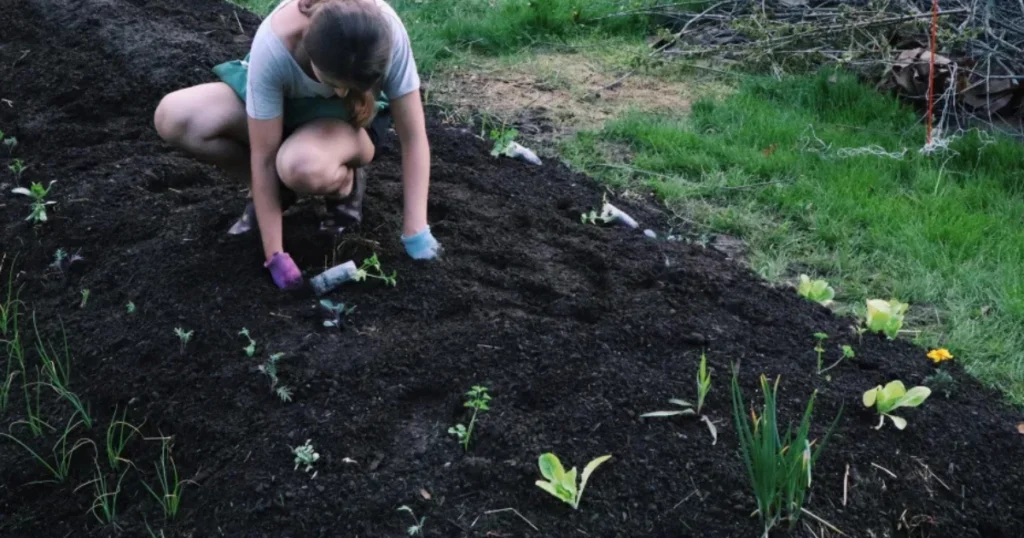
Cover the mound with compost and topsoil, ensuring at least 20–30 cm of soil for planting.
Step 6: Plant Immediately
Plant shallow-rooted crops in the first season while deeper roots develop over time.
What to Plant in Hugelkultur Beds
Hugelkultur beds support a wide range of plants.
Best Plants for Early Stages
- Leafy greens
- Squash and pumpkins
- Beans and peas
- Herbs
Long-Term Planting Options
- Fruit trees
- Berry bushes
- Perennial vegetables
- Native plants
Plants with extensive root systems benefit most from the moisture retention deep within the bed.
Watering and Maintenance
One of hugelkultur’s biggest advantages is reduced watering needs.
- Water thoroughly during the first growing season
- After establishment, watering needs decrease significantly
- Mulching helps retain moisture and regulate temperature
Over time, hugelkultur beds require less maintenance than traditional raised beds.
Environmental Benefits of Hugelkultur
Hugelkultur aligns closely with regenerative gardening principles.
Environmental advantages include:
- Reduced irrigation requirements
- Recycling fallen trees and organic waste
- Improved soil carbon storage
- Reduced erosion
- Increased biodiversity
According to sustainable agriculture research from government and university sources, soil-building methods like hugelkultur contribute positively to long-term land health.
Common Mistakes to Avoid
- Using treated or toxic wood
- Burying wood too shallowly
- Planting deep-rooted trees too early
- Ignoring settling during the first year
- Overwatering after establishment
Allowing the bed to settle naturally is part of the process.
Hugelkultur vs Traditional Raised Beds
Hugelkultur differs from standard raised beds in several key ways:
- Long-term fertility without frequent soil replacement
- Natural moisture regulation
- Reduced dependence on external inputs
- Gradual improvement rather than soil depletion
While traditional beds may be easier to build, hugelkultur offers superior long-term sustainability.
Frequently Asked Questions
How long does a hugelkultur bed last?
Most beds remain productive for 15 to 25 years, depending on wood type and climate.
Can hugelkultur be used in small gardens?
Yes. Smaller-scale hugelkultur beds work well in urban and backyard gardens.
Does hugelkultur attract pests?
Properly built beds do not attract pests more than traditional beds. Avoid food waste near the surface.
Is hugelkultur suitable for dry climates?
Yes. It is especially beneficial in dry regions due to its water-holding capacity.
Can hugelkultur be built above ground?
Yes. Raised hugelkultur beds are effective where digging is difficult.
Internal Linking Suggestions for secretsofthegreengarden.com
- Sustainable Garden Bed Ideas for Low-Water Gardening
- Composting Basics for Healthier Soil
- Natural Soil Improvement Methods for Home Gardens
External High-Authority Sources
- USDA Natural Resources Conservation Service – Soil health principles
- University extension programs on soil organic matter and decomposition
- FAO resources on sustainable agriculture and soil management
Final Thoughts
Hugelkultur is more than a gardening technique. It is a long-term investment in soil health, sustainability, and resilience. By mimicking natural forest processes, hugelkultur beds create productive growing spaces that improve with age rather than degrade.
For gardeners seeking low-maintenance, water-efficient, and environmentally responsible methods, hugelkultur offers a proven solution that continues to deliver benefits for decades.
**aquasculpt**
aquasculpt is a premium metabolism-support supplement thoughtfully developed to help promote efficient fat utilization and steadier daily energy.
**mounja boost**
MounjaBoost is a next-generation, plant-based supplement created to support metabolic activity, encourage natural fat utilization, and elevate daily energywithout extreme dieting or exhausting workout routines.
pg slot
สล็อต PG เกมสล็อตออนไลน์ที่คนค้นหาเยอะ เข้าเล่นไว ฝากถอนออโต้
คำค้นหา สล็อต PG มาแรงในช่วงนี้ ในกลุ่มผู้เล่นเกมสล็อตออนไลน์ เพราะเป็น ผู้ให้บริการเกมสล็อตที่มาแรง ด้าน งานภาพคุณภาพสูง ความ ลื่นไหล และ ระบบจ่ายที่ดึงดูด เกมของ PG พัฒนาโดยผู้ให้บริการชั้นนำ ที่รองรับการเล่นทั้งบน มือถือ และ เดสก์ท็อป
ความโดดเด่น ของ pg slot
สล็อต PG เป็นเกมสล็อตออนไลน์ที่ออกแบบมาให้ เปิดเกมได้ทันที เล่นผ่าน ระบบเว็บ และรองรับ ทุกแพลตฟอร์ม เข้าเล่นผ่านเว็บได้เลย ผู้เล่นสามารถเข้าเล่นผ่าน หน้าเว็บ ได้ทันที ภาพและเสียงถูกพัฒนาในรูปแบบ เอฟเฟกต์ 3 มิติ ให้ความคมชัด พร้อมเอฟเฟกต์ สวยงาม
คุณสมบัติหลักของเกม สล็อต PG ได้แก่
มีรอบโบนัสให้ลุ้นบ่อย
ฟีเจอร์ตัวคูณรางวัล
เล่นฟรีก่อนเติมเงิน
มีเมนูภาษาไทย
ฝากถอนง่าย ไม่ต้องรอนาน
แพลตฟอร์ม สล็อต PG มักมี การฝาก-ถอน ฝากถอนตลอดเวลา ขั้นต่ำเริ่มต้นเพียง หลักหน่วย ขึ้นอยู่กับ ระบบของผู้ให้บริการ การทำรายการใช้เวลา ไม่กี่วินาที ผ่าน คิวอาร์โค้ด หรือระบบ แอปธนาคาร ทำให้ธุรกรรมเป็นไปอย่าง ต่อเนื่อง
หมวดเกมฮิต ใน PG Slot
เกม PG Slot มีธีมหลากหลาย เช่น
ธีม แฟนตาซี
ธีม ลุยด่าน
ธีม เอเชียและโชคลาภ
ธีม ธรรมชาติ
หลายคนชอบเกมที่โบนัสเข้าไว พร้อมระบบ Special Feature และ โอกาสทำกำไรสูง เหมาะกับทั้ง คนเพิ่งเล่น และ สายสล็อตจริงจัง
มาตรฐานระบบ
pg slot มีมาตรฐานรองรับ มีการ รักษาความปลอดภัย และใช้ระบบสุ่มผล Random Number Generator เพื่อให้ผลลัพธ์ ตรวจสอบได้ แพลตฟอร์มที่ให้บริการ PG Slot ควรมี ความปลอดภัยสูง
บทสรุปท้ายบท
สล็อต PG เป็นตัวเลือกยอดนิยมสำหรับผู้ที่ต้องการเล่นสล็อตออนไลน์ ด้วยจุดเด่นด้าน กราฟิกคุณภาพ และการทำธุรกรรมที่ ไว ผู้เล่นสามารถเริ่มต้นได้ ทันที ฝากถอนสะดวก และเลือกเกมได้ ครบทุกหมวด เหมาะสำหรับ ทั้งมือใหม่และมือโปร ในโลกของเกมสล็อตออนไลน์