
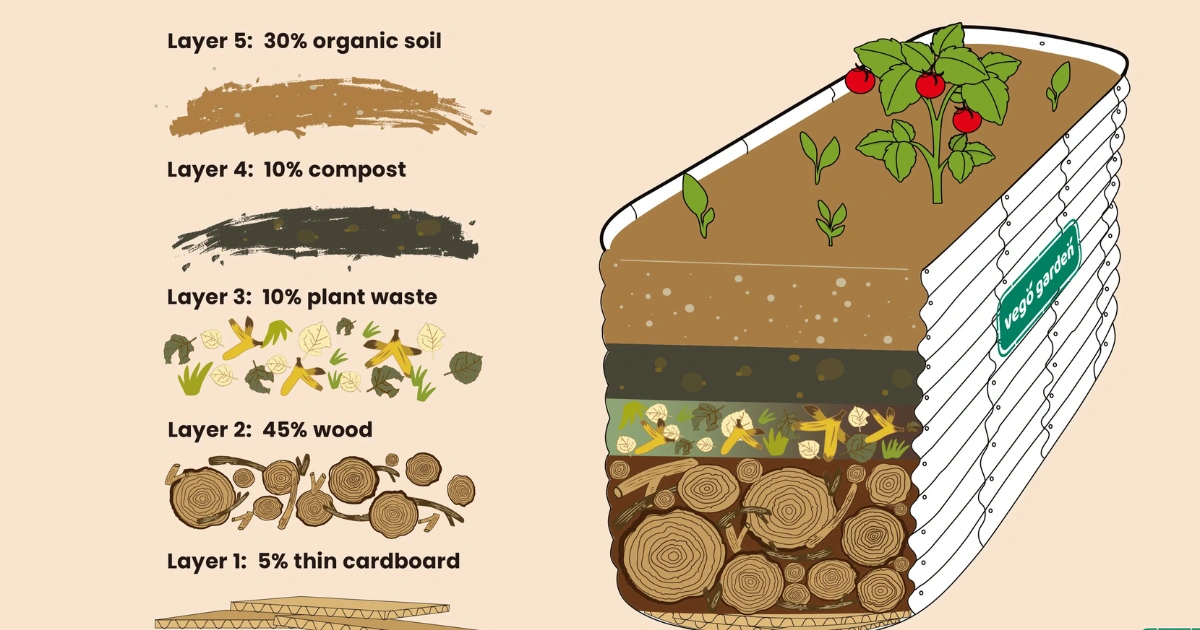
A well-filled raised garden bed sets the foundation for healthy plants and strong harvests. Using a layered soil method inspired by Hügelkultur helps improve drainage, retain moisture, and build long-term soil fertility.
Step-by-Step Layered Filling Method
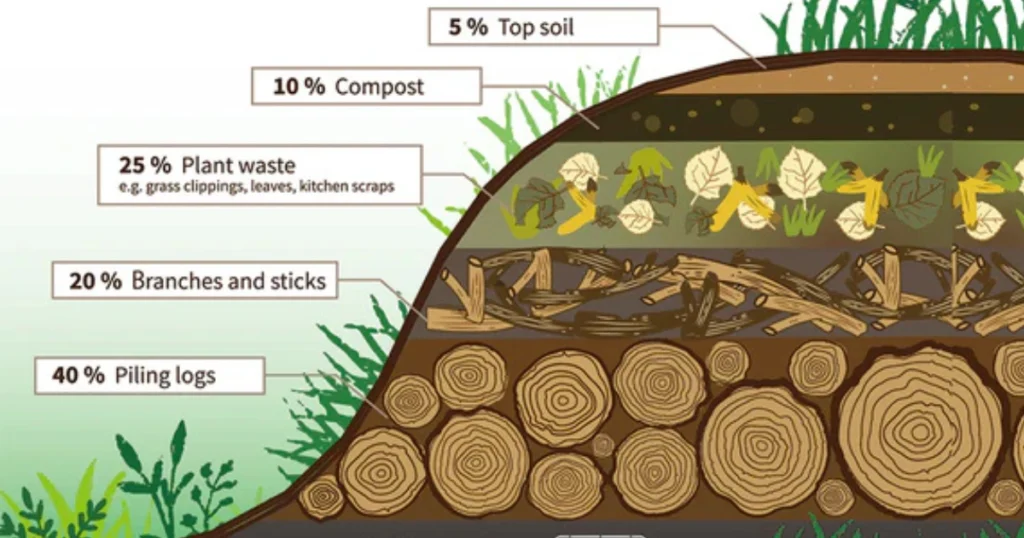
1. Branches and Logs
Start with woody materials at the bottom of the bed. These create airflow, improve drainage, and slowly release nutrients as they decompose.
2. Coarse Organic Material
Add twigs, rough mulch, or wood chips. This layer helps stabilize the base and continues the drainage process.
3. Grass Clippings and Green Waste
Fresh plant material adds nitrogen, which supports microbial activity and balances the carbon-rich wood layers below.
4. Cardboard Layer
Lay flattened cardboard sheets on top. This acts as a weed barrier while allowing water and roots to pass through as it breaks down.
5. Compost
Add a generous layer of mature compost. This provides essential nutrients and beneficial microorganisms for plant growth.
6. Straw or Leaf Mulch
Finish with straw or dried leaves to retain moisture, regulate soil temperature, and protect young plants.
Why This Method Works
- Improves soil structure over time
- Enhances water retention without waterlogging
- Encourages beneficial soil life
- Reduces weeds naturally
- Creates nutrient-rich growing conditions
This layered approach is ideal for raised beds and supports healthier plants with less maintenance.