
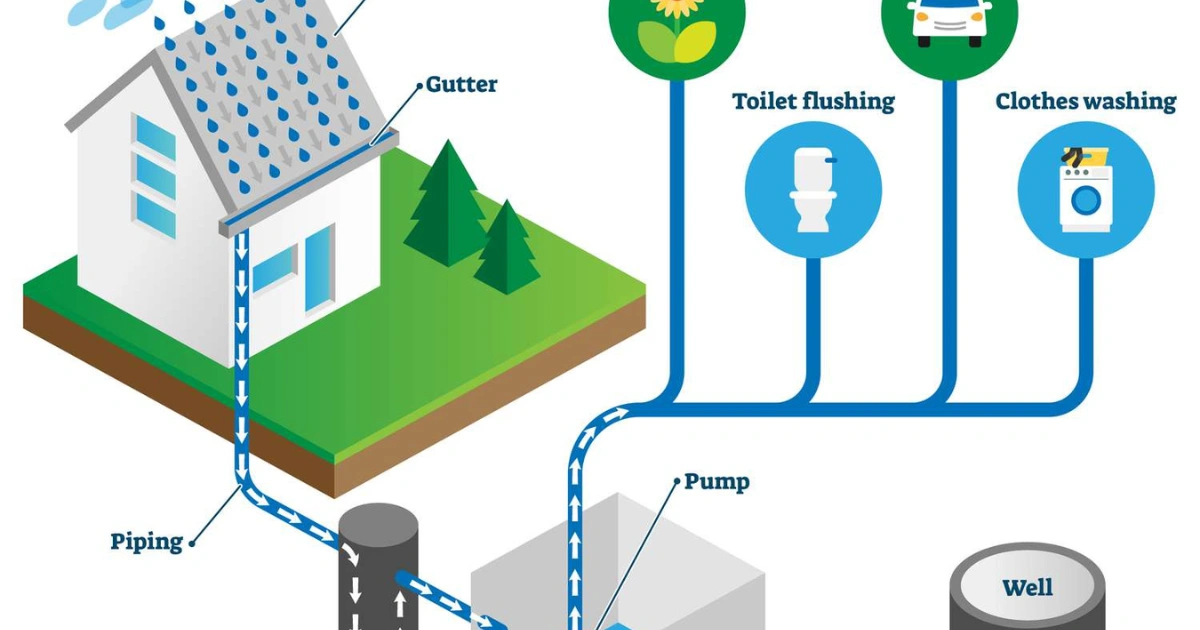
This image shows a cross-section of a rainwater harvesting system installed below ground to capture, filter, store, and reuse rainwater around the home.
1️⃣ Rainwater collection
Rainwater is captured from the roof through gutters and downspouts. Instead of being lost to runoff, the water is directed into an underground system.
2️⃣ Initial filtration
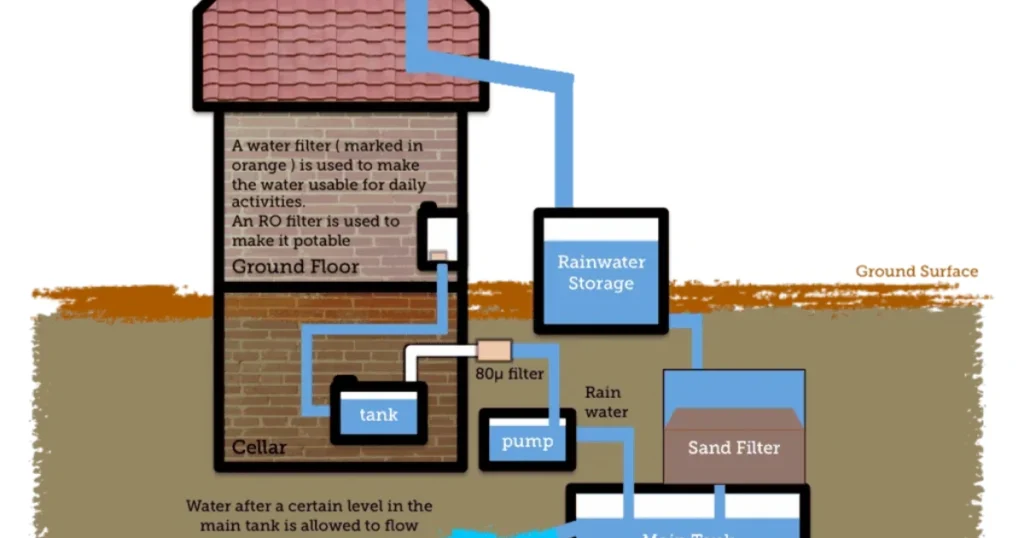
Before entering the tank, debris like leaves, dirt, and sediment are filtered out. This helps keep the stored water cleaner and protects pumps and pipes.
3️⃣ Underground storage tank
The filtered water is stored in a sealed underground cistern. Being underground keeps the water cooler, reduces algae growth, and saves yard space.
4️⃣ Natural settling and secondary filtering
Heavier particles settle at the bottom, while additional filters help improve water clarity before reuse.
5️⃣ Pumped reuse
A pump sends the stored water back up for non-drinking uses such as:
- Lawn and garden irrigation
- Washing outdoor areas
- Flushing toilets (in some systems)
This significantly reduces the demand for municipal water.
6️⃣ Overflow and safety control
When the tank is full, excess water is safely diverted away from the foundation to prevent flooding or soil damage.
Important reality check
- This water is not potable unless treated with advanced purification
- Local building codes and permits may be required
- Proper maintenance is essential for long-term performance
Why homeowners choose this system
- Lower water bills
- Reduced stormwater runoff
- More sustainable landscaping
- Emergency water reserve for non-drinking use
Key takeaway
Underground rainwater systems turn rainfall into a practical resource while protecting the landscape and conserving water. It’s a smart blend of engineering, sustainability, and everyday usefulness.