
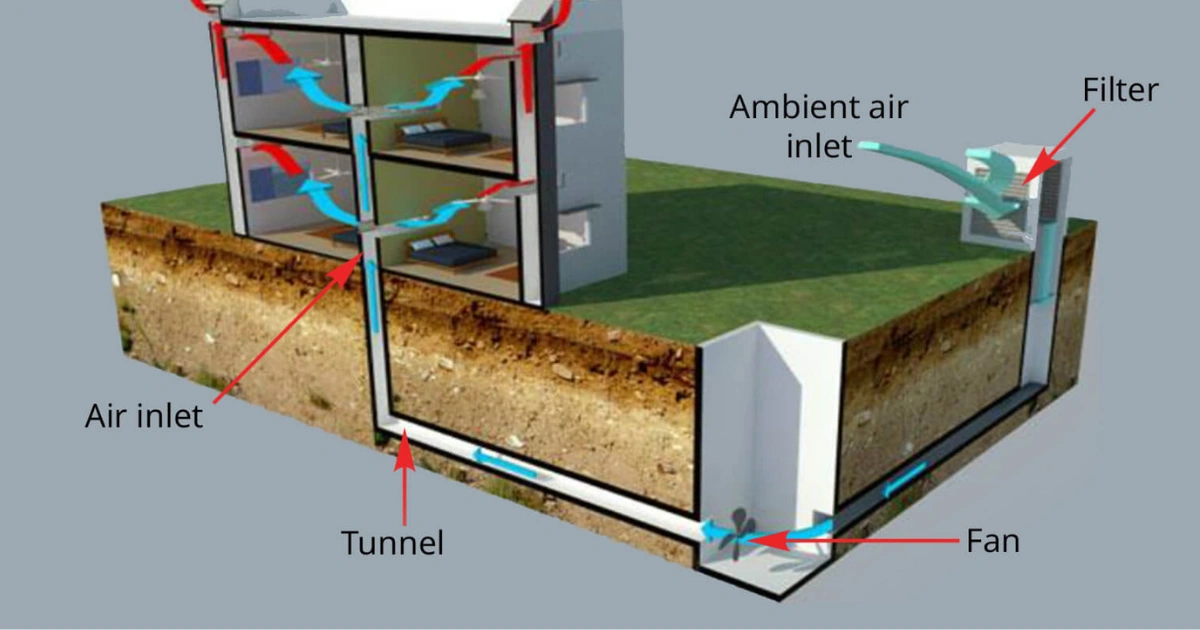
An earth air tunnel, also known as an earth tube or ground air heat exchanger, is a passive climate control system that uses the stable temperature of the soil to regulate indoor air. This simple yet effective design has been used for centuries in various forms and is now gaining renewed interest among homeowners seeking energy-efficient and eco-friendly solutions.
What Is an Earth Air Tunnel
An earth air tunnel is a buried pipe system that pulls outside air through underground ducts before it enters a building. Because the soil a few feet below the surface maintains a relatively constant temperature throughout the year, the air traveling through the pipe is naturally cooled in summer and warmed in winter.
This method reduces the need for mechanical heating and cooling systems, making it an attractive option for sustainable homes, greenhouses, and off-grid buildings.
How an Earth Air Tunnel Works
The system relies on the natural thermal stability of the ground. At a depth of about 6 to 10 feet, soil temperature remains fairly constant regardless of outdoor weather conditions.
In Summer
When hot air enters the intake pipe, it travels through the underground tunnel. As it moves through the cooler soil, the air gradually loses heat. By the time it reaches the interior space, the temperature is significantly lower.
Typical summer process:
- Outdoor air: around 35°C (95°F)
- Underground pipe temperature: around 25°C (77°F)
- Air entering the building: noticeably cooler and more comfortable
This passive cooling effect can reduce or eliminate the need for air conditioning in many climates.
In Winter
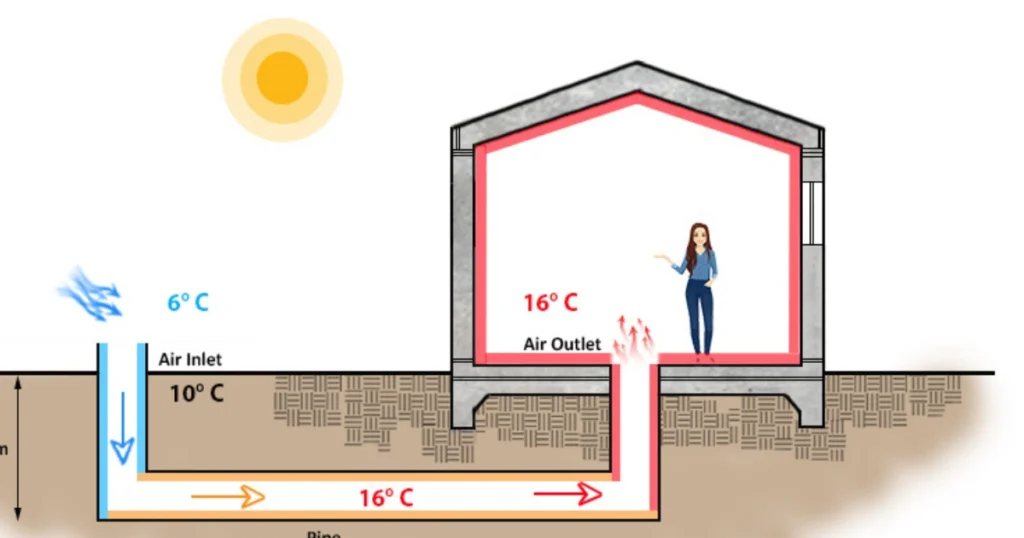
During colder months, the process works in reverse. Cold outdoor air passes through the same underground tunnel, where it absorbs heat from the warmer soil.
Typical winter process:
- Outdoor air: around 6°C (43°F)
- Underground pipe temperature: around 16°C (60°F)
- Air entering the building: significantly warmer than outside
This pre-heated air reduces the load on conventional heating systems.
Key Components of an Earth Air Tunnel System
A basic earth air tunnel setup includes:
- Air intake tower or vent above ground
- Underground pipe or tunnel, typically 6–10 feet deep
- Air outlet connected to the building
- Optional fan for assisted airflow
- Drainage system to prevent moisture buildup
The system can operate naturally using air pressure differences or with a small fan for more consistent airflow.
Benefits of an Earth Air Tunnel
An earth air tunnel offers several practical advantages:
- Lower energy consumption for heating and cooling
- Reduced electricity costs
- Quiet, passive operation
- Improved indoor air quality when properly filtered
- Long service life with minimal maintenance
For eco-conscious homeowners, it also reduces reliance on fossil fuels and lowers carbon emissions.
Important Design Considerations
To ensure optimal performance, several factors must be considered during installation.
Proper Depth
Pipes should be buried deep enough to reach stable soil temperatures, usually at least 6 feet below ground level.
Pipe Material
Smooth, durable pipes made of PVC or HDPE are commonly used. These materials resist corrosion and allow easy airflow.
Slope and Drainage
The tunnel should have a slight slope to prevent water accumulation. A drainage outlet or sump helps remove condensation.
Air Filtration
Installing a filter at the air intake prevents dust, insects, and debris from entering the system.
Potential Drawbacks
Although effective, earth air tunnels are not suitable for every location. Some limitations include:
- Higher installation cost compared to basic ventilation
- Reduced efficiency in very humid climates
- Need for careful design to avoid condensation or mold
- Space requirements for underground pipes
Proper planning and professional installation can minimize these issues.
Ideal Applications
Earth air tunnels are particularly effective in:
- Passive solar homes
- Earth-sheltered buildings
- Greenhouses
- Off-grid cabins
- Energy-efficient new constructions
They work best in climates with significant temperature differences between seasons.
Simple Example of a Home System
A typical residential system may include:
- A 20–50 meter (65–165 ft) long pipe
- Buried at 2–3 meters (6–10 ft) deep
- Connected to a small ventilation fan
- Delivering pre-conditioned air into living spaces
Even a modest system can noticeably improve comfort and reduce energy bills.
Maintenance Tips
To keep the system working efficiently:
- Clean or replace intake filters regularly
- Inspect drainage points for blockages
- Check for signs of moisture buildup
- Ensure airflow remains unobstructed
With proper care, an earth air tunnel can last decades.
FAQ
How much can an earth air tunnel reduce energy costs
Savings depend on climate, insulation, and system size, but many homeowners see noticeable reductions in heating and cooling expenses, especially in moderate climates.
Can an earth air tunnel replace air conditioning
In mild or temperate regions, it may reduce or eliminate the need for air conditioning. In very hot climates, it usually works best as a pre-cooling system.
Does the system require electricity
It can operate passively, but many systems use a small fan to improve airflow. The energy use is minimal compared to traditional HVAC systems.
Is there a risk of mold inside the pipes
Proper design with drainage, smooth pipes, and good airflow greatly reduces this risk. Regular maintenance is also important.
How deep should the pipes be buried
Most systems work best when buried between 6 and 10 feet deep, where soil temperature remains stable throughout the year.
Internal Linking Suggestions
- Passive Solar Greenhouse Design for Year-Round Growing
- How to Build an Earth-Sheltered Home
- Natural Ventilation Techniques for Energy-Efficient Houses