
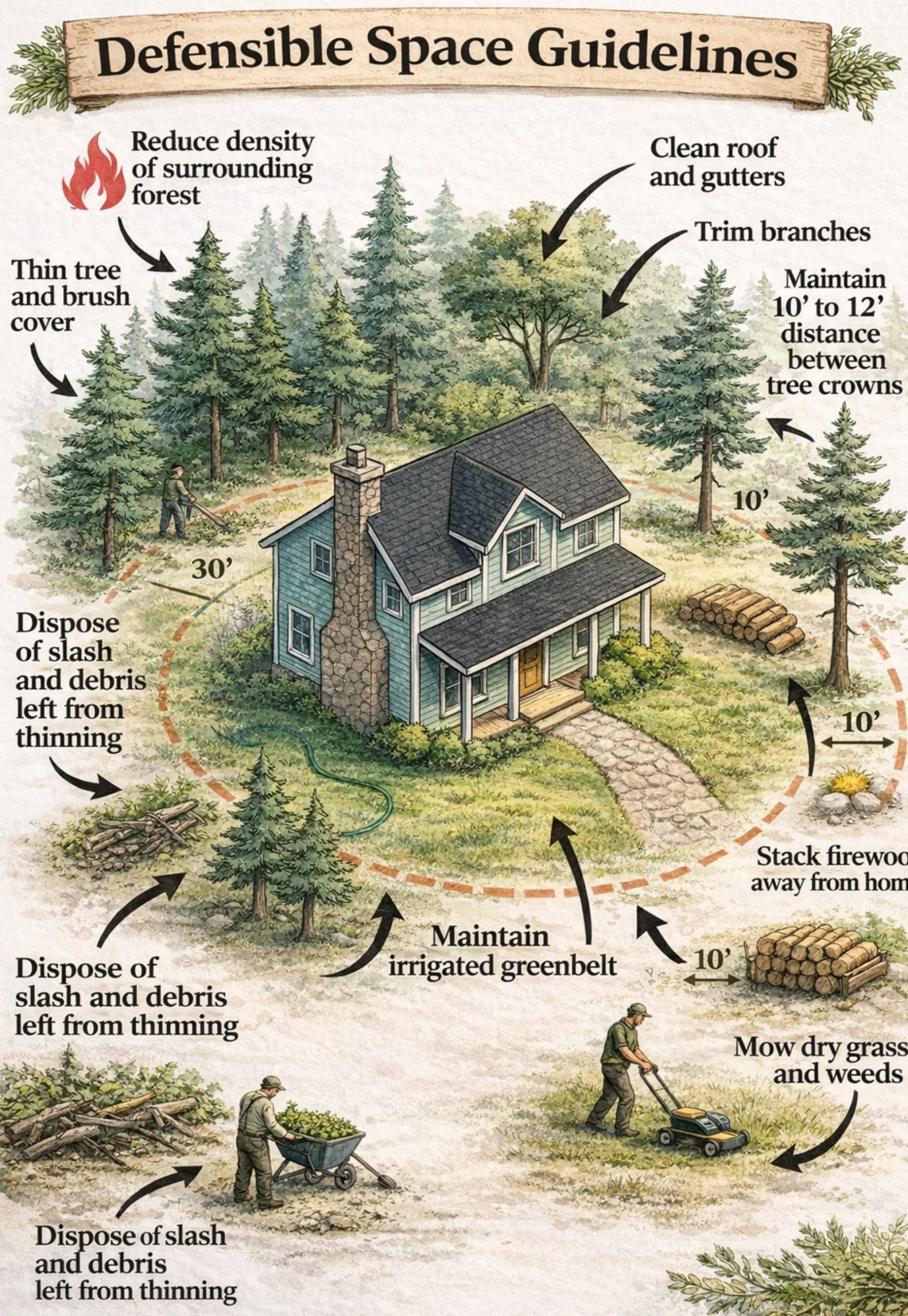
Creating a defensible space around your home is one of the most effective actions you can take to reduce wildfire risk. This carefully managed area helps slow the spread of fire, limits the intensity of flames near structures, and gives firefighters a safer and more effective environment to defend your property.
Defensible space is not about removing all vegetation. It is about smart landscaping, regular maintenance, and reducing the fuels that allow wildfires to spread rapidly.
What Is Defensible Space?
Defensible space is the buffer zone between your home and the surrounding vegetation. Within this area, plants, trees, and other combustible materials are managed to reduce fire behavior and prevent flames or embers from reaching structures.
This space plays a critical role in:
- Reducing fire intensity near the home
- Limiting ember ignition, the leading cause of home loss
- Improving firefighter safety and access
- Increasing the chances that a structure can withstand a wildfire
Reduce Forest Density Near the Home
Dense vegetation allows fire to move quickly and climb from the ground into tree canopies. Thinning is essential within the area closest to your home.
Key recommendations:
- Thin trees and brush within at least 30 feet of the structure
- Maintain 10 to 12 feet of spacing between tree canopies
- Remove small trees growing beneath larger ones
Reducing density prevents crown fires, which are among the most destructive wildfire behaviors.
Trim Trees and Remove Dead Vegetation
Dead plant material ignites easily and allows fire to spread faster.
Best practices include:
- Trimming lower tree branches at least 10 feet from the ground
- Removing dead limbs, fallen leaves, and pine needles
- Clearing vegetation that touches or overhangs the roof
Proper pruning helps keep fire on the ground, where it is easier to control.
Keep Roofs and Gutters Free of Debris
Roofs and gutters are common ignition points during wildfires, especially from wind-blown embers.
Maintenance tips:
- Clean gutters regularly, especially before fire season
- Remove leaves, needles, and debris from roofs
- Inspect corners, valleys, and flat roof areas where debris accumulates
A clean roof significantly reduces the risk of embers igniting your home.
Store Firewood Safely
Firewood stacks act as concentrated fuel sources and should never be stored close to structures.
Safe storage guidelines:
- Keep firewood at least 30 feet away from buildings
- Avoid stacking firewood against exterior walls
- Store on bare ground or gravel rather than grass
Relocating firewood during fire season adds an extra layer of protection.
Maintain Lawns and Greenbelts
Well-maintained green spaces can slow or stop fire spread, while dry vegetation increases risk.
Recommended actions:
- Mow grass regularly and keep it short
- Remove dry weeds and dead plants
- Irrigate green areas to keep vegetation healthy and moist
Healthy, well-watered plants are far less likely to ignite.
Dispose of Yard Debris and Slash Properly
Vegetation removed during thinning and pruning should not be left on-site.
Effective disposal methods:
- Remove branches and yard waste promptly
- Chip or haul away debris
- Follow local guidelines for green waste disposal
Leaving slash piles behind can negate the benefits of thinning.
Why Defensible Space Is So Important
Defensible space offers multiple layers of protection during a wildfire.
Its benefits include:
- Slowing the spread of flames toward structures
- Reducing heat exposure to walls and windows
- Lowering the chance of ember ignition
- Giving firefighters room to work safely
Homes with defensible space are far more likely to survive a wildfire than those surrounded by unmanaged vegetation.
Make Defensible Space an Ongoing Practice
Defensible space is not a one-time task. Vegetation grows back, debris accumulates, and conditions change with the seasons.
To stay protected:
- Inspect your property regularly
- Perform maintenance before fire season
- Adapt landscaping as plants mature
Consistent upkeep ensures your home remains as fire-resistant as possible.
Final Thoughts
Wildfires are unpredictable, but preparation makes a measurable difference. By creating and maintaining defensible space, you give your home its best chance of surviving a wildfire while also supporting firefighter safety and effectiveness.
Defensible space is not just about property protection. It is about preparedness, responsibility, and resilience in fire-prone landscapes.
Wonderful blog! I found it while browsing on Yahoo News. Do you have any suggestions on how to get listed in Yahoo News? I’ve been trying for a while but I never seem to get there! Appreciate it
Woh I like your articles, saved to fav! .
Youre so cool! I dont suppose Ive read anything like this before. So good to find someone with some original thoughts on this subject. realy thank you for starting this up. this web site is something that’s needed on the web, someone with a bit originality. useful job for bringing one thing new to the internet!