
Corvids are among the most intelligent and adaptable birds in the world. From the deep forests to urban environments, these birds have learned to thrive alongside humans while maintaining complex social behaviors and remarkable problem-solving skills.
This guide explores the most common corvid species, how to identify them, and why they are so important in ecosystems worldwide.
What Are Corvids?
Corvids belong to the family Corvidae, which includes crows, ravens, magpies, jays, jackdaws, rooks, and choughs. These birds are known for their intelligence, vocal communication, and adaptability.
They are often characterized by:
- Strong, slightly curved beaks
- Dark plumage (often black or black with markings)
- High cognitive abilities
- Social group behavior
Primary Keyword: corvid species
Understanding different corvid species helps birdwatchers, gardeners, and nature enthusiasts identify these birds accurately and appreciate their ecological role.
Common Corvid Species and How to Identify Them
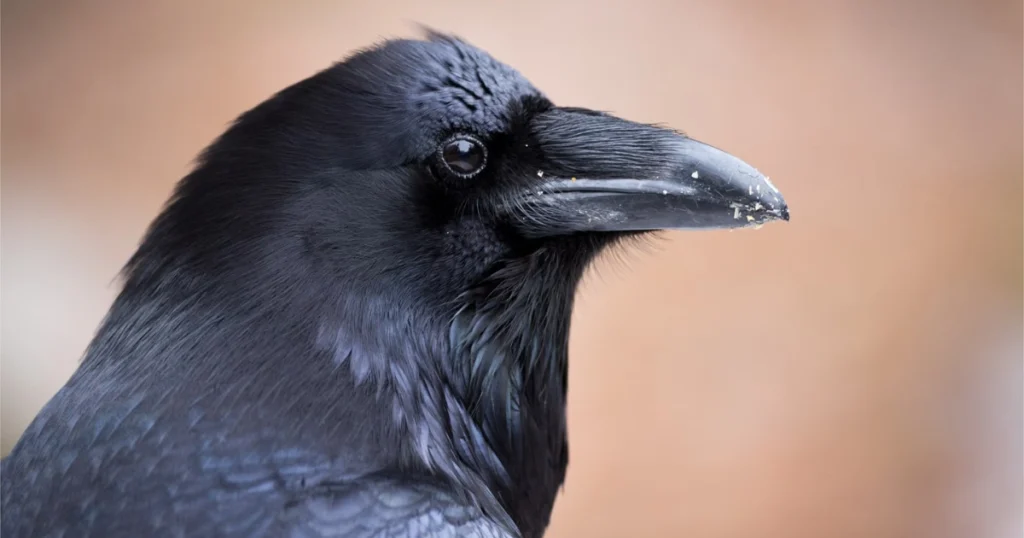
Common Raven (Corvus corax)
The common raven is the largest of all corvid species. It has a thick bill, shaggy throat feathers, and a deep, croaking call.
Key traits:
- Larger and heavier than crows
- Wedge-shaped tail in flight
- Deep, resonant voice
- Often seen in remote or mountainous areas
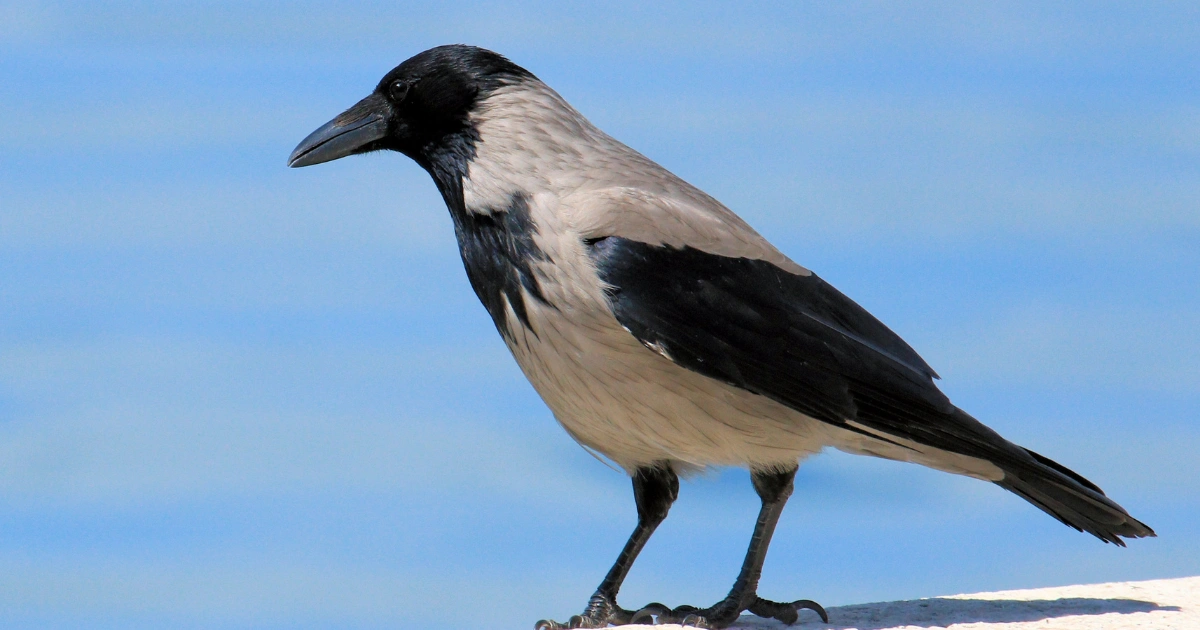
Hooded Crow (Corvus cornix)
The hooded crow is easily recognized by its two-tone coloring.
Key traits:
- Grey body with black head, wings, and tail
- Similar size to carrion crow
- Common in Europe and parts of Asia
Carrion Crow (Corvus corone)
This species is entirely black and often confused with the raven.
Key traits:
- Medium-sized
- Uniform black plumage
- Straight tail (not wedge-shaped)
- Common in open landscapes and cities
Jackdaw (Coloeus monedula)
Jackdaws are smaller and more social than most corvids.
Key traits:
- Greyish head and neck
- Pale eyes
- Often found in flocks
- Nest in chimneys and buildings
Magpie (Pica pica)
Magpies are among the most visually striking corvid species.
Key traits:
- Black and white body
- Long, iridescent tail
- Highly vocal and curious
- Known for collecting shiny objects
Rook (Corvus frugilegus)
Rooks resemble crows but have a distinctive facial feature.
Key traits:
- Bare, pale skin around the base of the beak
- Slimmer bill
- Often seen in large colonies
- Common in farmland
Chough (Pyrrhocorax)
Choughs are unique among corvids due to their bright features.
Key traits:
- Glossy black feathers
- Red or yellow curved beak
- Red legs
- Typically found in coastal cliffs or mountainous regions
Jay (Garrulus glandarius)
Jays stand out due to their colorful plumage.
Key traits:
- Light brown body
- Blue and black wing markings
- Loud, harsh calls
- Often found in woodlands
Differences Between Ravens and Crows
One of the most common questions when studying corvid species is how to tell ravens and crows apart.
Size and Shape
- Ravens are significantly larger
- Ravens have thicker beaks
- Raven tails form a wedge shape in flight
Behavior
- Ravens often soar and glide
- Crows flap more frequently
- Ravens are usually seen in pairs, crows in groups
Vocalization
- Ravens produce deep, croaking sounds
- Crows have higher-pitched caws
Why Corvids Are So Intelligent
Corvid species are widely recognized for their advanced cognitive abilities. Studies show that some species can:
- Use tools to obtain food
- Recognize human faces
- Solve complex puzzles
- Plan for future events
According to research from the University of Cambridge, corvid intelligence rivals that of primates in certain problem-solving tasks.
https://www.cam.ac.uk
The Smithsonian Institution also highlights their memory and learning capabilities, particularly in food storage behavior.
https://naturalhistory.si.edu
Ecological Importance of Corvid Species
Corvids play a vital role in maintaining healthy ecosystems.
Seed Dispersal
Many species, especially jays, help spread seeds by storing and forgetting them, contributing to forest regeneration.
Pest Control
Corvids consume insects, larvae, and small pests, helping balance populations naturally.
Scavenging
Ravens and crows clean up carrion, reducing the spread of disease.
The National Audubon Society emphasizes their role in maintaining ecological balance.
https://www.audubon.org
Corvids in Urban Environments
One reason corvid species are so widespread is their ability to adapt to human environments.
In cities, they:
- Use buildings for nesting
- Feed on a variety of food sources
- Learn to navigate traffic and human activity
This adaptability makes them one of the most successful bird families globally.
Tips for Observing Corvid Species
If you want to identify corvid species in the wild, follow these practical tips:
- Observe size and body shape first
- Look closely at beak thickness and color
- Watch flight patterns and tail shape
- Listen to vocalizations
- Note habitat and group behavior
Patience and consistency are key to improving identification skills.
Internal Linking Suggestions
To expand your knowledge on wildlife and garden ecosystems, consider linking to related articles on secretsofthegreengarden.com:
- “How to Attract Birds Naturally to Your Garden”
- “Best Plants to Support Local Wildlife”
- “Simple Ways to Create a Biodiverse Backyard”
These topics complement understanding corvid species and their role in nature.
Frequently Asked Questions
Are all corvid species black?
No. While many corvids are predominantly black, some species like magpies and jays have striking white, blue, or brown markings.
Are corvids aggressive?
Corvids are generally not aggressive toward humans but can become protective during nesting season.
Do corvids recognize humans?
Yes. Studies show that crows and other corvid species can recognize and remember human faces.
What do corvids eat?
They are omnivores, feeding on insects, seeds, fruits, small animals, and carrion.
Are corvids beneficial or harmful?
They are mostly beneficial due to their role in pest control, seed dispersal, and ecosystem cleaning.
Final Thoughts
Corvid species are far more than just black birds in the sky. Their intelligence, adaptability, and ecological importance make them one of the most fascinating bird families on Earth.
By learning to identify and understand them, you gain a deeper appreciation for the natural world and the complex behaviors that exist all around us.