
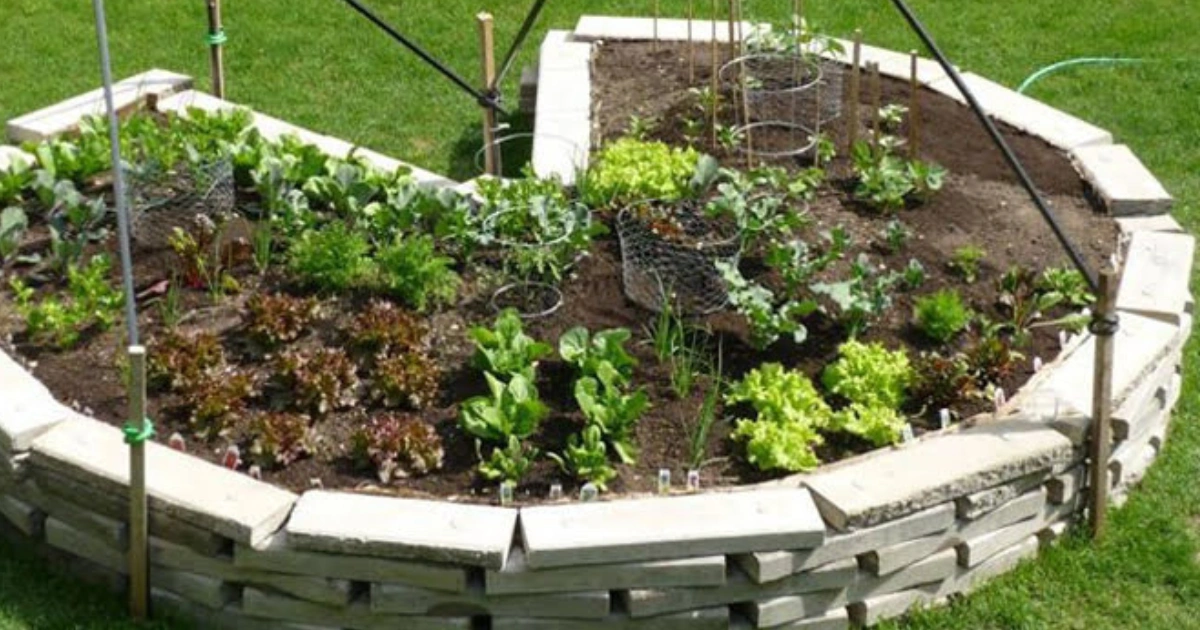
A circular garden with central compost is a practical and environmentally friendly way to grow vegetables, herbs, and fruit while improving soil health naturally. This gardening system places a compost basket or column at the center of a circular planting bed, allowing nutrients and moisture to move outward directly to plant roots. Instead of separating composting from gardening, this method combines both into a single, self-sustaining system.
Inspired by permaculture and keyhole garden designs, the circular garden with central compost is especially useful for home gardeners who want to reduce waste, conserve water, and grow healthier plants with minimal inputs.
What Is a Circular Garden with Central Compost?
A circular garden with central compost consists of a round bed built around a compost container placed in the middle. Plants are arranged in a ring surrounding the compost core. Organic materials such as vegetable scraps, garden waste, and compostable household items are added to the center, where they gradually break down.
As decomposition occurs, nutrients seep into the surrounding soil, feeding plants continuously. At the same time, water added to the compost basket spreads evenly through the bed, improving moisture retention and reducing runoff.
This system works well in small gardens, raised beds, urban spaces, and regions where water conservation is important.
Why the Circular Shape Is So Effective
The circular layout is not just a design choice. It directly affects how nutrients and water move through the soil.
Because all plants are positioned at a similar distance from the compost center, they receive nutrients more evenly. This prevents certain plants from being overfed while others struggle. The circular shape also reduces soil compaction because the entire bed can be reached without stepping on it.
In addition, circular beds improve airflow around plants and make garden maintenance easier, since watering, harvesting, and composting can all be done from one central point.
How the Central Compost System Works
The central compost basket functions as both a nutrient source and a moisture regulator.
Organic waste placed in the basket breaks down slowly. As it decomposes, beneficial nutrients such as nitrogen, phosphorus, and potassium move outward into the soil. This slow-release feeding supports steady plant growth and reduces the need for synthetic fertilizers.
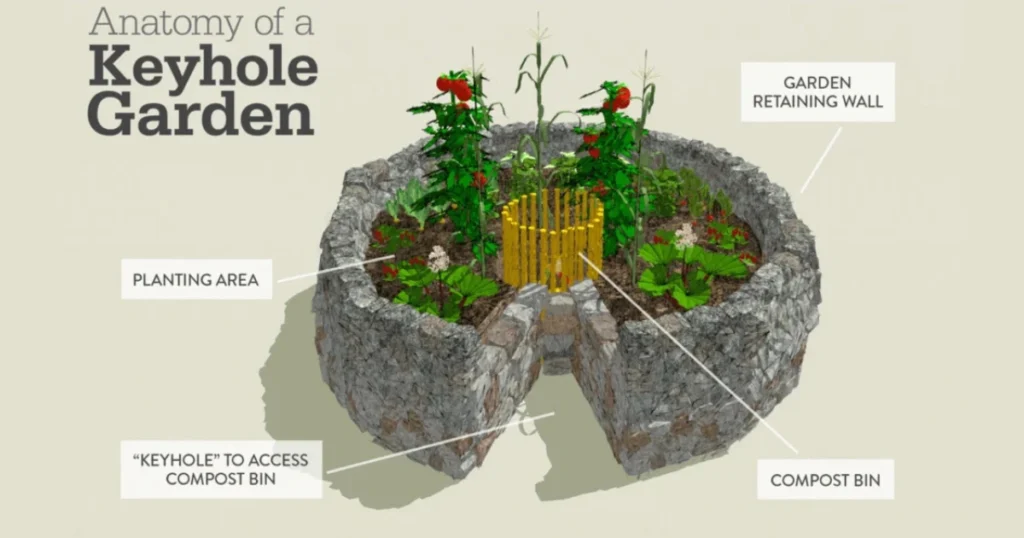
Compost also attracts earthworms and beneficial microorganisms. These organisms improve soil structure, increase nutrient availability, and enhance root health. Over time, the soil becomes darker, looser, and more fertile.
When water is added to the compost basket, it spreads through the bed naturally. This helps keep the soil evenly moist and reduces water waste, especially in warm or dry climates.
Building the Soil Layers
A successful circular garden with central compost relies on layered soil construction that mimics natural ecosystems.
The base layer often consists of cardboard or newspaper to suppress weeds. Above this, dry organic materials such as straw, leaves, or small branches improve airflow and drainage. Compost and organic waste provide nutrients, while a final layer of topsoil supports planting.
This layered approach improves water retention, prevents soil compaction, and supports long-term soil fertility.
Best Plants for a Circular Compost Garden
Many vegetables and herbs thrive in this system, particularly those that benefit from steady nutrients and consistent moisture.
Good choices include leafy greens such as lettuce and spinach, herbs like basil, parsley, and cilantro, and fruiting plants such as tomatoes, peppers, squash, and zucchini. Strawberries also perform well in circular compost gardens.
Root vegetables can be grown, but they should be planted farther from the compost center, where nutrient levels are more balanced and less intense.
Water Efficiency and Environmental Benefits
One of the biggest advantages of a circular garden with central compost is water efficiency. By delivering water directly through the compost core, evaporation and runoff are minimized. This makes the system especially useful in areas with limited rainfall or water restrictions.
From an environmental perspective, this method reduces household waste, lowers dependence on chemical fertilizers, and supports biodiversity in the soil. It creates a closed-loop system where food scraps become plant nutrition rather than landfill waste.
Maintenance and Long-Term Care
Maintaining a circular compost garden is simple but requires consistency. Organic materials should be added regularly to the compost basket, but not in excessive amounts. A balance of green materials, such as vegetable scraps, and brown materials, such as dry leaves, helps prevent odor and promotes healthy decomposition.
The compost basket should remain slightly moist but not waterlogged. Periodic mixing helps speed decomposition and maintain airflow.
As the system matures, the garden becomes easier to manage. Soil fertility improves naturally, and plants require fewer external inputs.
Common Mistakes to Avoid
While the system is forgiving, a few mistakes can reduce its effectiveness.
Overloading the compost basket with fresh waste can slow decomposition and create unpleasant odors. Adding meat, dairy, or oily foods should be avoided. Using compacted or clay-heavy soil without amendments can also limit nutrient movement.
Planting too close to the compost center may expose roots to overly concentrated nutrients. Spacing plants properly ensures balanced growth.
Circular Garden vs Traditional Raised Beds
Compared to traditional raised beds, circular gardens with central compost offer more efficient nutrient delivery and better water retention. Raised beds still require compost to be added manually, while circular compost gardens feed themselves continuously.
Over time, circular systems often require less maintenance and fewer external inputs, making them ideal for gardeners focused on sustainability.
Frequently Asked Questions
Can beginners use a circular garden with central compost?
Yes. The design is simple, forgiving, and easy to maintain once established.
Does the compost smell?
When balanced properly with dry materials, compost should not produce strong odors.
How long does it take to see results?
Most gardeners notice improved soil quality and plant growth within one growing season.
Can this system be used year-round?
Yes, although compost activity slows during colder months.
Is this method organic?
Yes. It relies on natural composting and avoids synthetic fertilizers.
Final Thoughts
A circular garden with central compost is more than a gardening technique. It is a sustainable system that turns waste into nourishment, conserves water, and builds healthy soil over time. By working with natural processes instead of against them, this method creates productive gardens that require less effort and fewer resources.
For gardeners seeking a practical, eco-friendly way to grow food, the circular compost garden offers long-term benefits for both the garden and the environment.