
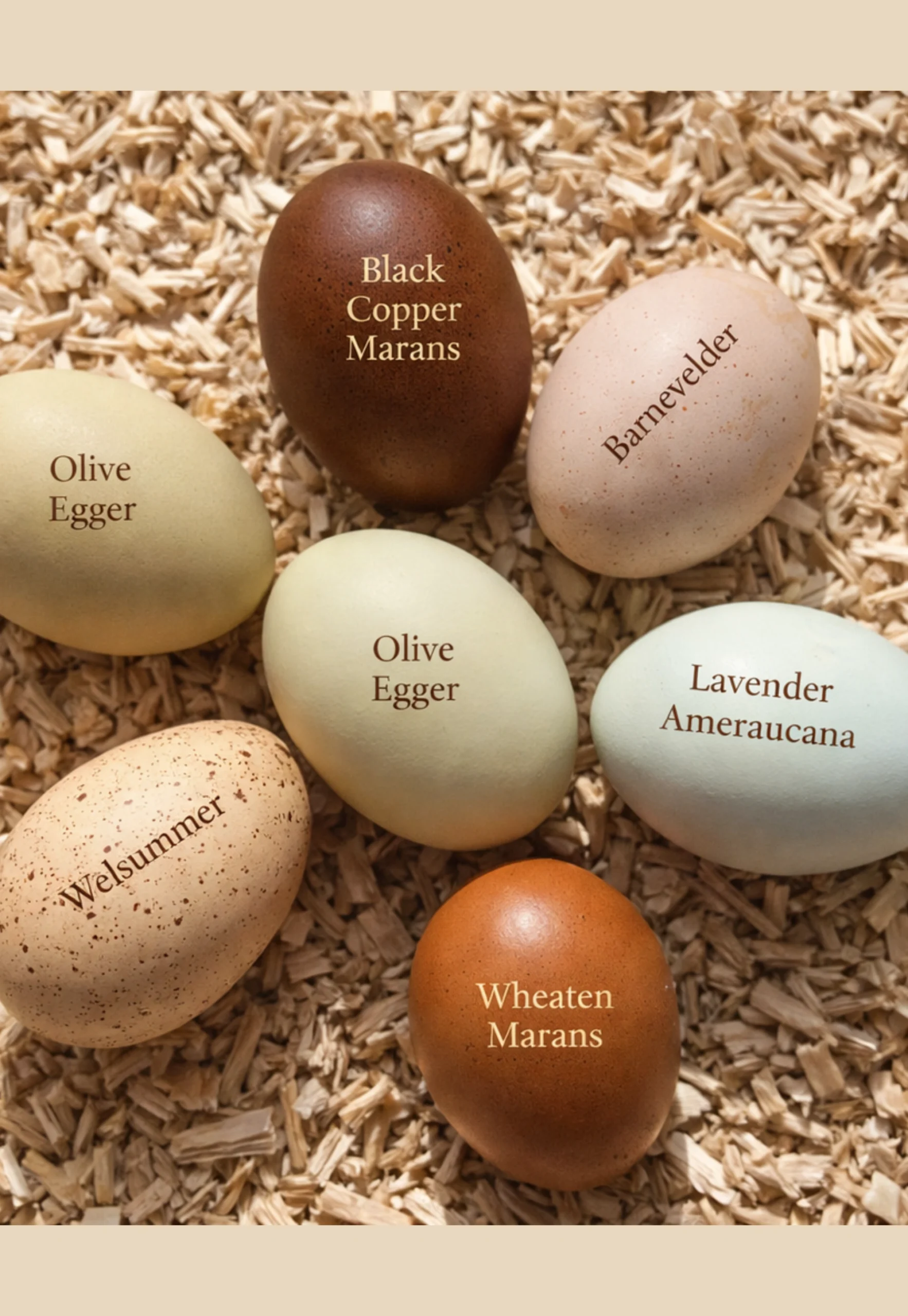
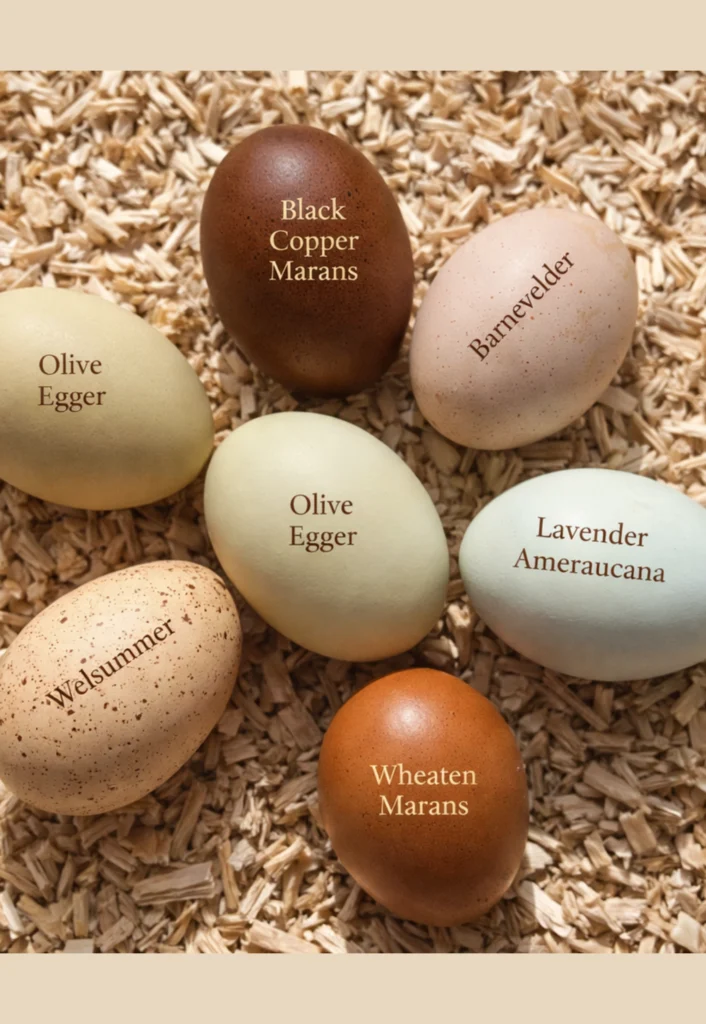
Chicken eggs are far more diverse than the standard white or brown varieties found in most grocery stores. Backyard flocks around the world produce eggs in shades ranging from deep chocolate brown to olive green, pale blue, and soft cream. This natural diversity is not only visually appealing but also a fascinating window into poultry genetics and breed history.
Understanding chicken egg colors helps poultry keepers choose breeds intentionally, appreciate the uniqueness of their flock, and educate others about where eggs truly come from. This guide explores the science, breeds, and practical meaning behind eggshell color.
Primary keyword: chicken egg colors
Why Chicken Egg Colors Vary
Eggshell color is determined almost entirely by genetics. The pigments deposited on the shell during egg formation in the hen’s oviduct create the final color. While diet and environment can influence shell strength and brightness, they do not change the fundamental shell color.
Two primary pigments are responsible:
- Protoporphyrin, which creates brown and reddish tones
- Biliverdin, which produces blue and green shades
White eggs contain no added pigment, resulting in a naturally pale shell.
Brown Eggs: Rich Tones and Classic Appeal
Brown eggs are among the most familiar and widely recognized. Their color ranges from light tan to deep chocolate, depending on the breed.
Black Copper Marans
Black Copper Marans are famous for producing some of the darkest brown eggs in the poultry world. Their eggs often appear mahogany or chocolate-colored and are highly prized by collectors and breeders.
Characteristics of dark brown eggs:
- Pigment is applied late in shell formation
- Color may fade slightly over a laying season
- Shell thickness is often strong and durable
Other brown egg layers include Rhode Island Reds, Plymouth Rocks, and Wyandottes.
Blue Eggs: Naturally Pigmented from the Inside Out
Blue eggs are unique because the pigment penetrates the entire shell, inside and out. Even when cracked, the shell remains blue throughout.
Lavender Ameraucana
Lavender Ameraucanas are well known for their soft pastel blue eggs. These eggs have a clean, delicate appearance that stands out in any egg basket.
Traits of blue eggs:
- Color remains consistent throughout the shell
- Pigment is added early in shell formation
- Often associated with calm, hardy breeds
Other blue egg layers include Cream Legbars and Araucanas.
Green and Olive Eggs: A Genetic Blend
Green and olive eggs are the result of crossbreeding blue egg layers with brown egg layers. The blue base shell is coated with a brown pigment, creating a wide range of green shades.
Olive Eggers
Olive Eggers are not a single breed but a hybrid created for their distinctive egg color. Their eggs can range from light moss green to deep olive.
What makes olive eggs unique:
- Color intensity varies widely
- Each hen may produce a slightly different shade
- Highly popular among backyard poultry keepers
Because Olive Eggers are hybrids, egg color consistency can vary from generation to generation.
Cream, Pink, and Tinted Eggs
Some breeds produce eggs that appear cream, pinkish, or lightly tinted. These eggs are technically light brown but have a softer, more subtle appearance.
Common tinted egg layers:
- Sussex
- Orpington
- Delaware
These eggs often look elegant and understated, adding gentle contrast to darker or blue eggs.
Do Egg Colors Affect Taste or Nutrition?
One of the most common misconceptions is that egg color affects flavor or nutritional value. In reality, shell color has no impact on taste, protein content, or nutrient density.
Egg quality depends on:
- Hen diet
- Freshness
- Living conditions
- Overall hen health
A blue egg and a brown egg from equally healthy hens will be nutritionally comparable.
Why Egg Color Matters to Backyard Chicken Keepers
For many poultry enthusiasts, egg color adds enjoyment and educational value to raising chickens. A colorful egg basket often reflects a diverse and well-planned flock.
Benefits of mixed egg colors:
- Visual appeal
- Educational opportunities for children
- Easier egg identification by breed
- Increased interest at local markets
Some small farmers also find that unique egg colors attract customers and add perceived value.
How Egg Color Can Change Over Time
Egg color intensity may shift throughout a hen’s laying cycle. Factors include:
- Age of the hen
- Stress levels
- Seasonal changes
For example, dark brown eggs often become lighter as the laying season progresses, while blue eggs tend to remain more consistent.
Choosing Breeds for Egg Color Variety
If your goal is a colorful egg basket, selecting breeds intentionally is key. Mixing blue, brown, and white egg layers produces the widest range of colors.
A balanced flock might include:
- One dark brown egg layer
- One blue egg layer
- One olive egg layer
- One white egg layer
This combination creates visual diversity without sacrificing productivity.
Frequently Asked Questions
Are blue and green eggs natural?
Yes. Blue and green eggs occur naturally due to genetics and are not dyed or altered.
Do darker eggs have stronger shells?
Not necessarily. Shell strength depends more on calcium intake and hen health than color.
Can egg color predict breed?
In many cases, yes. Egg color often provides a strong clue about breed or genetic background.
Will diet change egg color?
Diet affects shell quality but does not change the genetic shell color.
Are colored eggs safe to eat?
Absolutely. Eggshell color has no impact on safety or edibility.
Such a refreshing take on a common topic.
сколько стоит купить диплом медсестры сколько стоит купить диплом медсестры .
такой krab2.cc
Этот обзор позволяет увидеть привычные вещи под новым углом, хотя упоминаемые факты и события редко меняют суть, но всё же остаются частью картины.
Дополнительная информация – казино онлайн
Для поклонников сериалов Артек. Сквозь столетия (2025) русский сериал скачать торрент локальные художественные фильмы и сериалы часто предпочитают не ради онлайн-просмотра, а именно для скачивания, чтобы запускать без подключения без ограничений, формируя собственную коллекцию, где такие релизы интересуют не только как способ отдыха, но и как полноценный материал с качественным сценарием и выраженной кинематографической подачей, а адаптированная аудиодорожка делает восприятие максимально удобным. Сериал доступен для загрузки без обрезок, одним файлом в качественном качестве HDRip.
https://www.arthart.in/shop/index.php?route=journal3/blog/post&journal_blog_category_id=5&journal_blog_post_id=7
нажмите, чтобы подробнее вотка бет
посмотреть в этом разделе зеркало vodka bet
можно проверить ЗДЕСЬ vodka bet casino
зайти на сайт водка бет
https://www.theyeshivaworld.com/coffeeroom/users/bonusmelbet
Мы изготавливаем дипломы любой профессии по приятным тарифам. Стоимость будет зависеть от выбранной специальности, года получения и университета: impressiverp.listbb.ru/viewtopic.php?f=16&t=5456
Мы изготавливаем дипломы психологов, юристов, экономистов и других профессий по разумным тарифам. Приобрести диплом ВУЗа aytacproperties.com/agents/susaneda714831
Мы изготавливаем дипломы психологов, юристов, экономистов и других профессий по приятным тарифам. Диплом об образовании прежде считался главным документом, который способствовал удачному трудоустройству. Приобрести диплом о высшем образовании!: ebe.cool/devintaggart8
Experience thrilling gameplay and rewarding moments with 777bet online casino, where each spin brings fresh excitement and new possibilities to win.
Its live betting option allows users to place bets in real-time while games are progressing.