
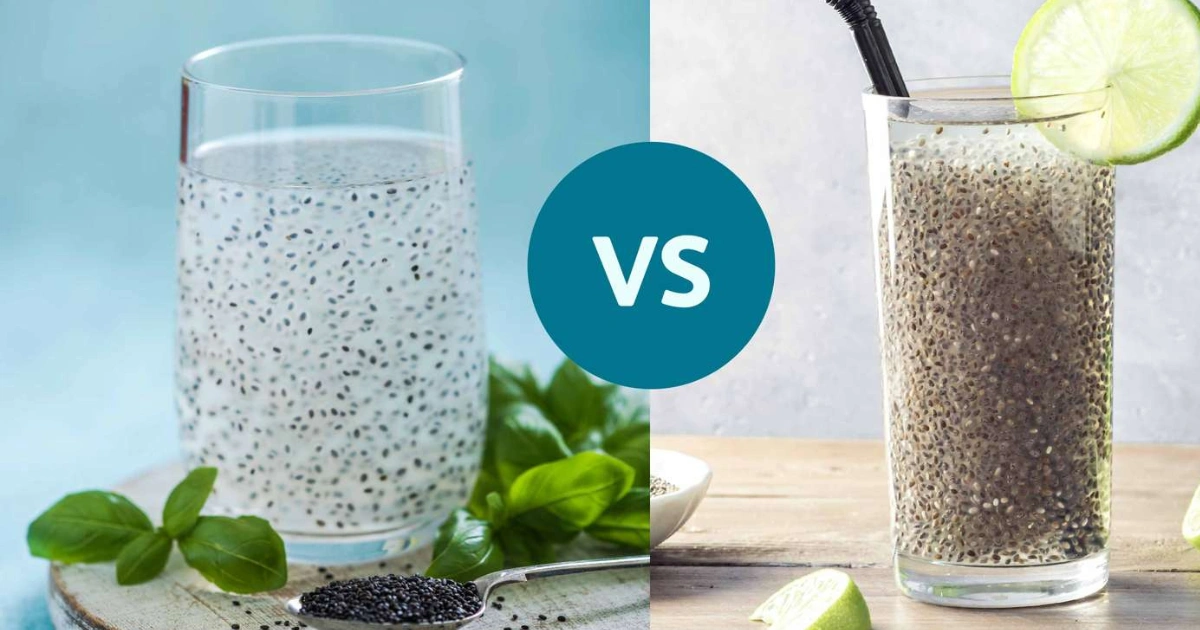
Superfoods have become a central part of modern nutrition, and seeds are among the most powerful additions to a healthy diet. Two of the most popular options are chia seeds and basil seeds. While they look similar and are often confused, they differ significantly in nutrition, digestion, hydration benefits, and overall health impact.
This guide explores the key differences between chia seeds and basil seeds, their individual benefits, how to use them correctly, and which one may be better suited to your lifestyle and health goals.
What Are Chia Seeds?
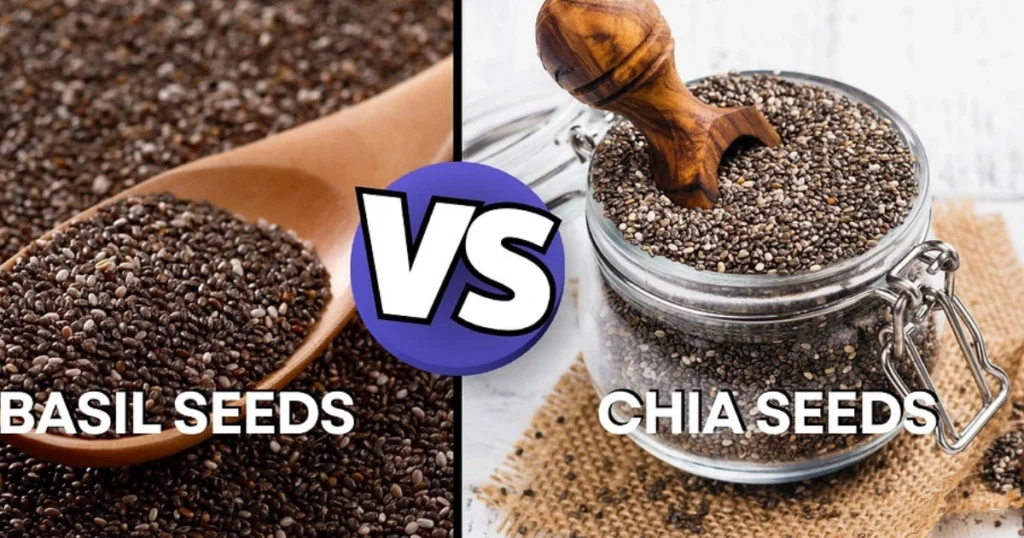
Chia seeds come from the plant Salvia hispanica, native to Central America. They were a staple food for ancient Aztec and Mayan civilizations, valued for their ability to provide long-lasting energy and nourishment.
Chia seeds are small, oval-shaped, and typically gray or black. When soaked in liquid, they absorb water and form a gel-like texture, which plays a major role in their digestive and hydration benefits.
What Are Basil Seeds?
Basil seeds, also known as sabja seeds or tukmaria, come from the sweet basil plant (Ocimum basilicum). They have been traditionally used in Asian and Middle Eastern cultures, especially in cooling drinks and digestive remedies.
Basil seeds swell much faster than chia seeds and develop a jelly-like coating almost immediately when soaked. They are darker in color and slightly larger when hydrated.
Nutritional Comparison Between Chia Seeds and Basil Seeds
Although both seeds are nutrient-dense, their nutritional profiles differ in important ways.
Chia Seeds Nutritional Highlights
- High in omega-3 fatty acids
- Excellent source of dietary fiber
- Rich in plant-based protein
- Contains calcium, magnesium, phosphorus, and iron
- High antioxidant content
Basil Seeds Nutritional Highlights
- High water absorption capacity
- Good source of fiber
- Contains iron, magnesium, and calcium
- Rich in antioxidants
- Naturally low in calories
Both seeds support overall health, but they excel in different areas.
Health Benefits of Chia Seeds
Supports Heart Health
Chia seeds are one of the richest plant-based sources of omega-3 fatty acids. These healthy fats help reduce inflammation, support healthy cholesterol levels, and improve cardiovascular function.
Promotes Digestive Health
The high fiber content in chia seeds supports regular bowel movements and feeds beneficial gut bacteria. When soaked, chia seeds form a gel that slows digestion, helping you feel full longer.
Aids in Weight Management
Chia seeds expand in the stomach, increasing satiety and reducing appetite. This makes them particularly useful for portion control and weight management when consumed as part of a balanced diet.
Strengthens Bones
Chia seeds contain significant amounts of calcium, phosphorus, and magnesium, all of which contribute to bone density and skeletal health.
Provides Sustained Energy
Because chia seeds slow the conversion of carbohydrates into sugar, they provide steady energy without spikes or crashes, making them popular among athletes and active individuals.
Health Benefits of Basil Seeds
Excellent for Hydration
Basil seeds absorb water extremely quickly and efficiently. This makes them ideal for hydration, especially in hot climates or after physical activity.
Supports Digestion and Gut Health
Basil seeds have soothing properties that help reduce bloating, acidity, and digestive discomfort. They are often used as a natural remedy for indigestion.
Helps Regulate Blood Sugar
Basil seeds slow down the digestion of carbohydrates, which helps prevent sudden blood sugar spikes. This can be beneficial for people managing insulin sensitivity.
Assists with Weight Control
Like chia seeds, basil seeds expand in the stomach, promoting fullness and reducing unnecessary snacking.
Cooling Effect on the Body
In traditional medicine systems, basil seeds are known for their cooling properties, making them useful during hot weather or for individuals prone to internal heat or inflammation.
Chia Seeds vs Basil Seeds: Key Differences
Absorption Time
Basil seeds swell almost instantly when soaked, while chia seeds take longer, usually 15–30 minutes.
Texture
Chia seeds develop a thicker gel throughout the seed, while basil seeds form a jelly-like outer coating with a solid center.
Omega-3 Content
Chia seeds contain significantly more omega-3 fatty acids than basil seeds, making them superior for heart and brain health.
Hydration Power
Basil seeds absorb more water relative to their size, making them better for hydration-focused uses.
Culinary Uses
Chia seeds are more versatile and commonly used in puddings, smoothies, baked goods, and breakfast bowls. Basil seeds are more commonly used in drinks and desserts.
Which Seed Is Better for You?
The answer depends on your personal health goals.
Choose chia seeds if your priority is:
- Heart health
- Omega-3 intake
- Bone strength
- Long-lasting energy
- Protein-rich plant foods
Choose basil seeds if your priority is:
- Hydration
- Digestive comfort
- Blood sugar control
- Cooling the body
- Light, refreshing drinks
Many people benefit from using both seeds at different times.
How to Use Chia Seeds Safely
- Soak before consuming to improve digestion
- Add to smoothies, yogurt, oatmeal, or baked goods
- Start with one tablespoon per day
- Drink enough water when consuming regularly
How to Use Basil Seeds Safely
- Always soak before consumption
- Add to water, lemon drinks, or plant-based beverages
- Avoid consuming dry seeds
- Start with one teaspoon per day
Common Mistakes to Avoid
- Eating seeds dry, which may cause digestive discomfort
- Consuming large amounts suddenly
- Not drinking enough water
- Relying on seeds as meal replacements rather than supplements
Frequently Asked Questions
Are chia seeds and basil seeds the same?
No. While they look similar, they come from different plants and have distinct nutritional properties.
Can I eat chia seeds and basil seeds every day?
Yes, in moderation and when properly soaked.
Which seed is better for weight loss?
Both can support weight management, but chia seeds provide more satiety due to their fiber and protein content.
Are basil seeds better for digestion?
Basil seeds are often gentler on digestion and are traditionally used for digestive relief.
Can people with diabetes consume these seeds?
Both seeds may help regulate blood sugar when used appropriately, but portion control is important.
Internal Linking Suggestions
From secretsofthegreengarden.com, consider linking to:
- Natural Fiber Sources for Better Digestion
- Plant-Based Superfoods for Daily Energy
- Hydration Foods That Support Gut Health
External High-Authority Sources
For additional research-based information:
- Harvard T.H. Chan School of Public Health – Fiber and seed nutrition
- National Institutes of Health – Omega-3 fatty acids and health
- Cleveland Clinic – Digestive health and fiber intake
Final Thoughts
Both chia seeds and basil seeds offer impressive health benefits, but they serve different purposes. Chia seeds shine as a nutrient-dense superfood rich in omega-3s and fiber, while basil seeds excel in hydration and digestive support.
Choosing the right seed depends on your individual needs, and incorporating both can provide a balanced approach to wellness when used correctly and consistently.
It’s a pity you don’t have a donate button! I’d definitely
donate to this fantastic blog! I guess for now i’ll settle for
bookmarking and adding your RSS feed to my Google account.
I look forward to brand new updates and will talk about this blog with my
Facebook group. Talk soon!
Виртуальная примерка мебели и сантехники сегодня закрывает важную потребность – она помогает покупателю принять решение без визита в шоурум. В тот момент, когда клиент понимает, как выбранный предмет вписывается в реальное пространство, уходит основной вопрос – «подойдёт ли?». Виртуальная примерка мебели в интерьере помогает быстрее принять решение, снижает количество возвратов и формирует уверенность в покупке.
По этой причине всё чаще используются сервисы вроде 3d проект каркасного дома позволяющие увидеть товар в реальной комнате через камеру смартфона или в браузере. Онлайн примерка мебели в интерьере даёт понимание габаритов, помогает оценить цвет, форму и сочетаемость с окружением. Дополненная реальность и 3D модели особенно эффективны для интернет-магазинов, в которых нет возможности «потрогать» товар.
Самостоятельным направлением стала – примерка сантехники онлайн. Фотореалистичные 3D модели сантехники, AR примерка ванны в интерьере, интерактивные каталоги и 3D смесители помогают представить финальный результат. Визуализация сантехники в интерьере покупателя положительно сказывается на продажах и увеличивает средний чек.
Подобные решения уже применяются и в проектировании. Проекты домов в 3D, дизайн-проекты, онлайн проектирование домов на русском упрощают согласование планировок и дизайна. Это решение подходит как для частных клиентов, так и для дизайнеров.
Решение arigami.io сочетает AR, 3D визуализацию и интерактивные каталоги. Если вы хотите повысить эффективность онлайн-продаж, виртуальная примерка – инструмент, который стоит внедрять уже сейчас.
What i do not understood is actually how you’re not actually a lot more neatly-favored than you might be right now. You’re so intelligent. You already know therefore considerably in the case of this topic, produced me personally imagine it from numerous numerous angles. Its like men and women aren’t fascinated except it¦s one thing to do with Woman gaga! Your own stuffs nice. All the time maintain it up!
I was just seeking this info for a while. After 6 hours of continuous Googleing, at last I got it in your website. I wonder what is the lack of Google strategy that do not rank this type of informative websites in top of the list. Usually the top web sites are full of garbage.
Very great post. I just stumbled upon your blog and wished to say that I have truly enjoyed surfing around your weblog posts. After all I will be subscribing on your feed and I hope you write again very soon!