
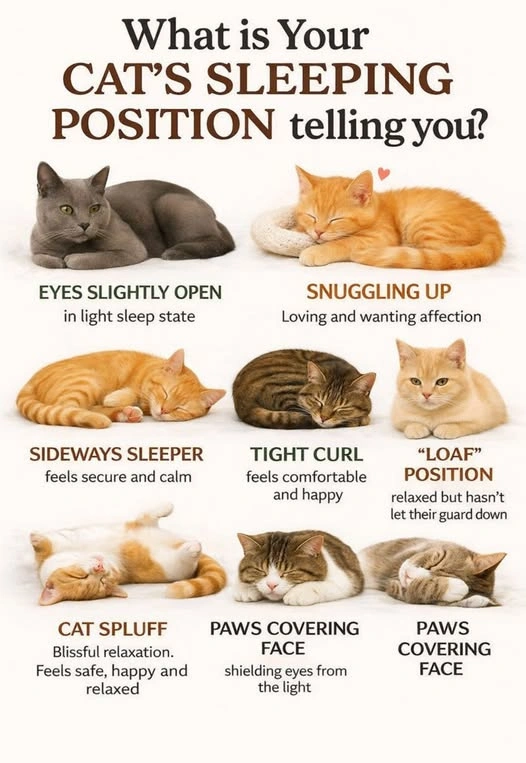
Cats sleep for an average of 12 to 16 hours per day, and sometimes even longer. While this may look like simple rest, a cat’s sleeping position can reveal valuable information about how safe, relaxed, and emotionally comfortable they feel in their environment. Every posture is an instinctive choice influenced by warmth, security, and trust.
Understanding cat sleeping positions allows owners to better interpret their pet’s emotional state, strengthen the human–animal bond, and even notice early signs of stress or discomfort. This guide explores the most common cat sleeping positions and what each one can tell you about your cat’s feelings.
Primary keyword: cat sleeping positions
Why Cats Have Distinct Sleeping Positions
Cats are both predators and prey by nature. Even in domestic settings, their instincts remain deeply ingrained. When choosing how and where to sleep, cats instinctively balance rest, safety, and readiness to react.
Several factors influence a cat’s sleeping position:
- Sense of security in the environment
- Temperature and physical comfort
- Emotional bond with humans or other animals
- Energy levels and alertness
- Individual personality traits
Because of these influences, a cat’s posture during sleep often reflects their emotional and physical state.
The Curled-Up Position: Comfort and Protection
One of the most common cat sleeping positions is the tight curl, where the cat tucks their paws beneath their body and wraps their tail around themselves.
This position usually indicates:
- A strong sense of comfort
- A desire to conserve body heat
- Mild instinctual protection of vital organs
Cats often curl up when temperatures are cooler or when they are resting lightly. While this posture shows relaxation, it also allows the cat to wake quickly if needed.
The Loaf Position: Calm but Alert
In the loaf position, a cat sits upright with paws tucked neatly underneath the body, resembling a loaf of bread. The head remains upright and the eyes may be partially closed.
This posture suggests:
- Calmness and emotional balance
- Comfort in the surroundings
- Light alertness rather than deep sleep
Cats in the loaf position feel safe enough to relax but remain prepared to respond to sounds or movement. It is commonly seen in familiar environments where the cat feels secure.
Sleeping on the Side: Deep Relaxation
When a cat sleeps stretched out on their side with legs extended, it is a strong sign of trust and relaxation.
This position indicates:
- A high level of comfort
- Reduced need for self-protection
- Willingness to enter deep sleep
Cats rarely expose themselves in this way unless they feel completely safe. This posture often appears in homes where the cat has established trust with its humans.
Belly-Up Position: Total Trust
A cat sleeping on their back with the belly exposed is one of the clearest signs of emotional security. The belly is the most vulnerable area of a cat’s body.
This position suggests:
- Complete trust in the environment
- High emotional comfort
- Deep, uninterrupted sleep
Although an exposed belly may look like an invitation for petting, many cats still prefer not to have this area touched. The posture itself is simply a sign of safety, not necessarily an invitation.
Paws Over the Face: Comfort and Sensory Control
Some cats sleep with their paws covering their eyes or face. This adorable posture serves both physical and emotional purposes.
Possible reasons include:
- Blocking light
- Retaining warmth
- Creating a sense of enclosed security
This position often appears when cats feel relaxed but still want to limit sensory input during rest.
Sleeping Close to Humans: Bonding and Trust
Cats that choose to sleep next to or on their owners demonstrate a strong emotional bond. This behavior reflects trust, attachment, and comfort.
Sleeping near humans may indicate:
- Emotional connection
- Seeking warmth and familiarity
- Feeling protected by their owner’s presence
Cats that sleep near the head, chest, or legs often feel deeply bonded and secure.
Hidden or Enclosed Sleeping Positions: Stress or Instinct
When cats sleep inside boxes, under furniture, or in hidden corners, it does not always indicate stress, but it can be situational.
This behavior may suggest:
- A need for solitude
- Sensitivity to noise or activity
- Instinctual desire for enclosed safety
If a cat consistently hides while sleeping and avoids interaction, it may signal anxiety or environmental stress that needs attention.
How Temperature Influences Cat Sleeping Positions
Temperature plays a major role in how cats sleep. In colder conditions, cats tend to curl tightly or seek enclosed spaces. In warmer environments, they stretch out to release excess heat.
Seasonal changes often explain shifts in sleeping posture and location, especially near windows, radiators, or cool floors.
What Changes in Sleeping Position Can Mean
Sudden changes in a cat’s sleeping habits can provide important clues.
Watch for:
- Increased hiding or isolation
- Restlessness or difficulty settling
- Unusual stiffness or guarded positions
While changes can be temporary, consistent alterations in sleeping behavior may indicate stress, discomfort, or health concerns.
How to Support Healthy Sleep for Your Cat
Creating a safe and comfortable sleep environment encourages relaxed and natural sleeping positions.
Helpful tips include:
- Providing quiet, warm sleeping areas
- Offering multiple sleeping options
- Maintaining a consistent routine
- Reducing household stressors
- Respecting your cat’s chosen rest spots
Cats that feel safe are more likely to sleep deeply and comfortably.
Frequently Asked Questions
Do cat sleeping positions really indicate mood?
Yes. While not exact, sleeping positions offer reliable clues about comfort, trust, and emotional state.
Is it normal for cats to change sleeping positions often?
Yes. Cats adjust their posture based on temperature, energy level, and surroundings.
Should I be concerned if my cat sleeps curled up all the time?
Not necessarily. Curling is normal, but if combined with hiding or withdrawal, it may indicate stress.
Why does my cat sleep near my head?
This usually reflects bonding behavior, warmth-seeking, and trust.
Can sleeping position indicate health problems?
In some cases, yes. Persistent stiffness or avoidance of movement may warrant veterinary attention.
This gave me a whole new perspective on something I thought I already understood. Great explanation and flow!
You’ve done a great job with this. I ended up learning something new without even realizing it—very smooth writing!
This is exactly the kind of content I’ve been searching for.
Great points, well supported by facts and logic.
кто нибудь работает медсестрой по купленному диплому https://frei-diplom13.ru .
купить диплом о средне специальном образовании казань купить диплом о средне специальном образовании казань .
купить диплом интернатура http://r-diploma26.ru/ .
купить диплом о средне специальном образовании тверь купить диплом о средне специальном образовании тверь .
https://forum.amzgame.com/thread/detail?id=529663
обложка для аттестата о среднем образовании купить в спб обложка для аттестата о среднем образовании купить в спб .
где можно купить аттестат 9 классов где можно купить аттестат 9 классов .
купить диплом у руководителя купить диплом у руководителя .
купить диплом юридического образования купить диплом юридического образования .
https://spinbetter.black/italy/
можно купить аттестат 9 класс можно купить аттестат 9 класс .
I’m definitely going to apply what I’ve learned here.
**neuro sharp**
neurosharp is a next-level brain and cognitive support formula created to help you stay clear-headed, improve recall, and maintain steady mental performance throughout the day.
**finessa**
Finessa is a natural supplement made to support healthy digestion, improve metabolism, and help you achieve a flatter belly.
Продолжение https://forum.hpc.name/thread/g901/93450/realizaciya-formy-obratnoy-svyazi-bez-ispolzovaniya-php-na-staticheskom-sayte.html
Thank you for being so generous with your knowledge.
his explanation https://lumi-wallet.io
useful link https://lumi-wallet.io
his response https://lumi-wallet.io/
you can try these out https://lumi-wallet.io/
When choosing a new online casino, it’s easy to get lost in the options. The most important thing is to look for detailed reviews and player feedback. A good review will cover everything from game selection to withdrawal times, giving you a complete picture before you commit.
If you want to see what a top-tier casino looks like, I recommend checking out this resource: explore the best slot machines.
The right casino can make all the difference. Do your research and trust your instincts.
moved here https://lumi-wallet.io