
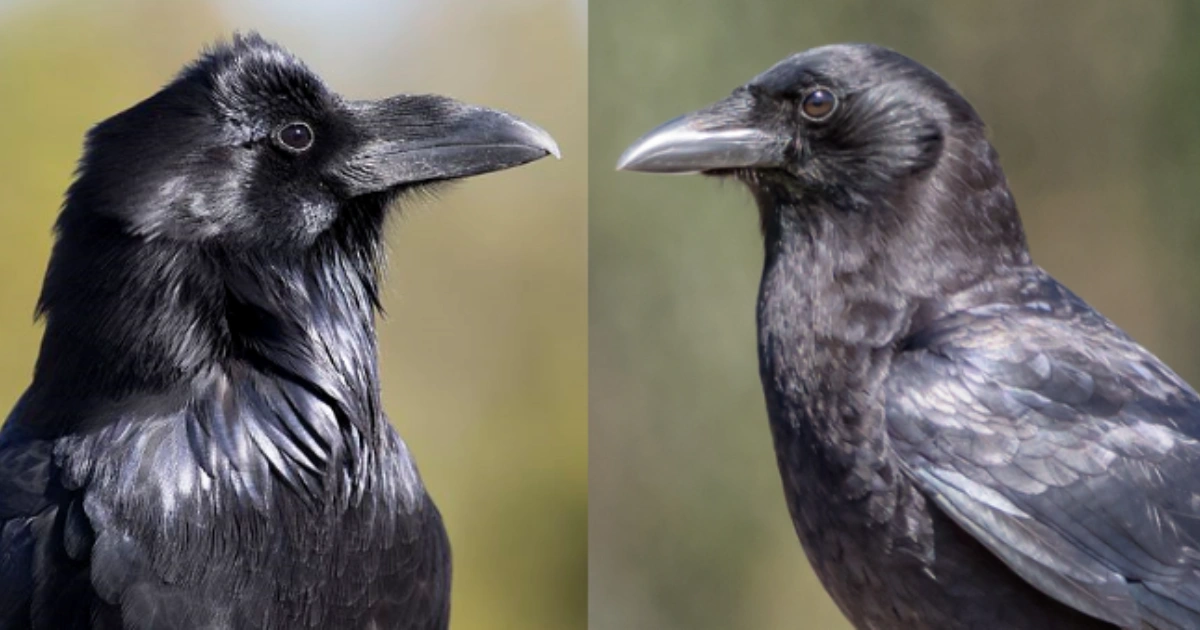
Many people confuse crows and ravens because they share similar dark plumage, intelligence, and behavior. However, these two birds belong to distinct species with noticeable differences in size, voice, behavior, and habitat. Learning how to distinguish them can make birdwatching more rewarding and help deepen your understanding of wildlife.
This guide explains the key differences between the American crow and the common raven, including their physical traits, calls, habitats, and lifespan.
Primary Keyword
American crow vs common raven
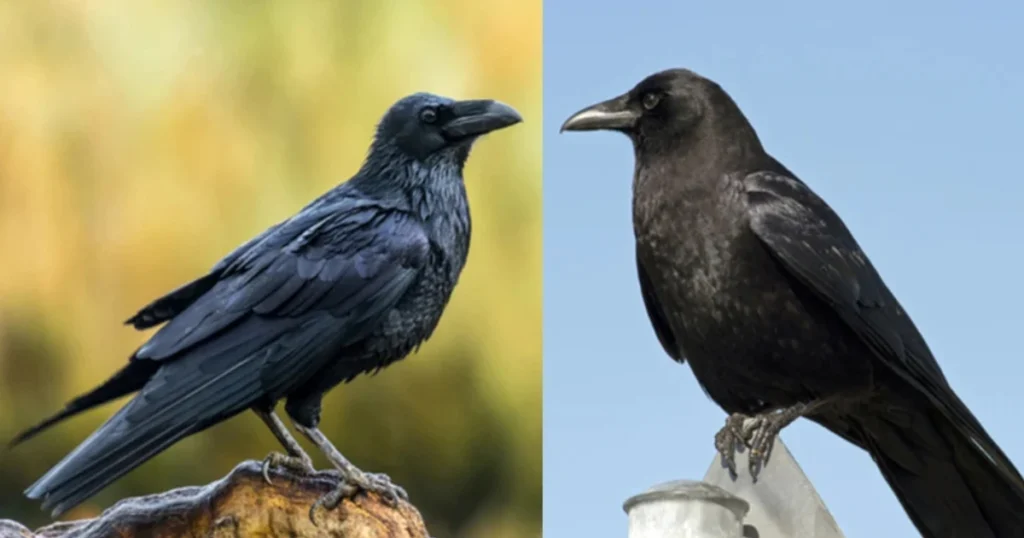
Understanding the Difference Between Crows and Ravens
Both the American crow (Corvus brachyrhynchos) and the common raven (Corvus corax) belong to the corvid family, a group of birds known for exceptional intelligence and adaptability. Corvids are capable of problem-solving, tool use, and complex social behavior.
Despite these similarities, several features clearly distinguish the two species. Observing size, flight patterns, and vocalizations can often reveal whether you’re seeing a crow or a raven.
Related keywords commonly associated with this topic include:
- crow vs raven differences
- how to identify ravens
- American crow characteristics
- raven bird identification
- corvid species comparison
- crow and raven habitat
- raven wingspan size
- bird identification tips
Physical Size and Body Structure
One of the easiest ways to distinguish the two birds is by comparing their size.
American Crow
American crows are medium-sized birds with a slender appearance.
Key characteristics include:
- Length: 17 to 20 inches
- Wingspan: 32 to 40 inches
- Weight: around 20 ounces
Crows generally appear lighter and more compact than ravens.
Common Raven
Common ravens are noticeably larger and heavier.
Typical features include:
- Length: 24 to 27 inches
- Wingspan: 46 to 54 inches
- Weight: about 40 ounces
Ravens often appear bulkier with thicker necks and heavier beaks.
According to the Cornell Lab of Ornithology, the common raven is the largest member of the corvid family.
https://www.allaboutbirds.org
Tail Shape: A Reliable Identification Feature
Tail shape is one of the most reliable ways to identify these birds in flight.
American Crow Tail
Crows have a fan-shaped tail. When the bird spreads its tail feathers, the edge appears rounded and symmetrical.
Common Raven Tail
Ravens display a wedge-shaped tail, sometimes described as diamond-shaped. The center feathers are longer, creating a pointed outline.
Birdwatchers often rely on this visual clue when observing birds flying overhead.
Differences in Calls and Sounds
The vocalizations of these birds are very different.
American Crow Call
The American crow produces the familiar high-pitched “caw-caw” sound. These calls are sharp, repetitive, and often heard in groups.
Common Raven Call
Ravens produce a deep, croaking voice, often described as a low “gronk” or guttural croak. Their calls sound rougher and more resonant than crow calls.
Ravens also display a wider variety of vocalizations, including clicks and knocking sounds.
Lifespan and Intelligence
Both species are highly intelligent birds, but their lifespans differ significantly.
American Crow Lifespan
In the wild, American crows typically live around 8 years, although some individuals may live longer under favorable conditions.
Common Raven Lifespan
Common ravens can live 20 to 30 years in the wild, making them one of the longest-living bird species in North America.
Research published by the Smithsonian Migratory Bird Center highlights the advanced cognitive abilities of corvids.
https://nationalzoo.si.edu
Habitat and Geographic Distribution
Both species are widespread across North America, but their preferred environments differ.
American Crow Habitat
American crows are extremely adaptable and thrive in:
- cities
- suburbs
- farmland
- parks
They are commonly seen near human settlements and often gather in large social groups.
Common Raven Habitat
Ravens tend to prefer more remote environments such as:
- mountains
- forests
- deserts
- coastal cliffs
Although ravens occasionally appear near towns, they are more commonly found in wilderness areas.
The National Audubon Society provides detailed maps and habitat information for both species.
https://www.audubon.org
Flight Patterns and Behavior
Observing flight behavior can also help identify these birds.
Crow Flight
Crows flap their wings steadily and often fly in straight lines. They frequently travel in groups and may gather in large flocks.
Raven Flight
Ravens are stronger fliers and often soar or glide like hawks. They may perform aerial acrobatics and flips while flying.
These playful flight displays are especially common among young ravens.
Internal Linking Suggestions
To strengthen related wildlife content on secretsofthegreengarden.com, consider linking to articles such as:
- Birds That Help Control Garden Pests Naturally
- How to Attract Beneficial Birds to Your Backyard Garden
- Simple Ways to Create a Wildlife-Friendly Garden
These topics complement bird identification and backyard ecology.
Frequently Asked Questions
Are ravens bigger than crows?
Yes. Ravens are significantly larger than crows, with a wingspan that can exceed 50 inches.
Do ravens and crows live in the same places?
Both species live across North America, but ravens usually prefer wild landscapes while crows adapt well to cities and suburbs.
How can you identify a raven in flight?
Look for a wedge-shaped tail, larger wings, and gliding flight patterns.
Are ravens more intelligent than crows?
Both species are extremely intelligent. Studies show that crows and ravens have similar problem-solving abilities and social intelligence.
Can crows and ravens live together?
Yes. Their ranges overlap in many regions, although they often occupy slightly different habitats.
Conclusion
While American crows and common ravens may look similar at first glance, several key features make them easy to distinguish with careful observation. Size, tail shape, voice, and habitat are the most reliable identification clues.
Learning these differences not only improves bird identification skills but also reveals the fascinating diversity within the corvid family. These birds remain some of the most intelligent and adaptable species in the natural world.