
Sound plays a powerful role in the animal kingdom. From deep ocean clicks to forest-shaking roars, some species rely on extreme volume to communicate, hunt, defend territory, or stay connected across vast distances.
The loudest animals are not simply noisy by accident. Their vocal strength evolved for survival, helping them locate prey, warn rivals, or reunite family members. In this guide, we explore the world’s most powerful animal voices, measured in decibels (dB), and explain why being loud can mean staying alive.
How Animal Loudness Is Measured
Sound intensity is measured in decibels. For comparison:
- Normal conversation: about 60 dB
- Busy traffic: around 85 dB
- Rock concert: 110–120 dB
- Pain threshold for humans: about 130 dB
Some animals exceed these levels by a remarkable margin.
Because sound travels differently through air and water, marine mammals can reach far higher decibel levels than land animals.
The Loudest Animals in the World


6
1. Sperm Whale – Up to 230 dB
The sperm whale holds the title for the loudest animal ever recorded.
Its echolocation clicks can reach around 230 decibels underwater. These intense pulses help the whale locate squid in deep ocean darkness and may even stun prey.
Scientists also warn that close exposure to these clicks could damage human hearing.
Marine bioacoustics research from the U.S. National Oceanic and Atmospheric Administration explains how cetaceans use sound as their primary sensory system:
https://www.noaa.gov
2. Howler Monkey – About 140 dB
Howler monkeys are the loudest land mammals.
Their calls echo through tropical forests for miles, allowing small groups to mark territory without physical confrontation. Specialized throat bones amplify their voices, creating a roar far larger than their bodies suggest.
A single howl can travel up to 3 miles in dense jungle.
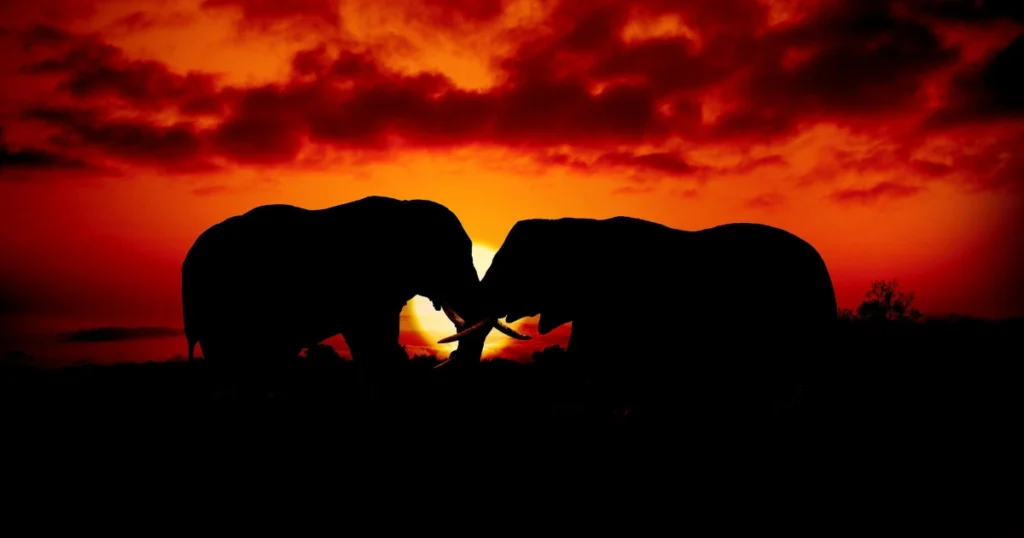
3. African Elephant – Around 117 dB
Elephants use both audible sound and infrasonic vibrations (frequencies too low for humans to hear).
These low-frequency rumbles travel through air and ground, allowing elephants to communicate across several kilometers. This system helps coordinate herd movement and detect distant threats.
Research from Cornell University’s Elephant Listening Project confirms elephants can communicate over distances exceeding 6 miles:
https://elephantlisteningproject.org
4. Lion – About 114 dB
A lion’s roar is one of the most iconic sounds in nature.
It can be heard up to 8 kilometers away and serves multiple purposes:
- Claiming territory
- Calling pride members
- Warning rival males
The roar comes from specialized vocal cords and a unique larynx structure that allows massive air displacement.
5. Spotted Hyena – About 112 dB
Hyenas are famous for their “laugh,” but this sound is actually a high-pitched signal used to express stress, excitement, or submission.
Their vocalizations help coordinate group behavior and establish social hierarchy within clans.
6. Gray Wolf – 90 to 150 dB
Wolf howls serve as long-distance communication tools.
They help pack members regroup, defend territory, and locate one another across wide landscapes. Depending on conditions, a howl can carry for several miles.
Why Being Loud Matters in the Wild
Extreme vocal power offers several survival advantages:
- Long-distance communication
- Territorial defense without physical conflict
- Pack coordination
- Mate attraction
- Prey detection
For marine mammals especially, sound replaces sight in dark underwater environments.
According to Harvard’s marine biology research, many ocean species depend almost entirely on acoustic cues:
https://www.hsph.harvard.edu
How Human Noise Affects Loud Animals
While these species evolved to handle powerful natural sounds, modern noise pollution presents new challenges.
Ship engines, seismic exploration, and urban expansion interfere with animal communication. Studies show chronic noise can disrupt migration, feeding, and reproduction patterns.
The U.S. National Park Service documents how soundscapes influence wildlife behavior:
https://www.nps.gov
FAQ: Loudest Animals
What is the loudest animal on Earth?
The sperm whale is officially the loudest animal, producing clicks up to approximately 230 dB underwater.
What is the loudest land animal?
The howler monkey holds this record, reaching about 140 dB.
Can animal sounds damage human hearing?
Yes. Close exposure to powerful calls, especially from whales, can potentially harm hearing.
Why do wolves howl?
Wolves howl to communicate location, reunite pack members, and defend territory.
Do elephants really communicate through the ground?
Yes. Elephants use low-frequency vibrations that travel through soil, detected by sensitive receptors in their feet.
Internal Linking Suggestions for secretsofthegreengarden.com
To strengthen topical relevance and user engagement, consider linking this article with:
- “Amazing Animal Communication Methods”
- “How Wildlife Uses Sound in Nature”
- “Predators and Their Survival Strategies”
These articles naturally complement acoustic behavior and animal survival themes.
Final Thoughts
The loudest animals demonstrate how sound can be as powerful as strength or speed. From ocean depths to forest canopies, these species rely on volume to navigate complex environments and maintain social bonds.
Understanding their voices helps us appreciate wildlife more deeply and reminds us why protecting natural soundscapes matters.
If you’d like, I can next prepare companion articles on animal communication, echolocation, or how noise pollution impacts ecosystems. Just tell me.