
Understanding the difference between puff pastry and pie crust can transform the way you bake. While both are flour-based doughs commonly used in sweet and savory dishes, their structure, texture, and preparation methods are entirely different.
If you have ever wondered which dough works best for your recipe, this guide explains everything you need to know about puff pastry vs pie crust, from ingredients and technique to ideal applications.
What Is Puff Pastry?
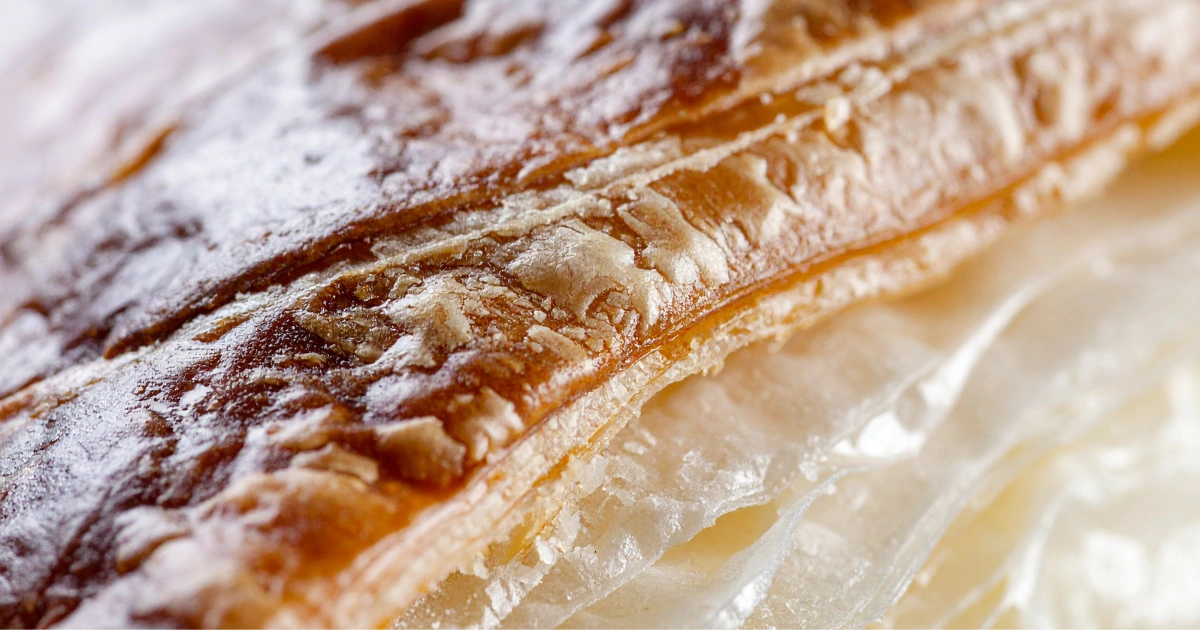
Puff pastry is a laminated dough made by folding butter into flour repeatedly, creating hundreds of thin layers. When baked, moisture trapped between these layers turns to steam, forcing the dough to rise dramatically.
The result is a light, airy pastry with crisp flakes.
Typical Puff Pastry Ingredients
- All-purpose flour
- Cold butter (cut into cubes)
- Water
- Salt
Traditional puff pastry requires patience and precision. The dough is rolled and folded multiple times, chilling between turns to keep the butter cold and distinct.
Texture and Appearance
Puff pastry bakes into tall, flaky layers with a delicate crunch. It expands significantly in the oven and has a neutral flavor that works equally well with sweet or savory fillings.
What Is Pie Crust?
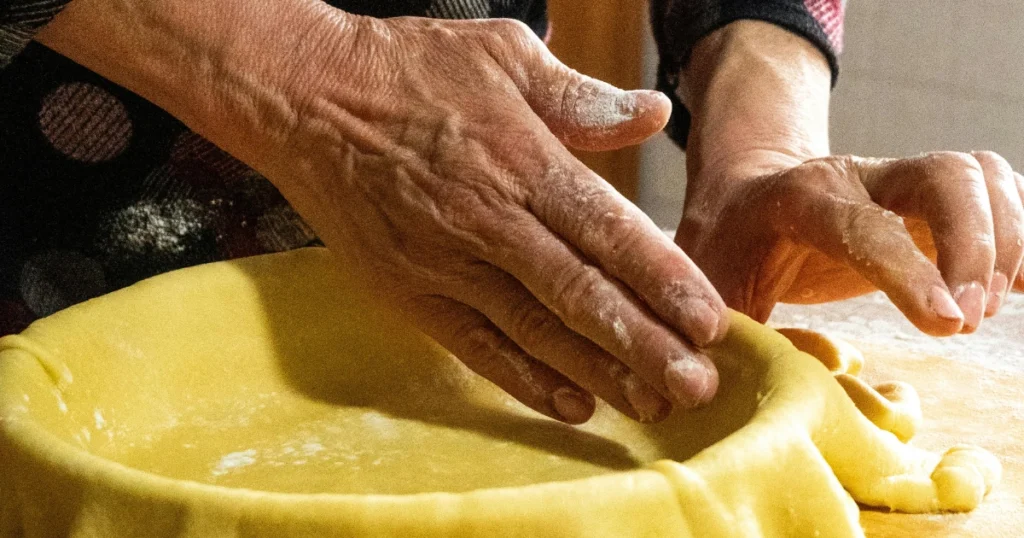
Pie crust is a simpler dough designed to be sturdy rather than flaky. Butter or shortening is cut into flour, then cold water is added just until the dough comes together.
Unlike puff pastry, pie crust is not laminated.
Typical Pie Crust Ingredients
- All-purpose flour
- Salted or unsalted butter
- Cold water
Pie crust forms a compact structure that supports moist fillings without collapsing.
Texture and Appearance
Pie crust bakes into a tender, slightly crumbly shell with minimal rise. Its purpose is structural, creating a firm base for custards, fruit fillings, or savory pies.
Puff Pastry vs Pie Crust: The Main Differences
Preparation Method
Puff pastry relies on repeated folding and chilling to build layers.
Pie crust uses a quick mixing method with minimal handling to avoid developing gluten.
Butter Distribution
In puff pastry, butter remains in visible sheets between dough layers.
In pie crust, butter is worked into small pieces throughout the dough.
Rise and Volume
Puff pastry rises dramatically due to steam expansion.
Pie crust remains mostly flat.
Structural Strength
Pie crust holds heavy fillings well.
Puff pastry is fragile and best suited for lighter toppings or enclosed fillings.
Time Investment
Puff pastry requires significant prep time unless store-bought.
Pie crust can be made in minutes.
Best Uses for Puff Pastry
Puff pastry shines in recipes where lightness and flakiness matter.
Common applications include:
- Turnovers and hand pies
- Cream-filled pastries
- Savory tarts
- Beef Wellington
- Vol-au-vents
Because it expands so much, puff pastry works best when fillings are modest and evenly distributed.
Best Uses for Pie Crust
Pie crust is ideal for dishes that need structural integrity.
Typical uses include:
- Fruit pies
- Custard pies
- Quiches
- Pot pies
- Galettes
Its firm base keeps fillings contained while baking.
Nutritional Considerations
Both doughs are rich in fat due to butter content. Puff pastry usually contains more butter by weight, making it higher in calories.
According to the USDA, butter contributes saturated fat, which should be consumed in moderation as part of a balanced diet.
If nutrition is a concern, portion control matters more than dough choice.
You can explore ingredient data through the USDA FoodData Central database:
https://fdc.nal.usda.gov
Homemade vs Store-Bought Options
Puff Pastry
Many home cooks opt for store-bought puff pastry because traditional preparation is time-intensive. Commercial versions deliver consistent results and save hours.
Pie Crust
Pie crust is much easier to make at home and often tastes fresher than packaged versions. Homemade crust also allows control over salt and fat levels.
Common Baking Mistakes to Avoid
- Using warm butter for either dough
- Overworking pie crust dough
- Skipping chilling steps with puff pastry
- Overloading puff pastry with heavy fillings
- Forgetting to dock pie crust when blind baking
Temperature control is critical for both styles.
Which Should You Choose?
Choosing between puff pastry vs pie crust depends on your recipe goals.
Use puff pastry when you want:
- Dramatic rise
- Crisp layers
- Elegant presentation
Use pie crust when you need:
- Structural support
- Moist fillings
- Classic pie texture
Neither is “better.” Each serves a different purpose in baking.
FAQ: Puff Pastry vs Pie Crust
Is puff pastry the same as pie crust?
No. Puff pastry is laminated and rises significantly, while pie crust is mixed and remains mostly flat.
Can puff pastry replace pie crust?
Not usually. Puff pastry lacks the strength needed for heavy fillings like custard or fruit pies.
Can I use pie crust for turnovers?
Yes, but the result will be denser and less flaky than puff pastry.
Which dough is easier for beginners?
Pie crust is simpler and more forgiving, making it better for beginners.
Why does puff pastry need to stay cold?
Cold butter creates steam during baking, which forms the signature flaky layers.
Internal Linking Suggestions for secretsofthegreengarden.com
To strengthen topical authority, consider linking this article with:
- “Kitchen Garden Vegetables for Beginners”
- “How to Grow Culinary Herbs at Home”
- “Composting Kitchen Scraps for Healthier Soil”
These connect baking with fresh ingredients and sustainable food practices.
External High-Authority Sources
For ingredient science and food safety guidance, you may reference:
USDA FoodData Central
https://fdc.nal.usda.gov
Harvard T.H. Chan School of Public Health on dietary fats
https://www.hsph.harvard.edu/nutritionsource/fats-and-cholesterol
FDA food handling recommendations
https://www.fda.gov/food
These sources provide educational support without commercial competition.
Final Thoughts
Understanding puff pastry vs pie crust helps you choose the right dough for every recipe. Puff pastry delivers dramatic flakiness and visual impact, while pie crust offers stability and classic comfort.
Once you learn their strengths, baking becomes more intentional and far more successful.
If you would like a follow-up guide on homemade puff pastry, pie crust variations, or filling recipes, just tell me.
I like what you guys are up too. Such intelligent work and reporting! Carry on the superb works guys I have incorporated you guys to my blogroll. I think it will improve the value of my web site 🙂
888slot apk – Nơi kết nối niềm đam mê và hiện thực hóa những kỳ vọng tài chính của bạn thông qua một nền tảng giải trí an toàn. TONY03-11O
You can definitely see your expertise in the work you write. The world hopes for even more passionate writers like you who are not afraid to mention how they believe. At all times go after your heart.
Backbiome is an advanced daily wellness supplement formulated to help support spinal comfort, reduce feelings of built-up tension, and promote freer, smoother movement throughout backbiome everyday life.
Boostaro is a modern men’s wellness boostaro formula created to support daily vitality, stamina, and confidence through a practical, natural routine.
I went over this website and I conceive you have a lot of wonderful info , saved to fav (:.