
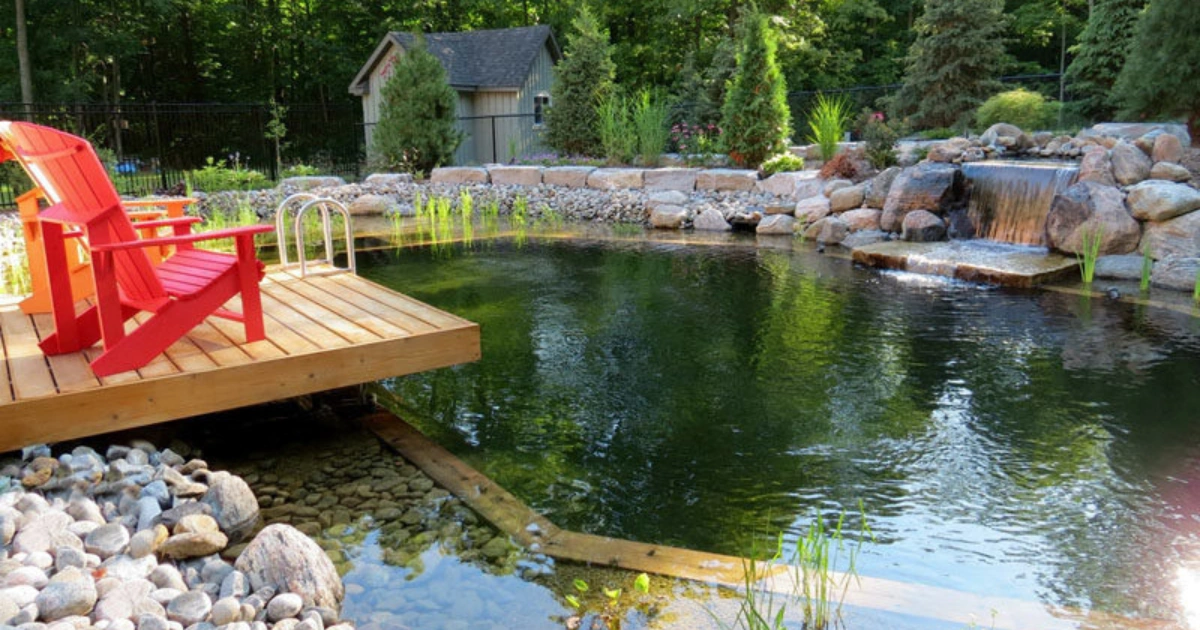
Swimming pools are often associated with chlorine, chemical maintenance, and constant water treatment. However, there is an alternative that relies on natural processes rather than synthetic products. A natural swimming pool uses biological filtration, thoughtful construction, and continuous water circulation to keep water clear, healthy, and pleasant to swim in without chlorine.
This approach combines swimming comfort with ecological balance, creating a space that functions more like a living ecosystem than a conventional pool.
What Is a Natural Swimming Pool?
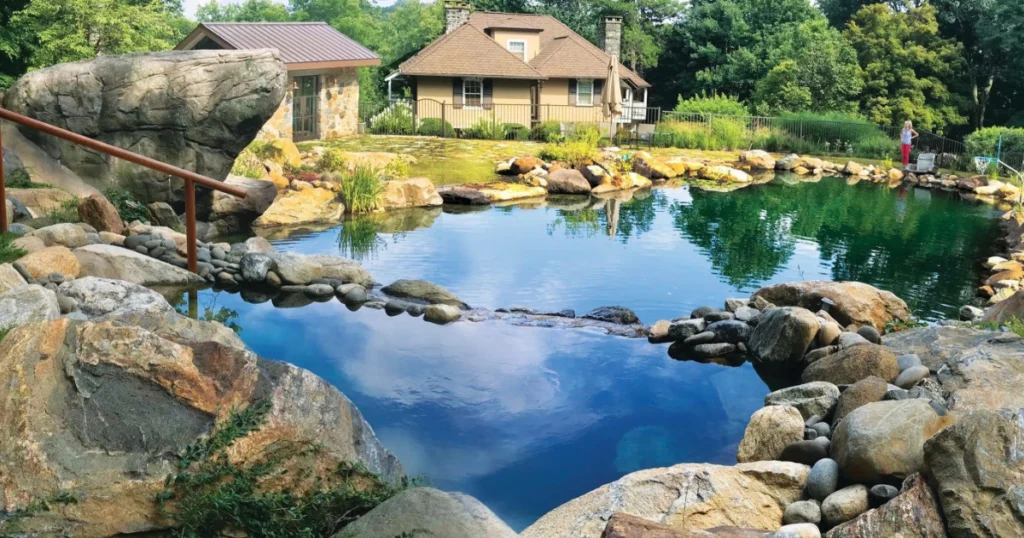
A natural swimming pool is a water system designed with two distinct but connected zones: a swimming zone and a filtration zone planted with aquatic vegetation. Instead of chemicals, the pool relies on plants, microorganisms, and physical filtration to maintain water quality.
The concept is inspired by natural lakes and ponds where water remains clear due to biological balance rather than chemical treatment.
The Two Essential Zones of a Natural Pool
The Swimming Zone
The swimming zone is the area intended for bathing. It is designed to remain clear, comfortable, and visually clean, with minimal or no plants inside the swimming area itself.
Key characteristics include:
- Sufficient depth to improve thermal stability
- Smooth surfaces for comfort and safety
- Clear water free from suspended particles
This zone functions like a traditional pool, but without chemical additives.
The Plant-Based Filtration Zone
The filtration zone is the heart of a natural swimming pool. It contains gravel, sand, and aquatic plants that naturally filter the water.
In this zone:
- Plants absorb excess nutrients
- Microorganisms break down organic matter
- Gravel and sand trap fine particles
Together, these elements reduce algae growth and maintain water clarity.
How Water Circulation Keeps the Pool Clean
Continuous circulation is essential for a natural swimming pool to function properly. A small, energy-efficient pump moves water from the swimming zone through the planted filtration zone and back again.
This constant movement prevents stagnation and ensures that nutrients are consistently processed by plants and beneficial microorganisms. Surface skimmers are often used to collect leaves, pollen, and floating debris before they sink.
Layers and Materials Used in Construction
A well-designed natural pool relies on carefully layered materials that support both structure and filtration.
Common components include:
- A waterproof pool membrane
- A protective geotextile layer
- A sand or fine gravel base
- Larger gravel in planted areas
- Wooden or stone decking around the pool
Geotextile fabric plays a key role by protecting the membrane and separating soil from filtration layers.
Decking and Rest Areas Around the Pool
Natural swimming pools are often integrated into the surrounding landscape using wooden decks or stone terraces. These areas serve as resting zones, sunbathing spaces, and visual transitions between water and garden.
Decks made of natural wood blend well with the ecological design and provide comfortable access to the pool without disrupting the environment.
Why Natural Pools Do Not Need Chlorine
In conventional pools, chlorine is used to kill bacteria and algae caused by stagnant or nutrient-rich water. In a natural swimming pool, these issues are addressed at their source.
Proper design ensures:
- Balanced nutrient levels
- Continuous water movement
- Biological filtration through plants and microbes
When these elements are in harmony, algae growth is limited and harmful bacteria are kept under control naturally.
Maintenance Requirements Compared to Traditional Pools
While natural swimming pools require a different type of maintenance, they are not more demanding overall.
Typical maintenance tasks include:
- Weekly removal of surface debris
- Monthly inspection of pumps and skimmers
- Seasonal pruning of aquatic plants
- Occasional removal of sediment
There is no need for chemical testing, chlorine handling, or frequent water replacement.
Addressing Common Concerns and Misconceptions
Some people worry that natural pools attract insects or amphibians. In reality, a well-balanced pool with moving water is less attractive to mosquitoes than stagnant ponds.
Others believe the system is unreliable. In practice, most problems arise from poor design, insufficient circulation, or an undersized filtration zone rather than from the concept itself.
Can Natural Pools Work with Flowing Water?
Natural pools can be adapted to sites with flowing water, but careful planning is required. External water sources must be controlled to avoid introducing excess nutrients or contaminants.
Professional design guidance is recommended when integrating natural pools with streams or sloped terrain.
Environmental and Health Benefits
Natural swimming pools offer several long-term advantages:
- No chemical exposure for swimmers
- Lower environmental impact
- Reduced water waste
- Integration with garden ecosystems
Many users report softer water, less skin irritation, and a more pleasant swimming experience compared to chlorinated pools.
Frequently Asked Questions
Is the water truly safe without chlorine?
Yes, when the pool is properly designed and balanced. Biological filtration and circulation control harmful organisms naturally.
Do natural pools require electricity?
Only for a small pump used for circulation. Energy consumption is significantly lower than conventional pool systems.
Can algae still appear?
Some algae may appear during seasonal transitions, but proper circulation and plant balance usually keep it under control.
Are natural pools suitable for all climates?
They can be adapted to many climates, but design details such as depth and plant selection must be adjusted accordingly.
Is maintenance more expensive?
Maintenance costs are generally lower over time due to the absence of chemicals and reduced water replacement.
Internal Linking Suggestions
For related content on secretsofthegreengarden.com, consider linking to:
- How biological filtration works in garden ponds
- Sustainable water features for home landscapes
- Low-chemical garden design solutions
External Linking Suggestions
For authoritative, non-competing references, consider linking to:
- University research on constructed wetlands and water filtration
- Government environmental agencies discussing sustainable water systems
- Botanical garden resources on aquatic plant filtration
These sources provide reliable, science-based support for ecological pool design.
Final Thoughts
A natural swimming pool demonstrates that clean, enjoyable water does not require chlorine or harsh chemicals. Through thoughtful design, proper circulation, and biological filtration, it is possible to create a swimming environment that is both refreshing and environmentally responsible.
This approach transforms a pool from a chemical system into a living, balanced feature that enhances both the garden and the swimming experience.
2t0mrs
vexaro hub – Browsed briefly, layout feels organized and navigation is simple.
Slot tại sa slot 888 có tính năng “xem lại lịch sử quay” – giúp bạn phân tích chu kỳ game, từ đó đưa ra quyết định cược thông minh hơn trong những vòng tiếp theo. TONY02-27
Hello i want share my experience with this site because is very good for me. I using for two month and everything working very nice, very fast, very good customer service they help me when i have problem. tk88 in net is reccommend from my freind and now i reccommend also to you.
Hệ thống khuyến mãi tại xn88. com không chỉ hấp dẫn mà còn rất thực tế: từ tiền cược miễn phí không cần nạp, hoàn trả tuần lên tới 2%, đến quà sinh nhật và ưu đãi VIP theo cấp bậc – chơi càng nhiều, lợi càng lớn. TONY03-27O
Backbiome is an advanced daily wellness supplement formulated to help support spinal comfort, reduce feelings of built-up tension, and promote freer, smoother movement throughout backbiome everyday life.
Boostaro is a modern men’s wellness boostaro formula created to support daily vitality, stamina, and confidence through a practical, natural routine.