
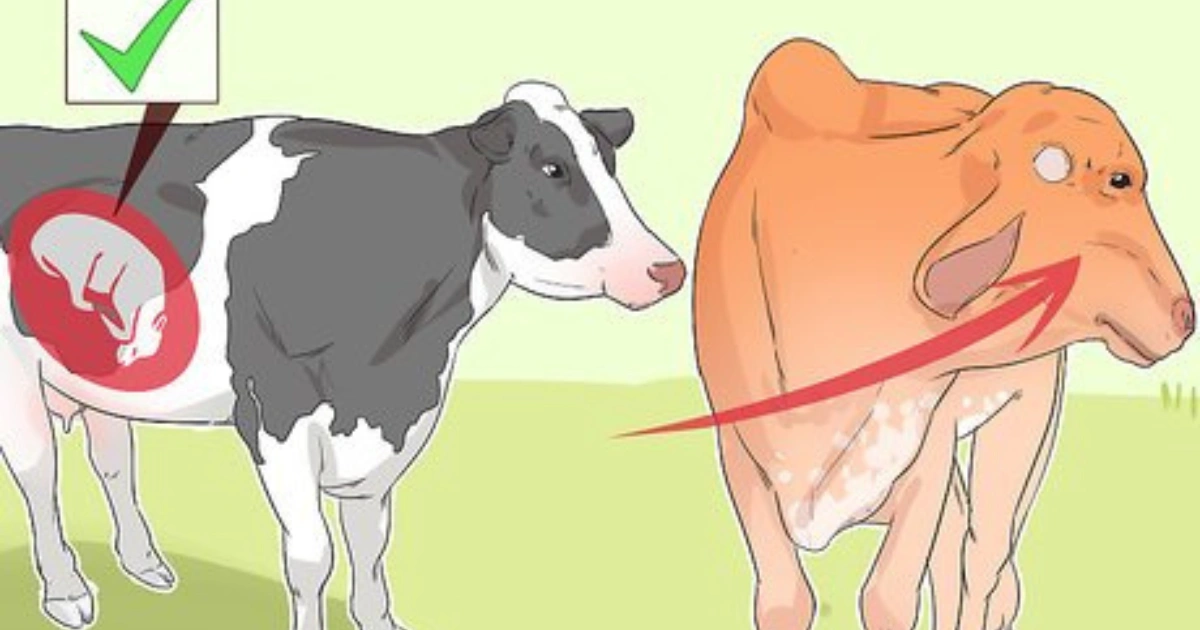
Pregnancy palpation is a traditional livestock management technique used to assess whether a cow is pregnant and to monitor fetal development. When done correctly and at the appropriate stage of gestation, this method can provide useful information about the cow’s condition.
What the Illustration Shows
The image demonstrates external abdominal palpation:
- The upper illustration shows the approximate position of the calf inside the uterus
- The lower illustration shows proper hand placement on the cow’s abdomen
- Gentle downward pressure allows the handler to feel movement or firmness associated with the developing calf
This technique relies on calm handling, correct positioning, and experience.
How External Palpation Is Performed
- Stand safely beside the cow, never directly behind
- Place your hand on the lower right side of the abdomen, just in front of the udder
- Apply gentle, steady pressure rather than poking or squeezing
- Observe for movement, resistance, or shifting that may indicate pregnancy
This approach is most effective during mid to late pregnancy, when the calf is larger and easier to detect.
Important Safety Notes
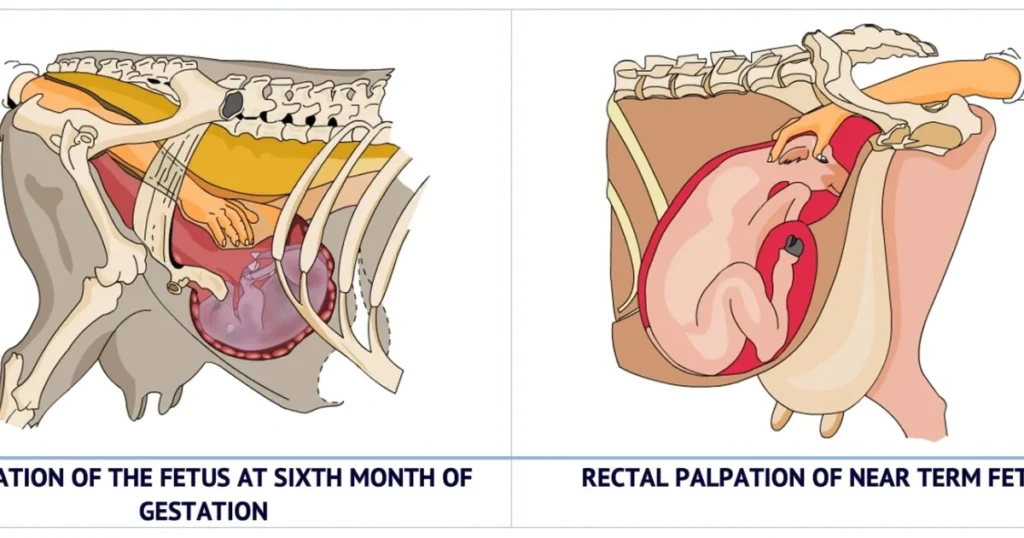
- External palpation is not reliable in early pregnancy
- Rough handling can stress the animal or cause injury
- Results can vary based on cow size, body condition, and stage of gestation
For accurate confirmation, veterinary methods such as rectal palpation or ultrasound should be used by trained professionals.
Why Pregnancy Monitoring Matters
- Helps plan nutrition and calving schedules
- Supports early detection of health issues
- Improves overall herd management
- Reduces unexpected calving complications
External palpation can be a helpful observational tool, but it should never replace professional veterinary assessment when accuracy is required.