
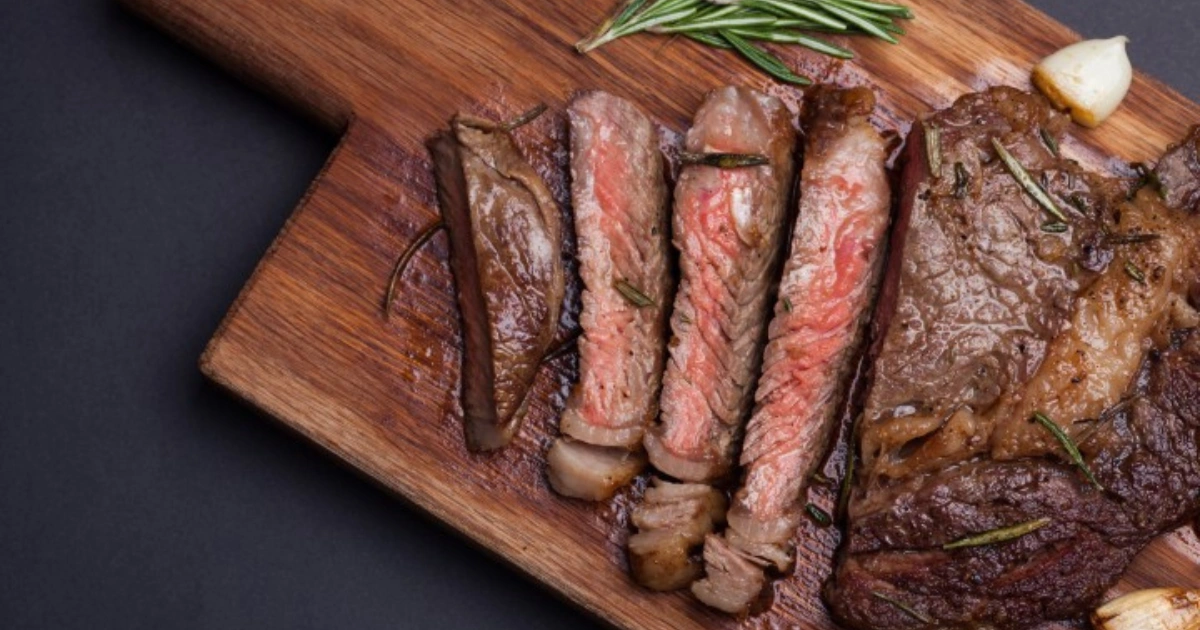
This image is a visual guide to the most common steak cuts, explaining how each one differs in texture, flavor, and best cooking method. Choosing the right cut makes a big difference in tenderness, taste, and cooking success.
1. Ribeye
- Texture: Very juicy and tender due to heavy marbling
- Flavor: Rich and buttery
- Best for: Grilling or pan-searing
Ribeye is ideal for those who enjoy bold flavor and a melt-in-your-mouth texture.
2. Sirloin
- Texture: Leaner and firmer
- Flavor: Mild, beef-forward
- Best for: Grilling or stir-fries
Sirloin is a good balance between flavor and leanness.
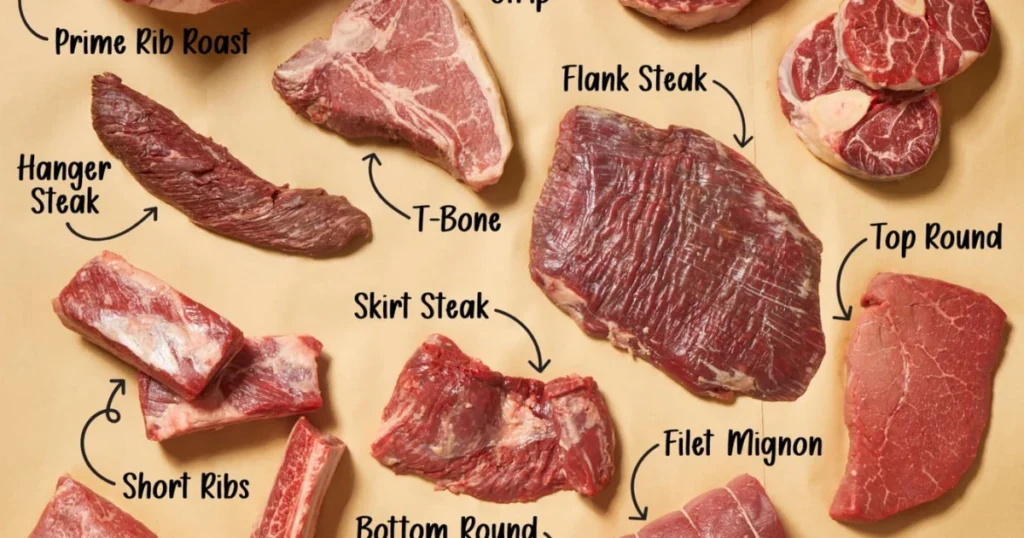
3. Tenderloin (Filet Mignon)
- Texture: Extremely tender
- Flavor: Mild with low fat content
- Best for: Pan-searing, then finishing in the oven
This cut is prized for tenderness rather than strong beef flavor.
4. T-Bone / Porterhouse
- Texture: Combination of tenderloin and strip steak
- Flavor: Bold and hearty
- Best for: Grilling
A classic steakhouse cut offering two textures in one steak.
5. New York Strip (Striploin)
- Texture: Firm with slight chew
- Flavor: Strong beef flavor
- Best for: Pan-searing or grilling
A favorite for those who want flavor without excessive fat.
6. Flank Steak
- Texture: Lean and fibrous
- Flavor: Strong beef taste
- Best for: Quick, high-heat searing and thin slicing
Best sliced against the grain to maximize tenderness.
7. Skirt Steak
- Texture: Loose grain, moderately tender
- Flavor: Very beefy
- Best for: High-heat cooking such as fajitas
Absorbs marinades well and cooks quickly.
8. Flat Iron
- Texture: Tender with good marbling
- Flavor: Rich and balanced
- Best for: Grilling or pan-searing
Often considered one of the best value cuts for tenderness.
9. Brisket
- Texture: Tough if cooked quickly
- Flavor: Deep and hearty
- Best for: Slow cooking or smoking
Requires long, low-temperature cooking to become tender.