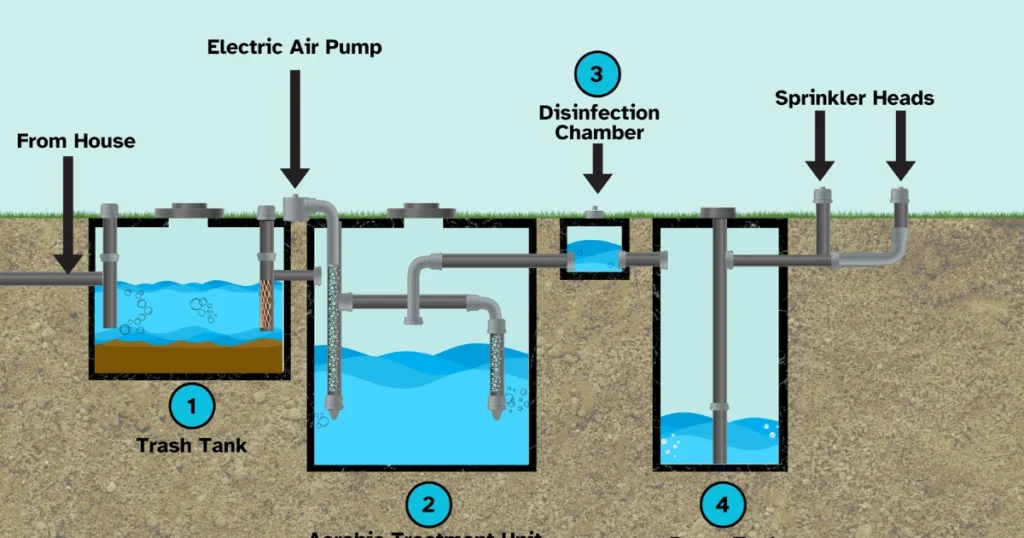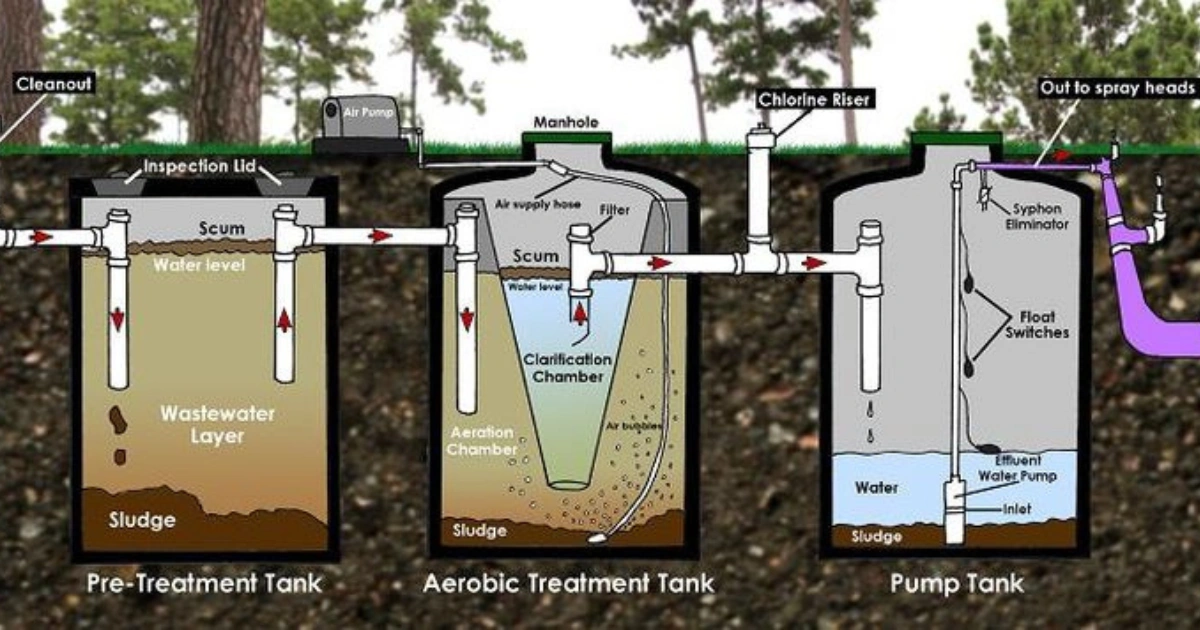
A 3-stage septic system is designed to treat household wastewater efficiently before it is released back into the soil. Each stage has a specific function that helps separate solids, break down organic matter, and clarify water, reducing environmental and health risks.
Understanding how this system works is essential for proper maintenance and long-term performance.
Stage 1: Settling Chamber
The first chamber is where all wastewater from the home enters.
In this tank, separation begins naturally:
- Heavy solids sink to the bottom and form sludge
- Lighter materials, such as grease and oils, float to the surface as scum
- The partially clarified liquid remains in the middle
This initial separation prevents large solids from moving further into the system, protecting downstream components from clogging or damage.
Stage 2: Bacterial Breakdown Chamber
The second stage focuses on biological treatment.
Naturally occurring anaerobic bacteria break down organic waste by:
- Digesting solid and dissolved organic material
- Reducing overall waste volume
- Lowering the concentration of harmful substances
This process significantly improves water quality before it reaches the final stage. A healthy bacterial environment is critical for system efficiency.
Stage 3: Final Clarification Chamber
In the third chamber, the wastewater undergoes further refinement.
During this stage:
- Remaining fine particles settle out
- Water becomes clearer and more stable
- Flow is regulated before soil absorption
By this point, most solids and organic matter have already been removed.
Soil Absorption and the Leach Field
After treatment in the tanks, the wastewater enters the leach field.
Here, the soil plays a vital role:
- Water slowly disperses through gravel and surrounding soil
- Soil microbes naturally filter remaining bacteria and nutrients
- Cleaned water safely returns to the groundwater system
Healthy soil is essential for completing the treatment process effectively.
Why a 3-Stage Septic System Is Effective
This type of system offers several advantages:
- Reduces environmental contamination
- Protects groundwater quality
- Uses natural biological processes
- Operates with minimal energy input
Because treatment is spread across multiple stages, the system is more reliable and less prone to failure when properly maintained.
Maintenance and Long-Term Performance
Regular maintenance is essential to keep a 3-stage septic system functioning correctly.
Best practices include:
- Periodic inspections
- Timely pumping of sludge and scum
- Avoiding excessive water use
- Preventing chemicals and grease from entering the system
Proper care extends the system’s lifespan and prevents costly repairs.
Final Notes
A 3-stage septic system is an efficient, low-energy solution for household wastewater treatment. By combining physical separation, biological breakdown, and natural soil filtration, it protects both your property and the surrounding environment.
Understanding how each stage works helps homeowners make informed decisions and maintain a safe, effective system for years to come.